
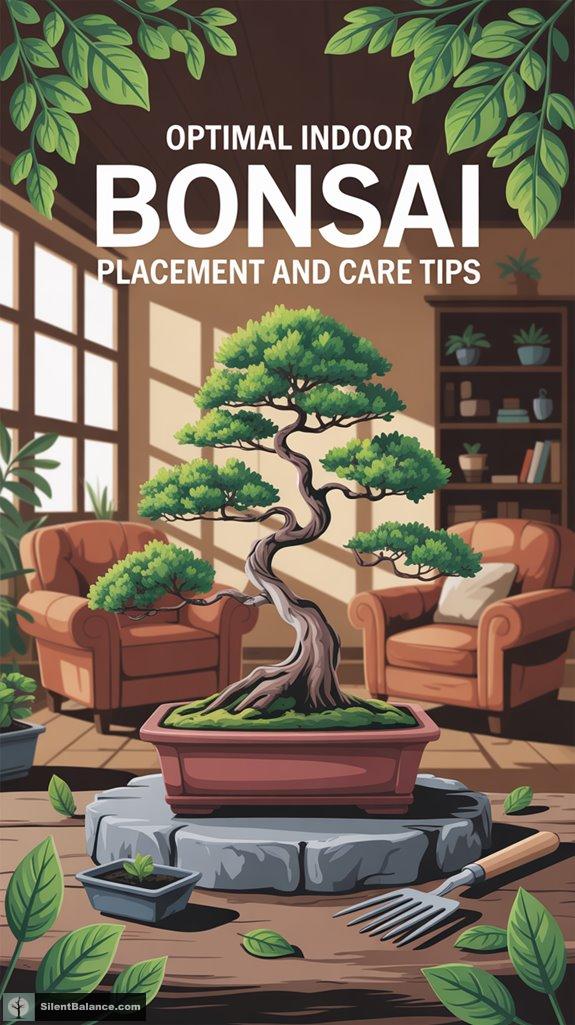
When crafting your indoor bonsai paradise, think bright, indirect light—4 to 8 hours a day does wonders! South-facing windows are a total game changer, just keep leaves from scorching. Next, let’s talk water—check the top inch of soil and water when it’s dry. Humidity? Don’t skimp! Use trays or mist your beauties lightly. And keep in mind, stable temps and a feeding schedule with organic fertilizers keep your bonsai thriving. That’s just the start; there’s much more to explore!
Quick Takeaways
- Place your bonsai near a south-facing window to provide 4 to 8 hours of bright, indirect light daily for optimal growth.
- Water your bonsai when the top inch of soil feels dry, using room temperature water to avoid shocking the roots.
- Enhance humidity by using humidity trays, misting lightly, or grouping plants together to create a supportive environment.
- Maintain a stable temperature between 70°F to 80°F for tropical bonsai, avoiding drafts and temperature fluctuations to prevent stress.
- Fertilize consistently with organic options, following a schedule, and prune before fertilizing to stimulate healthy growth.
Ideal Light Situations for Indoor Bonsai
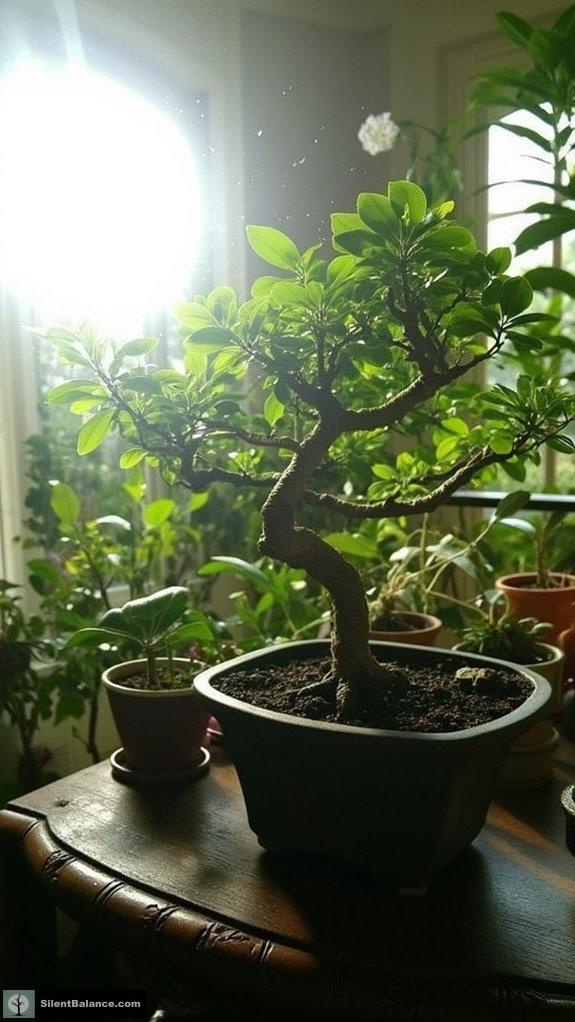
Have you noticed your little tree stretching awkwardly toward that single beam of sunlight? It’s a sign it needs more light!
Most indoor bonsai thrive on 4 to 8 hours of bright, indirect light daily. I recommend placing your bonsai near south-facing windows for that ideal glow—less risk of leaf scorch, too. Trees symbolize growth and resilience, ensuring that your bonsai reflects its potential for vitality.
Most indoor bonsai love 4 to 8 hours of bright, indirect light—south-facing windows are a great choice!
Now, if you’ve got a Dwarf Jade, it craves even more—up to 18 hours! A Dwarf Jade requires 4-6 hours of bright, indirect light daily, ensuring it gets the best possible care.
Keep an eye out for leggy branches or oversized leaves; they’re not just trying to give you the puppy eyes.
Trust me, proper light can radically transform your bonsai’s health and liveliness!
Effective Watering Techniques for Longevity
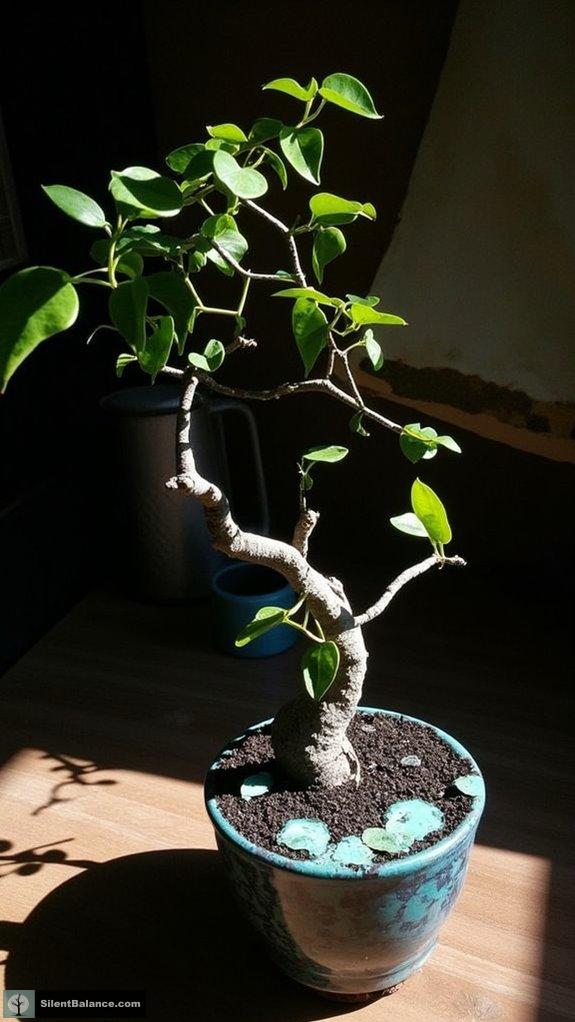
Getting the watering game just right is a key ingredient in the recipe for a happy, thriving bonsai.
Check your soil regularly; if the top inch feels dry, it’s watering time! During spring and summer, you might find yourself watering every day or even every few days.
Use a narrow spout can; nobody likes soil disturbance during a hydration session! Additionally, soil moisture management plays a crucial role in preventing root rot and promoting healthy growth.
And please, let’s not drown our little friends—stop when you see water pouring out the drainage holes.
Remember, room temperature water, not ice-cold!
Each tree has its quirks, so keep an eye out for yellowing leaves or dry, crispy ones asking for your attention. Additionally, proper watering is critical for indoor bonsai health and vitality, so regularly monitor soil moisture.
Enhancing Humidity for Optimal Growth
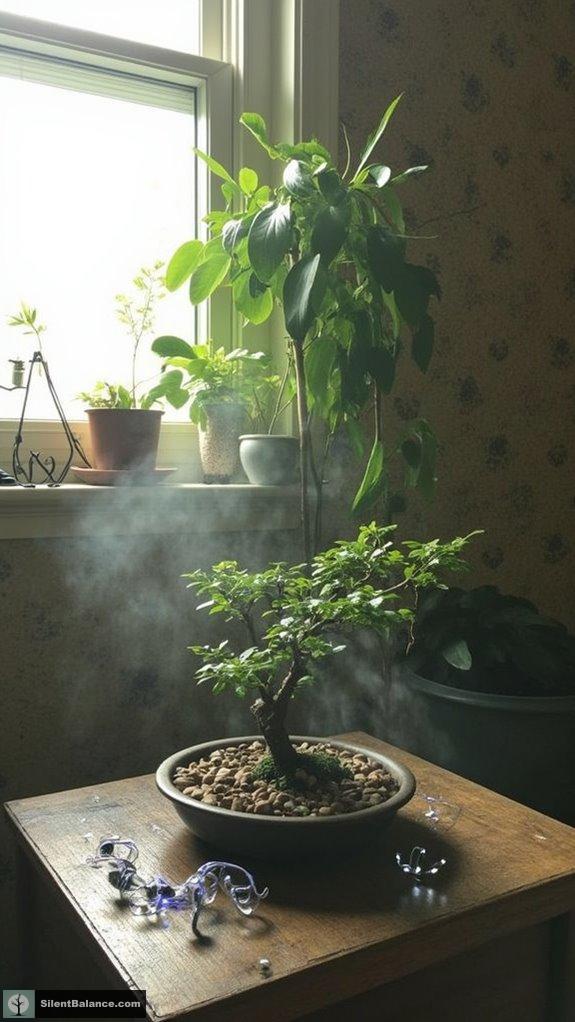
While it might seem like humidity’s just a nice-to-have for your bonsai, let me assure you, it’s like a warm hug for your leafy friends!
To enhance humidity effectively, consider these methods:
- Set up humidity trays with water and pebbles beneath your pot.
- Give your bonsai a light misting, but don’t drown it!
- Use cool mist humidifiers to maintain a cozy climate.
- Group your plants together; they’re social creatures, after all!
Additionally, maintaining a consistent humidity level is crucial for the health and vitality of your bonsai.
Maintaining Perfect Temperature Conditions
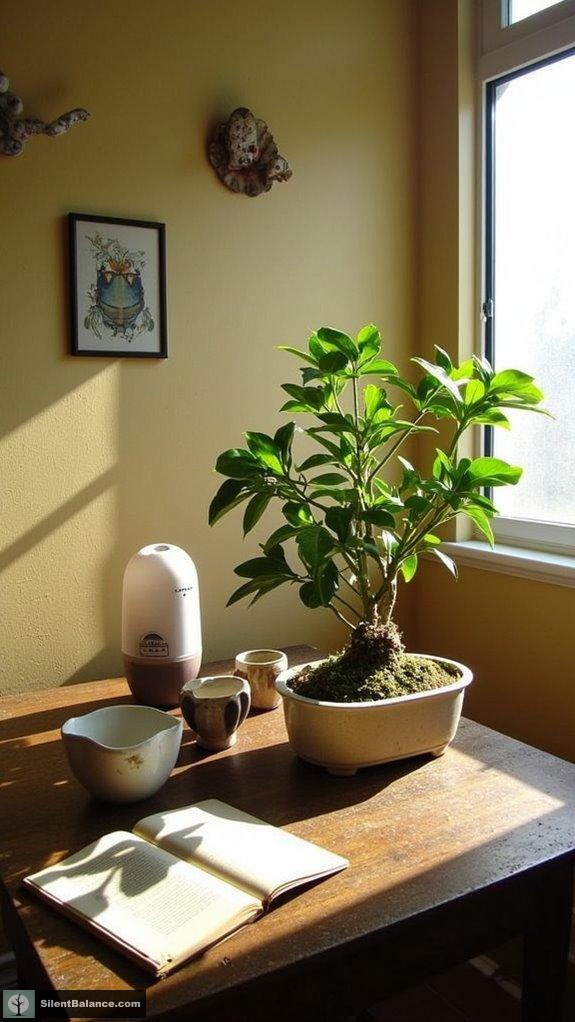
Tropical bonsai crave cozy warmth, ideally between 70°F to 80°F (21°C to 27°C) during the day, while Dwarf Jade prefers a cool 65°F to 75°F (18°C to 24°C).
Avoid drafts and wild temperature swings, as they lead to stress and leaf drop.
Trust me, keeping your bonsai’s environment stable is the key to their thriving—no one likes a moody little tree!
Essential Fertilizing and Pruning Practices
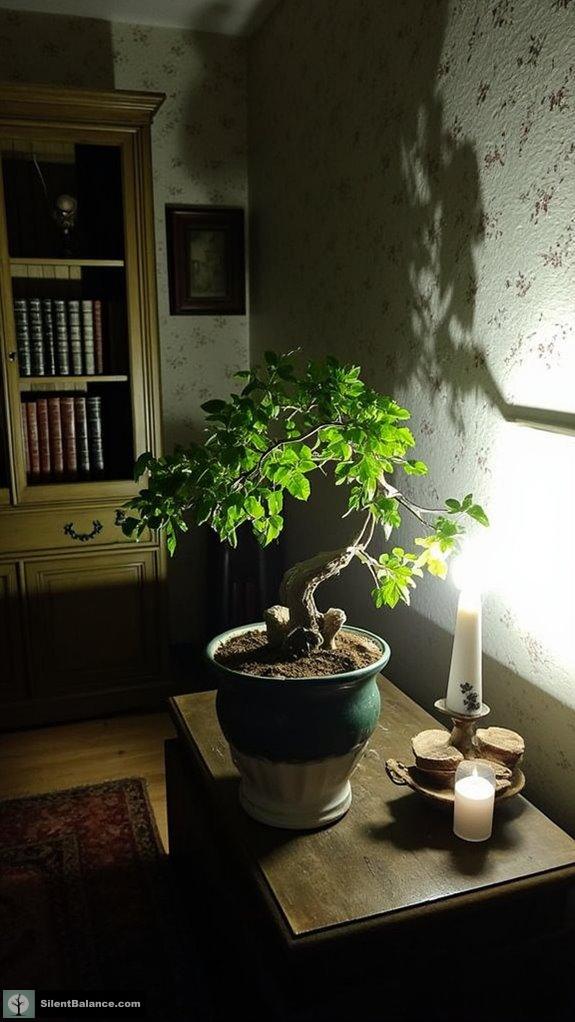
To nurture your bonsai to its fullest potential, you’ll want to master the art of fertilizing and pruning, two dance partners in the tree care waltz that are vital for growth.
Master the delicate balance of fertilizing and pruning to unlock your bonsai’s true potential.
Here are some important practices you shouldn’t overlook:
- Choose organic fertilizers like fish emulsion for gentle nutrient release.
- Stick to a consistent fertilizing schedule to avoid stressing your tree.
- Prune before fertilizing to encourage fresh, nutrient-hungry growth.
- Avoid applying fertilizer during dormancy—your bonsai won’t appreciate it!
With these tips in mind, you’ll have a thriving bonsai that’s the envy of all your friends!
Bonsai Tree Symbolism
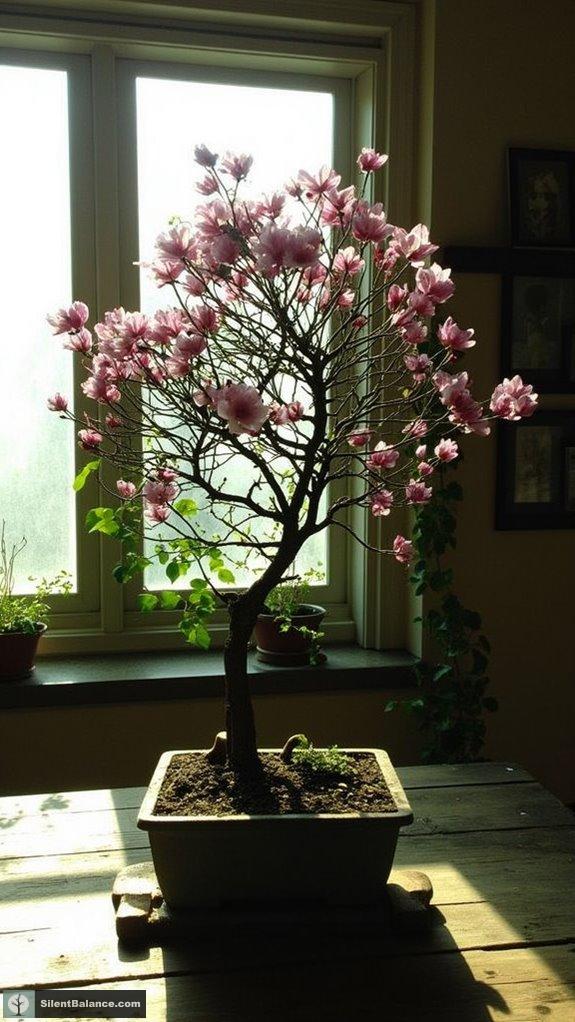
After nurturing your bonsai with the right pruning and fertilizing practices, it’s time to appreciate the deeper essence of these miniature marvels.
These little trees aren’t just pretty decor; they symbolize harmony, balance, and patience, reflecting nature’s beauty and our need for control.
Did you know that “penjing,” the origin of bonsai, translates to “pot scenery”? That’s some serious artistry!
Each species conveys different vibes—Azalea bonsai, for example, whispers feminine beauty and love.
Tree Symbolism
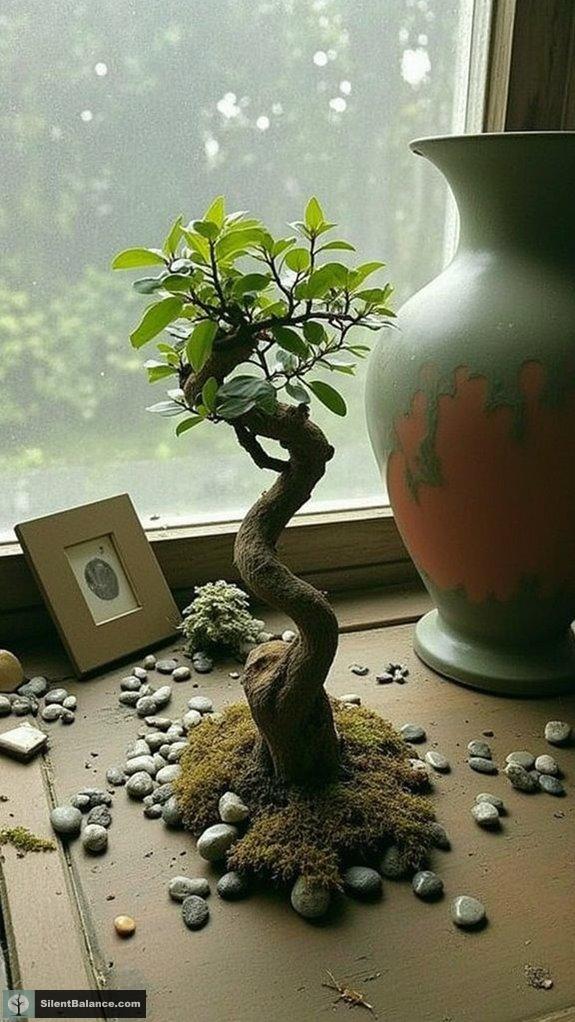
While I mightn’t be a linguist, I can certainly appreciate the unique language of bonsai culture, which is as complex as the art itself.
Trees speak volumes in symbolism, revealing rich meanings about life and nature.
Here are four key aspects of tree symbolism:
- Longevity – Bonsai often represents long life and endurance.
- Wisdom – Their age and grace reflect wisdom accrued over time.
- Harmony – Bonsai embodies balance, merging nature with artistry.
- Growth – They symbolize personal growth, resilience, and transformation.
Isn’t it fascinating how a tiny tree can convey such profound messages?
Questions and Answers
How Do I Choose the Right Bonsai Tree Variety for Indoors?
Choosing the right bonsai for indoors is like selecting a companion; you need one that thrives in your space. I favor resilient species like Ficus or Chinese Elm, as they adapt beautifully to indoor conditions.
Can I Propagate My Bonsai Tree? if So, How?
Yes, I can propagate my bonsai tree! I usually take cuttings, guarantee they’re healthy, use rooting hormone, and maintain high humidity. With patience and care, I’ll watch them develop into beautiful new plants.
What Are Common Signs That My Bonsai Is Unhealthy?
Did you know that around 80% of bonsai owners face unhealthy trees at some point? I’ve spotted key signs like browning leaves, slow growth, and spots. Recognizing these can empower you to save your bonsai!
Is It Safe to Use Tap Water for Bonsai?
I’ve found tap water’s mostly safe for bonsai, but I always check local water quality. If it’s high in minerals or chemicals, I consider using rainwater or filtered water to guarantee my bonsai thrives.
How Can I Prevent Pests on My Indoor Bonsai?
Aren’t you frustrated when pests invade your bonsai? I inspect my plants regularly, maintain cleanliness, and enhance airflow. I also use natural remedies like neem oil to keep infestations at bay. Stay proactive!
References
- https://www.youtube.com/watch?v=kX3XNdR00J4
- https://www.allthingsbonsai.co.uk/bonsai-tree-care/indoor-bonsai-care/
- https://bonsaiwest.com/resources/bonsai-care/
- https://brusselsbonsai.com/recommended-care/
- https://www.youtube.com/watch?v=MbLOamsdpYU
- https://bonsaiandbrewstudio.com/blogs/news/light-for-your-bonsai-tree
- https://soltech.com/products/indoor-bonsai-care
- https://www.bonsaiempire.com/blog/grow-lights
- https://bonsai2u.co.uk/how-much-sun-does-a-bonsai-tree-need/
- https://bonsaibar.com/blogs/tree-care/light-requirements-for-your-dwarf-jade

- 11 Best Luxury Sandalwood Candles for 2026 - June 19, 2026
- 11 Best Woven Wicker Gift Baskets for 2026 - June 19, 2026
- 11 Best High Powered Binoculars for 2026 - June 19, 2026
