
Bonsai pruning isn’t just about trimming; it’s like sculpting a living story. Each cut mirrors ancient artistry, reflecting resilience, just like the Yamaki Pine that survived Hiroshima. The twists and turns of branches narrate tales of perseverance—who knew a tree could have so many adventures? Plus, the act of pruning embraces wabi-sabi, celebrating imperfections. Curious how these timeless practices evolve today? Stick around, and you’ll discover even more fascinating bonsai secrets!
Quick Takeaways
- Bonsai pruning techniques reflect ancient artistry, shaping trees into living representations of resilience and survival throughout history.
- Each pruning cut symbolizes life’s challenges and the enduring spirit, echoing the historical struggles faced by these trees.
- The evolution of bonsai shapes tells individual stories, reflecting personal growth and adaptation over time.
- Pruning practices embody the philosophical concepts of wabi-sabi, celebrating imperfections that define the essence of life.
- Historical bonsai specimens, like the Yamaki Pine, serve as living testimonies of cultural heritage and endurance beyond adversity.
The Roots of Bonsai: A Historical Perspective
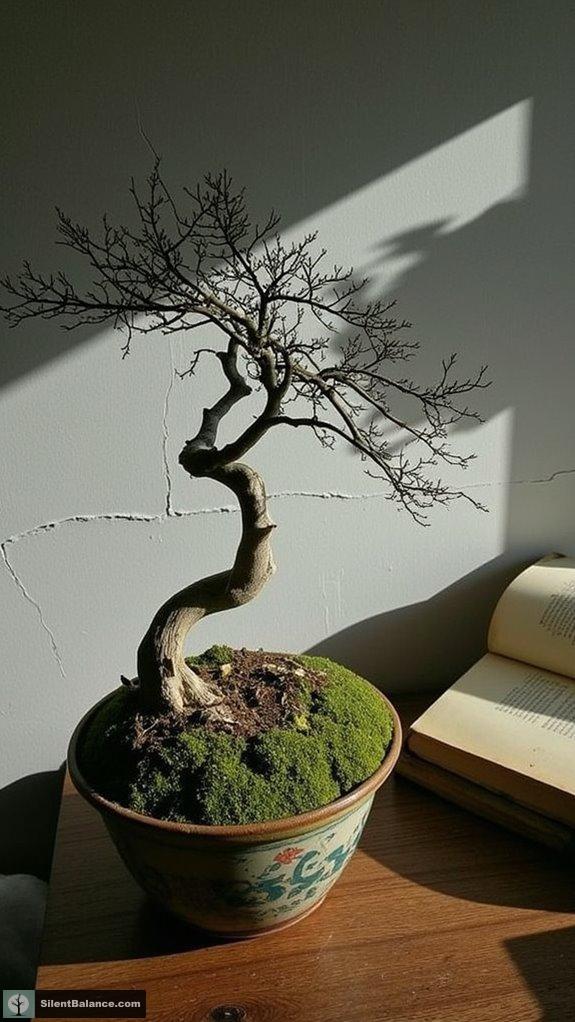
When you plunge into the world of bonsai, it can feel like stepping into a time machine that whisks you back to ancient China—how cool is that?
Envision the Han Dynasty, around 210 BC, where “pun-sai” represented nature’s essence in miniature. These dwarf trees adorned the homes of elites, symbolizing prestige and refinement. Earliest documented evidence shows that these ancient trees were highly prized and reflected the artistry of their time. The practice evolved significantly, influencing various cultures, including Japan, where pine bonsai is considered a symbol of long-lasting endurance.
Incredible, right?
The early art emphasized creative shapes, sometimes resembling mythical creatures. Talk about creativity!
Pruning as a Form of Expression
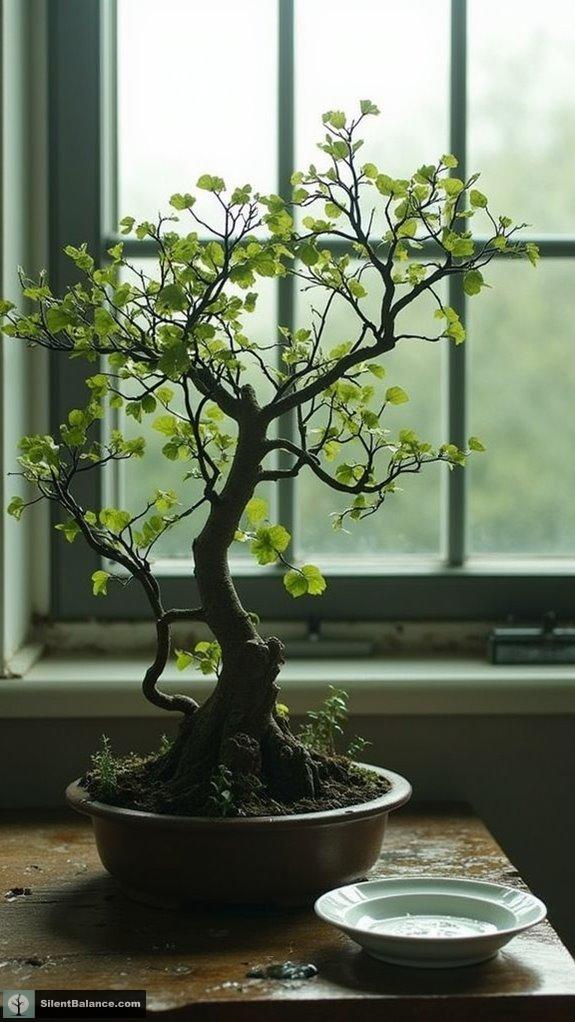
Pruning is more than just a necessity for bonsai; it’s like sculpting a masterpiece that tells a story through every branch and leaf.
I’m not just cutting here; I’m balancing tree health with art. Each heading-back and structural pruning cut carries weight—literally! I’m shaping the tree’s character while promoting new growth for a bushier look. The process embodies the art of patience, as bonsai trees can take decades to mature and reveal their full beauty.
Don’t you love how a simple turn of a branch can transform the whole vibe?
A subtle twist of a branch can redefine the entire essence of the tree.
Using precise tools like concave cutters, I minimize scarring and preserve visual harmony. It’s an expressive dance, where every snip reflects my personal vision and the culture-rich history of bonsai.
Ready to join me?
Symbolism of Resilience: Legends in Every Bend
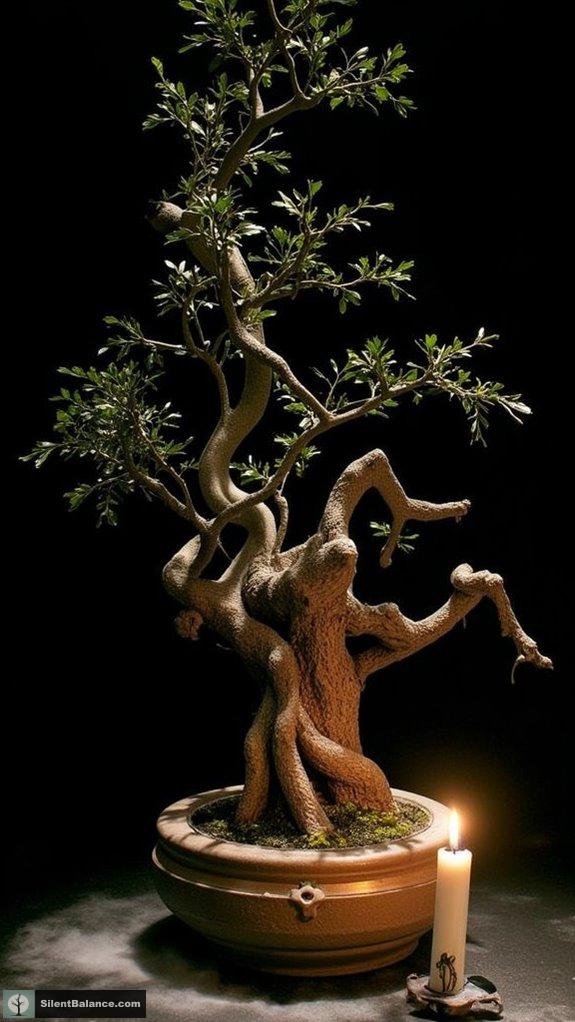
There’s something magical about the way a bonsai twists and turns, each bend and curve whispering stories of resilience and survival.
Ever heard of the Yamaki Pine? It’s an incredible bonsai that survived the Hiroshima bombing—a true symbol of endurance.
These trees, witnessing wars and transform through history, encapsulate our struggles and triumphs in their very structure. Isn’t that astonishing?
Each snip during pruning reflects our fight against adversity; we shape their growth, much like we navigate life’s challenges. Furthermore, bonsai cultivation is deeply intertwined with spiritual significance, showcasing the profound respect for nature in both Japan and China.
The Art of Impermanence: Embracing Wabi-Sabi
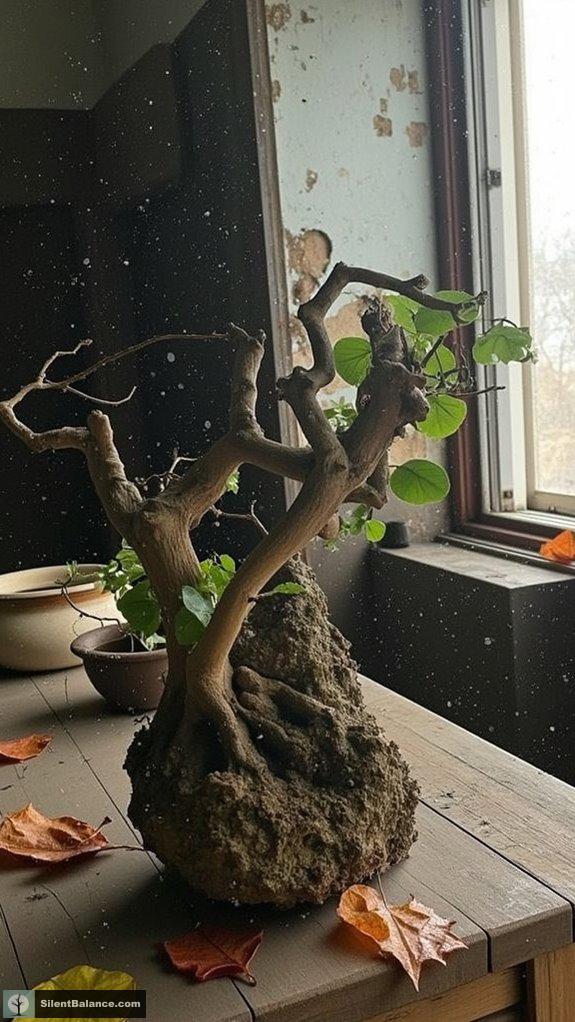
Bonsai invites us into a world where the beauty of impermanence reigns supreme, offering a revitalizing take on life’s fleeting moments.
Ever noticed how a tree with twisted roots and rough bark tells a story? That’s wabi-sabi—embracing imperfections and celebrating the unique!
In bonsai, we learn to find grace in flaws, like scars or asymmetrical shapes. They’re not mistakes; they’re character!
What’s more satisfying than nurturing a tree that evolves over time, mirroring our own lives?
Shaping Narrative: The Influence of Climate and Time
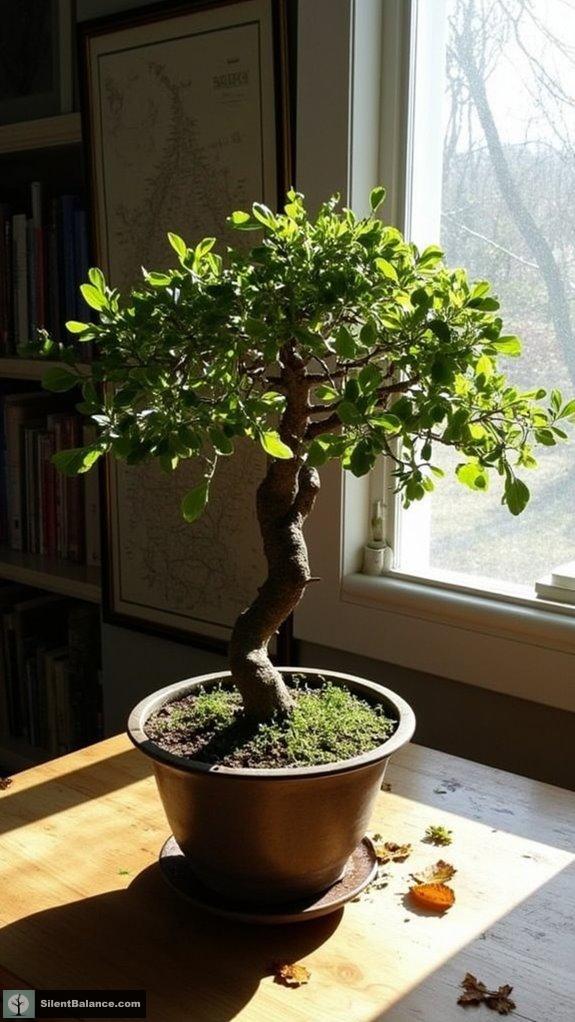
While experimenting on bonsai, I often find myself reflecting on how climate and time shape the stories each tree tells.
Rising temperatures push me to embrace heat-tolerant species, like the Japanese Black Pine, as I carefully adjust my watering routine. Do you ever wonder how seasonal changes mold a bonsai’s narrative?
During winter, I protect them from harsh winds, keeping them cozy in greenhouses, while pruning in spring heralds new growth.
Each snip I make reflects the ancient rhythms of nature, sculpting the tree’s compact form. It’s a dance between control and adaptability, and every bonsai thrives as a reflection of these living chronicles.
Cultural Transmission: Preserving Stories Through Pruning
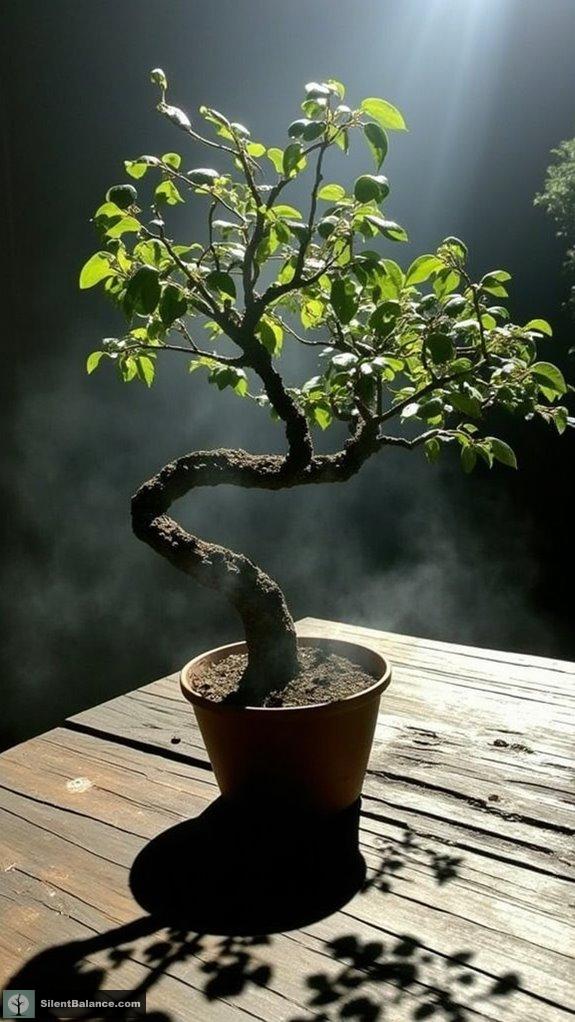
Growing a bonsai isn’t just about nurturing a tiny tree; it’s about weaving a tapestry of stories that spans centuries.
When I prune, I’m not just shaping foliage; I’m honoring ancient traditions. Each trim echoes tales from over 2,000 years ago, with every cut reinforcing the ideals of balance and impermanence, thanks to Zen influences.
Pruning becomes a ritual, where each cut embodies centuries of tradition and the essence of balance and impermanence.
Have you ever thought about how these cuts channel mythical terrains?
It’s like every branch whispers secrets of aristocratic tales and spiritual wisdom.
Contemporary Voices: Evolving Styles and Interpretations
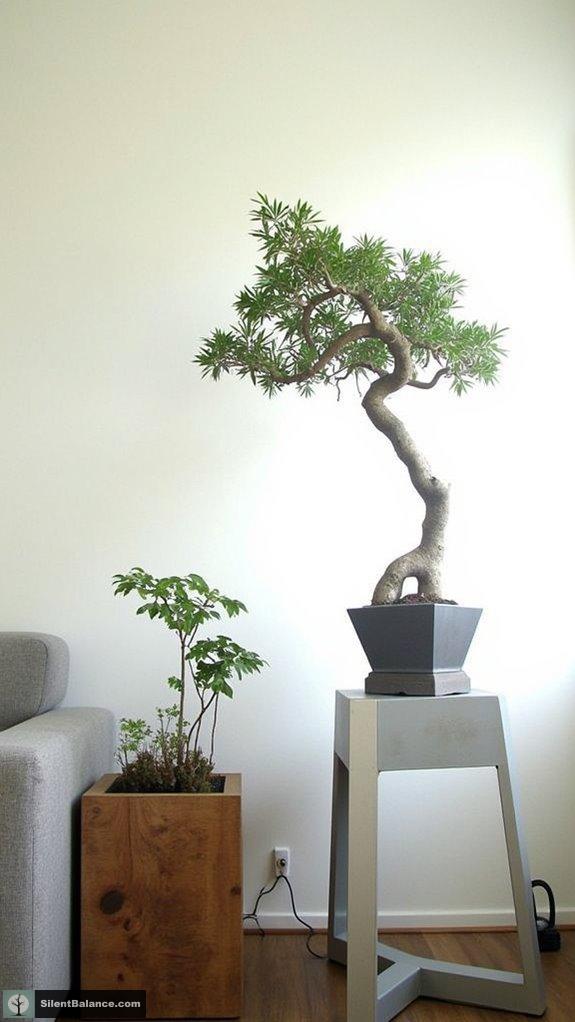
There’s something exhilarating about witnessing the evolution of bonsai in the contemporary scenery.
Today’s styles blend minimalist design with traditional finesse, creating living sculptures that draw the eye. Have you seen those geometric pots and bold stands? They seamlessly anchor bonsai as chic interior accents.
Plus, stylish innovations like forest groupings and artistic deadwood designs push the boundaries of this ancient art.
In urban settings, bonsai can transform tight spaces into tranquil retreats. With smart tech gadgets monitoring light and moisture, bonsai care is accessible to everyone.
Why not bring a piece of nature into your home and showcase your unique style?
Bonsai Tree Symbolism
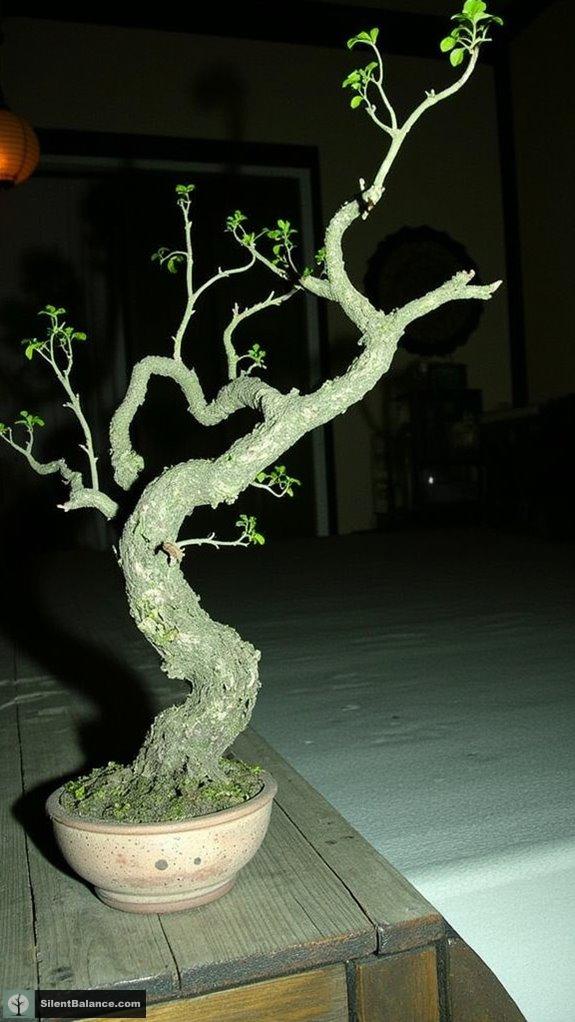
As we admire the striking forms and artistic expressions of contemporary bonsai, it’s easy to overlook the profound symbolism rooted in this practice.
You see, each bonsai represents patience, balance, and harmony—qualities we often seek in our busy lives. These miniature marvels serve as constant reminders of our control over nature and our inner peace.
Ever thought about how a simple clip can transform a tree, just like life? Isn’t that a powerful metaphor?
A simple snip can reshape not just a tree, but our lives—what a profound reminder of transformation.
Each species carries unique significance, making them perfect gifts that inspire reflection and personal connection.
Tree Symbolism
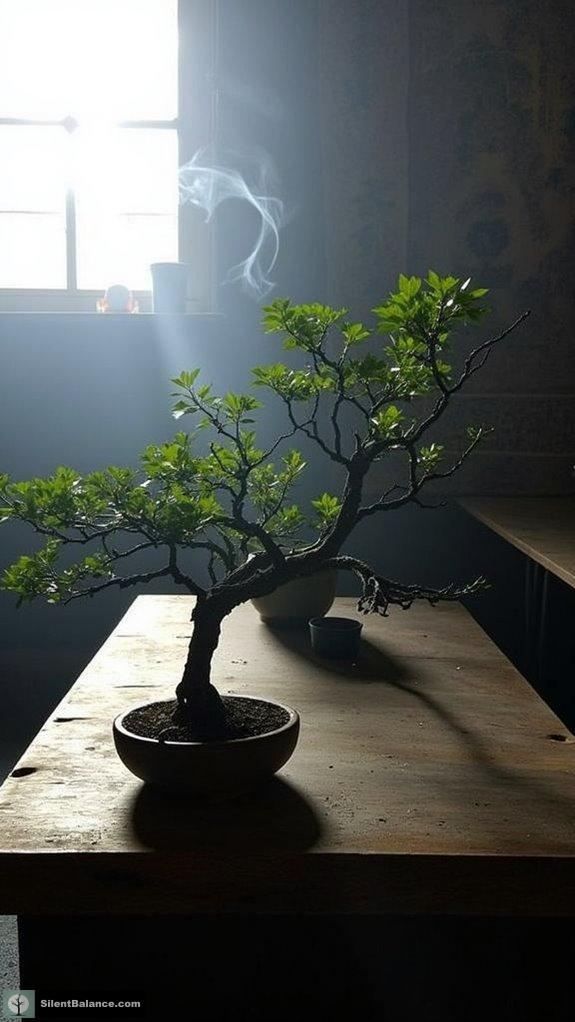
Trees have long been celebrated as powerful symbols in many cultures, with their majestic stature and elaborate forms speaking volumes about life’s complexities.
Take the Bodhi tree, for instance—it’s not just any tree; it’s the embodiment of wisdom and enlightenment in Buddhism.
Or consider the mighty oak, revered by Druids for its strength and divine connection. Isn’t it fascinating how a simple tree can represent themes of immortality, interconnectedness, and even messages from our ancestors?
In bonsai, we harness these symbolisms, guiding these miniature giants to reflect deep-rooted traditions, resilience, and our desire for control—what a beautiful dance of nature and humanity!
Questions and Answers
How Do I Start My Own Bonsai Pruning Journey?
To start my bonsai pruning journey, I grab sharp scissors, remove dead branches, and envision my tree’s shape. I’ll make clean cuts, respect growth patterns, and enjoy watching my bonsai flourish as I learn.
What Tools Are Essential for Bonsai Pruning?
Did you know that using the right tools can boost your bonsai health by 30%? I always rely on pruning shears, concave cutters, and specialized scissors to maintain control and precision in my bonsai pruning journey.
Can Any Tree Species Be Used for Bonsai?
I’ve found that not every tree species works for bonsai. Some thrive while others struggle. It’s essential to choose species that bud on old wood, have smaller leaves, and tolerate root pruning for successful cultivation.
How Often Should Bonsai Trees Be Pruned?
You won’t believe how my bonsai thrives with the right pruning schedule! I prune fast-growing trees multiple times a year, while my slow-growers get their roots pruned every few years. Timing really matters!
What Are the Common Mistakes in Bonsai Pruning?
When I prune my bonsai, I’ve learned to avoid common mistakes like over-pruning or using dull tools. Timing matters, too; I always wait for the right season to guarantee my tree thrives and recovers well.
References
- https://www.triptojapan.com/blog/exploring-the-art-of-japanese-bonsai-cultivating-miniature-beauty
- https://www.bonsaiempire.com/origin/bonsai-history
- https://mymodernmet.com/bonsai-tree-history/
- https://en.wikipedia.org/wiki/Bonsai
- https://avalonplants.com/blogs/news/the-art-of-bonsai-history-and-cultural-background
- https://thunderstruckbonsai.com/a-little-bonsai-history-for-beginners/
- https://www.bjornbjorholm.com/bonsai-history-japan/
- https://www.toki.tokyo/blogt/2015/9/16/the-art-of-japanese-bonsai
- https://deeperjapan.com/the-history-of-bonsai
- https://hookedonbonsai.com/bonsai-pruning-tools/

- 11 Best Luxury Sandalwood Candles for 2026 - June 19, 2026
- 11 Best Woven Wicker Gift Baskets for 2026 - June 19, 2026
- 11 Best High Powered Binoculars for 2026 - June 19, 2026
