
Bonsai art traditions really capture an amazing journey, don’t they? Starting from the ancient Chinese practice of penjing, which focused on detailed Scenery, it transformed into the elegant Japanese bonsai style, embracing wabi-sabi—finding beauty in imperfections. Both styles are rich in symbolism and philosophy, reflecting mindfulness and nature’s resilience. It’s fascinating how techniques like wiring and pruning not only shape the trees but also our own personal growth. Stick around, and you’ll uncover more about these vibrant traditions!
Quick Takeaways
- Bonsai originated from penjing in China, focusing on miniature environments blending trees, rocks, and water for artistic expression.
- Chinese bonsai emphasizes cultural narratives, while Japanese bonsai reflects wabi-sabi’s beauty in imperfections and transience.
- The transition from mystical Daoist roots to Zen-inspired bonsai highlights cultural adaptation and mindfulness in care practices.
- Artistic techniques like wiring and pruning transform bonsai into a sculptural expression of potential and growth.
- Modern bonsai practices have embraced global influence, allowing local species to enhance aesthetics and promote environmental benefits.
Historical Roots: the Journey From Penjing to Bonsai
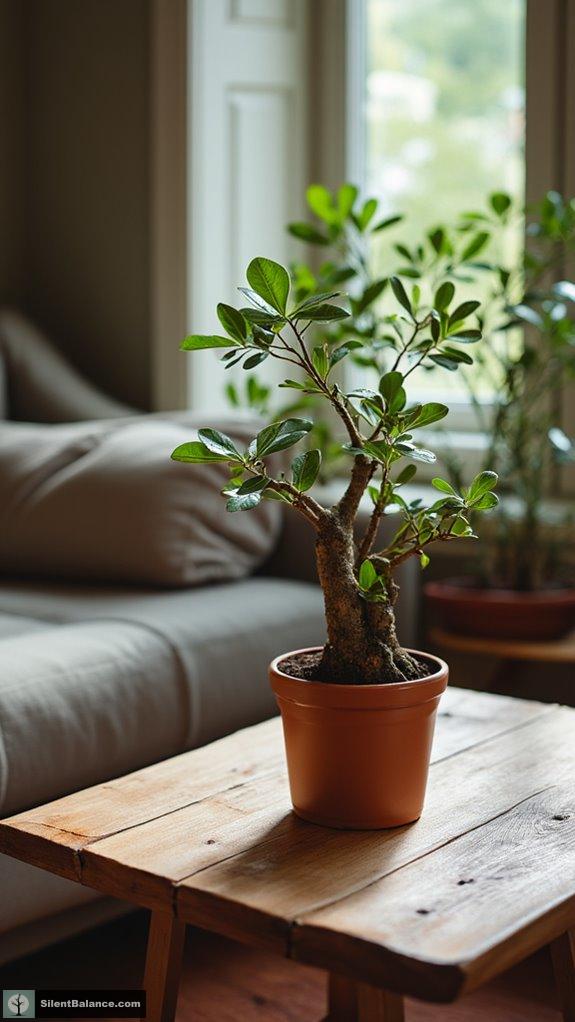
When you plunge into the world of bonsai, it’s pretty fascinating to uncover its roots in penjing—the original Chinese art form that laid the groundwork for this enchanting practice.
Dating back to 500 BC, penjing emphasized miniature environments infused with mystical power. It is believed that the development of ceramics in China enhanced the bonsai art, with trees admired in beautiful containers.
Imagine this: elite gardens adorned with scaled-down trees, rocks, and water, all crafted for contemplation.
Elite gardens showcase miniature trees, rocks, and water, all meticulously designed for peaceful contemplation.
It’s no wonder techniques like lacerating bark and scaffolding emerged, shaping our modern bonsai culture.
Ever tried bending a branch with bamboo? Now that’s what I call commitment!
Aesthetic Principles: Chinese Symbolism vs. Japanese Philosophy
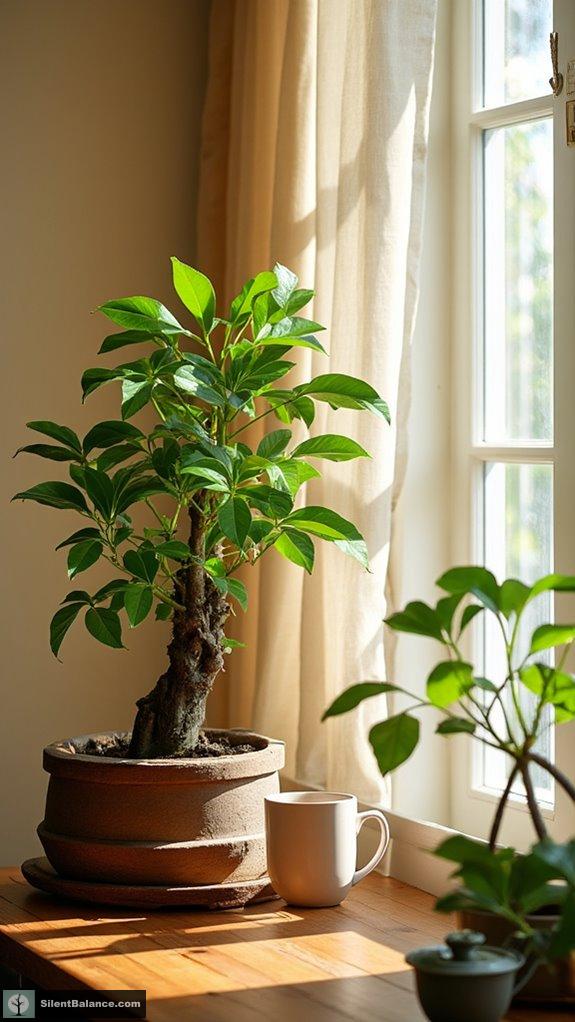
Stepping into the domain of bonsai aesthetics, anyone can’t help but marvel at the rich tapestry woven by Chinese symbolism and Japanese philosophy.
Chinese bonsai, or penjing, embodies power with its narratives, where each twist of bark represents cultural refinement and philosophy.
It’s all about creating a cosmic connection through miniature environments.
In contrast, Japanese bonsai thrives on elegance; think wabi-sabi—embracing imperfections and the beauty of transience.
Cultural Adaptation: From Mysticism to Zen Influence
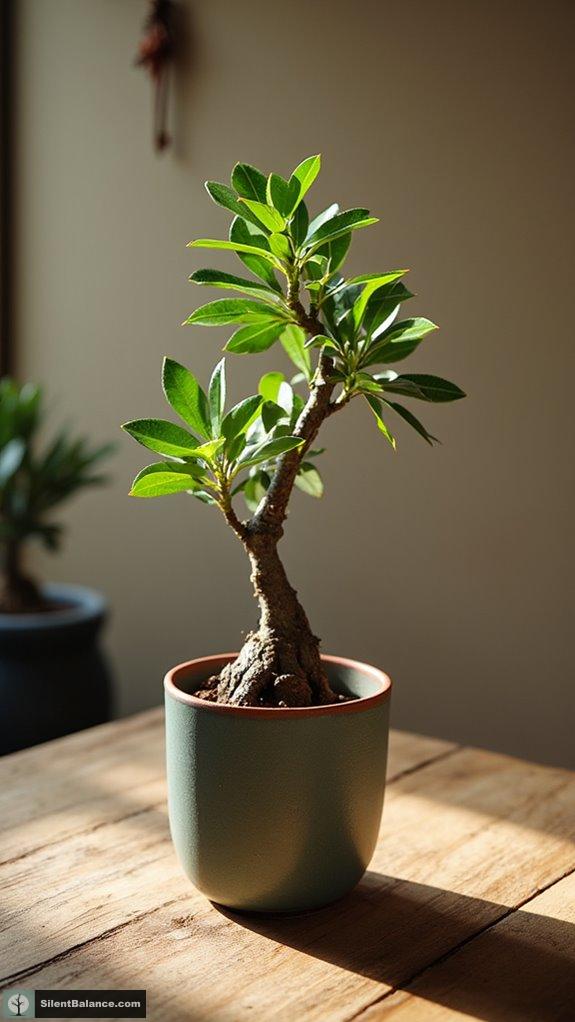
Bonsai’s evolution from its mystical Chinese roots to a more Zen-centric practice in Japan isn’t just fascinating; it’s a reflection of how cultures can morph art over time.
Bonsai’s journey from mystical origins to Zen practice beautifully illustrates the cultural evolution of art and mindfulness.
Initially tied to mystical Daoist ideas, bonsai’s journey transformed as Zen monks introduced potted environments to Japan. Here, it’s less about magical properties and more about cultivating mindfulness and tranquility.
Isn’t it incredible how a simple tree can embody concepts like wabi-sabi—finding beauty in imperfection?
As we prune and nurture these living artworks, don’t we also shape ourselves?
It’s a powerful blend of aesthetics and introspection, redefining our connection with nature and ourselves.
Artistic Techniques: Evolution of Styles and Tools
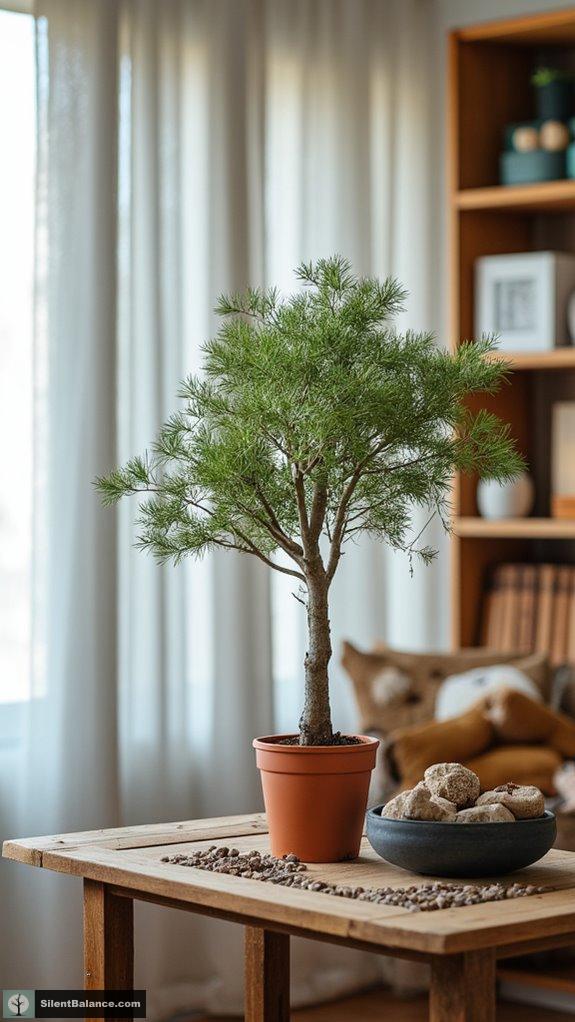
As we explore the artistic techniques surrounding bonsai, it’s thrilling to realize how these methods have evolved over centuries, shaping not just the trees but also the very culture of their caretakers.
From early Chinese imaginings of natural forms to Japan’s formal styles like chokkan and kengai, every chop and curl tells a story.
Have you tried wiring? It’s like a dance, guiding branches into place!
Pruning isn’t just clipping; it’s sculpting potential.
And those tools? Concave cutters and copper wire work wonders, ensuring your artistry is both precise and powerful.
Are you ready to elevate your bonsai game? Let’s get growing!
Symbolic Interpretations: Nature, Resilience, and Harmony
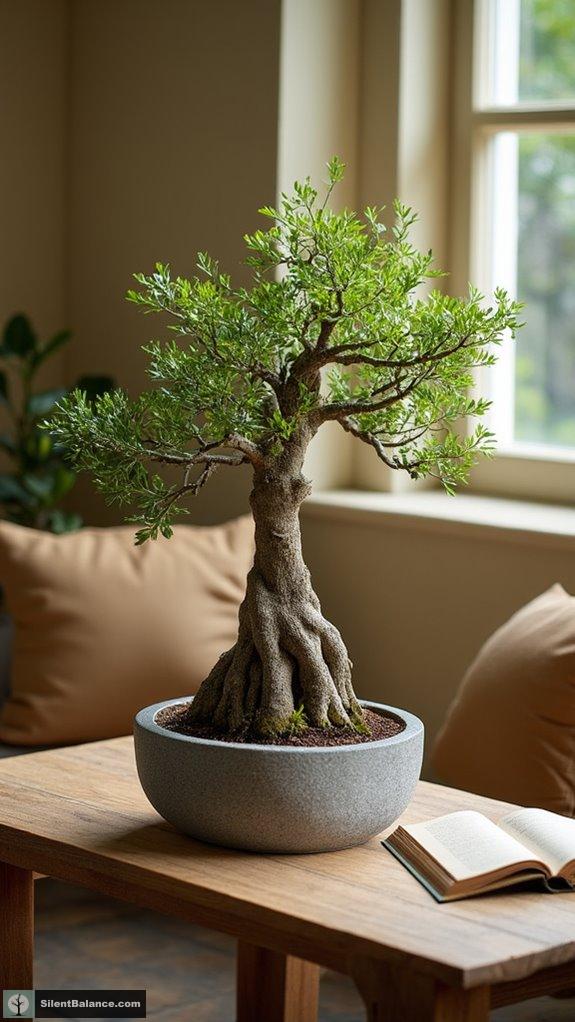
Harmony in bonsai embodies more than just aesthetic appeal; it expresses a profound relationship with nature that captivates both the mind and spirit.
You see, bonsai reveals balance, simplicity, and resilience, all bottled up in those tiny trunks.
Ever notice how they thrive in constraints? That’s nature’s way of showing us strength!
Like a wise willow, it teaches us to bend, not break, with life’s challenges.
And that sense of peace? It echoes through your soul, nurturing mindfulness and connection.
So, why not invite a little bonsai into your world?
After all, isn’t it time we embrace nature’s enduring spirit?
Modern Practices: Global Influence and Local Expressions
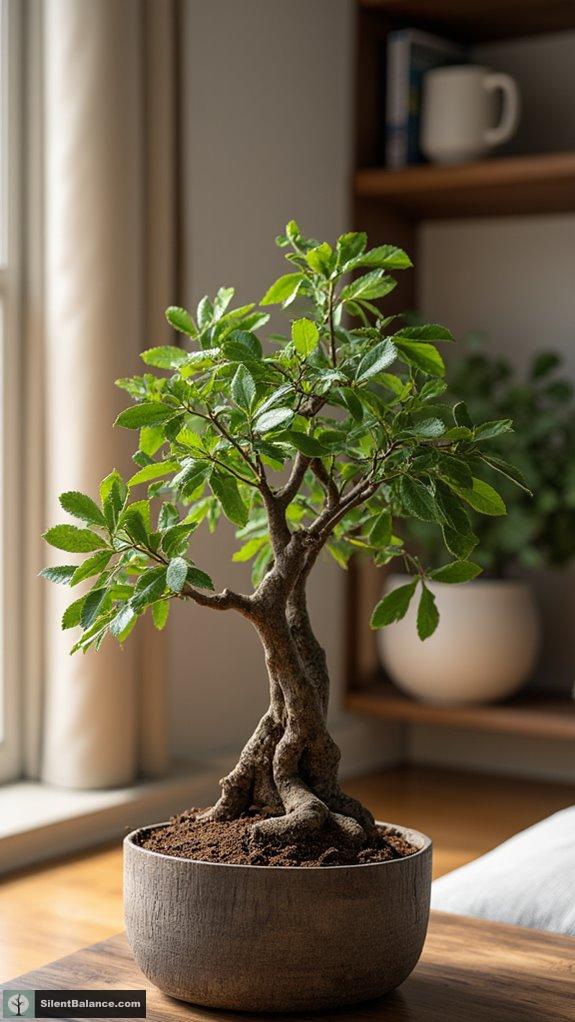
While diving into the world of bonsai, you’ll discover its modern practices blooming like a well-pruned tree.
It’s fascinating how bonsai has sprouted worldwide, with enthusiasts from Tokyo to Toronto adopting local species. Ever tried shaping a banyan tree? I have, and let me tell you, it’s an experience!
In urban spaces, compact bonsai not only beautify but also purify our air—talk about multitasking!
With clever techniques like clamping and grafting, we’re fusing passion and science to craft living art.
The Philosophical Dialogue: Nature, Intent, and Spiritual Reflection
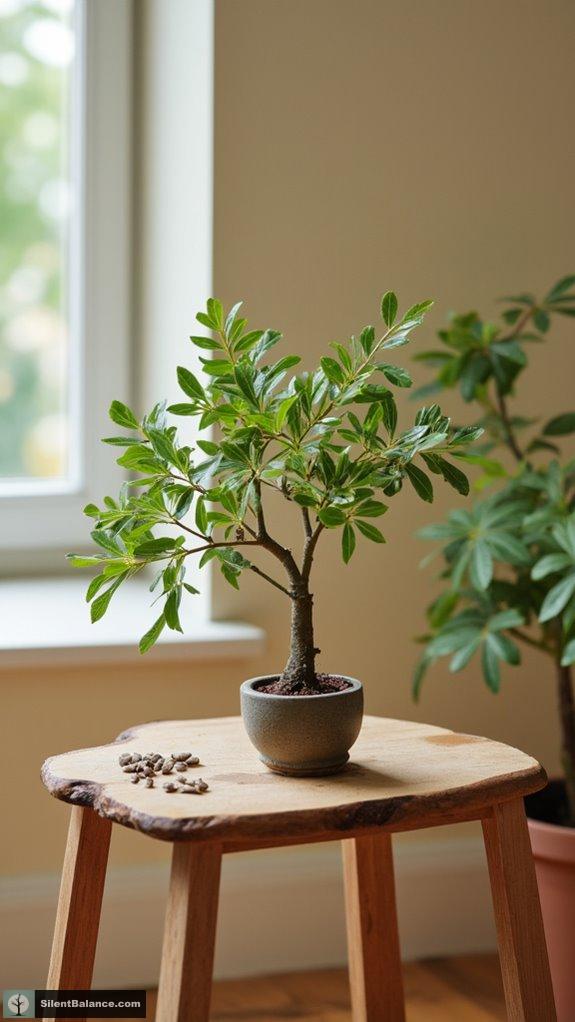
Have you ever marveled at how a tiny tree can pack such profound philosophical punch?
Bonsai isn’t just about aesthetics—it’s a grand dialogue between nature and our artistic intent. Each tiny tree, meticulously pruned and wired, becomes a microcosm of larger ecosystems, reflecting balance, resilience, and the beauty of imperfection.
Ever felt the meditative pull of tending to one? It’s about mindfulness, where every snip and twist is a conversation with the cosmos.
With bonsai, we engage in a soulful exchange, reminding us that nurturing art can echo vast spiritual truths. So, what’s your mini environment saying to you today?
Cultural Heritage and Resilience
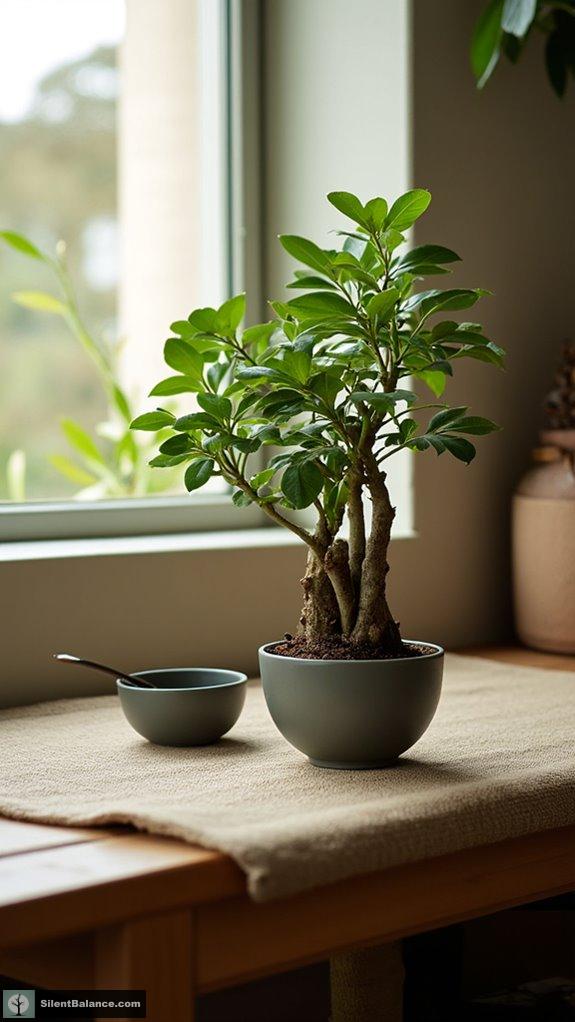
Cultural heritage isn’t just a relic of the past; it evolves, and bonsai beautifully exemplifies this dynamic.
Think about it: this art form hasn’t only withstood political storms but also adapted over centuries.
From ancient *penjing* to Japanese minimalist styles, bonsai reflects resilience and respect for nature.
Isn’t it fascinating how a little tree can embody patience, harmony, and Zen principles?
Through exhibitions and cultural exchanges, bonsai thrives, bridging East and West while remaining a symbol of sophistication.
Moreover, bonsai signifies the harmony between nature and humanity, which is a central theme in both Japanese and Chinese cultures.
Questions and Answers
What Types of Trees Are Best for Bonsai Cultivation?
If you’re diving into the bonsai world, you’ll want to start with resilient species like Chinese elm and Ficus, both forgiving for beginners.
Juniper’s your go-to for wiring practice, while pines challenge you with advanced techniques.
Ever tried shaping a Fukien tea tree? It’s a delight!
Just keep in mind, bonsai isn’t just about pretty plants; it’s about mastering the art.
What tree will you showcase as your bonsai masterpiece?
How Often Should Bonsai Be Watered and Fertilized?
I water my bonsai when the soil feels dry to the touch—trust me, overwatering’s a killer!
In spring and fall, I typically water once a day, and in those sizzling summer months, I might do it three times.
When fertilizing, every 2 to 4 weeks during growth season works wonders; just be cautious in winter.
It’s all about observing your little tree buddy and adjusting as needed—who knew we could bond over H2O and nutrients?
Can Bonsai Be Grown Indoors Year-Round?
Absolutely, you can grow bonsai indoors year-round, but stick to tropical species like Ficus or Fukien Tea.
These beauties thrive without the winter snooze that temperate trees crave. Just keep in mind, they love bright, indirect sunlight—your south-facing window is their happy place!
Keep that humidity up, too—think misting and humidity trays.
It’ll help keep those leaves shiny and prevent any indoor drama. Who knew tiny trees could bring so much joy?
What Tools Are Essential for Bonsai Care?
You wouldn’t believe the power of the right tools for bonsai care!
I can’t fathom tending to my little green friends without my trusty pruning shears, concave cutters, and wire cutters at my side.
Ever tried sculpting a masterpiece with the wrong tools?
Exactly! Those fine scissors for delicate trimming and a bonsai turntable are invaluable for precision work.
Trust me, investing in quality gear makes every pruning session a joy, not a chore!
How Do I Choose the Right Pot for My Bonsai?
Choosing the right pot for your bonsai isn’t just a decision; it’s an art form!
You want a pot that matches your tree’s vibe, right?
Think about materials—stoneware is where it’s at for moisture retention.
Size matters, too! A pot’s height should align with your trunk’s thickness for balance.
And don’t forget drainage holes—without those, your roots might just throw a tantrum!
Ready to elevate your bonsai game? Let’s get potting!
References
- https://thunderstruckbonsai.com/a-little-bonsai-history-for-beginners/
- https://www.bonsaiempire.com/origin/bonsai-history
- https://deeperjapan.com/the-history-of-bonsai
- https://www.bjornbjorholm.com/bonsai-history-japan/
- https://www.wbffbonsai.org/bonsaihistory
- https://abanahomes.com/blogs/news/penjing-bonsai-history-style-and-how-to-make
- https://en.wikipedia.org/wiki/Penjing
- https://www.yorkshirebonsai.co.uk/blogs/news/the-origins-of-bonsai-a-journey-through-time-and-culture
- https://www.ultra-unlimited.com/blog/the-ancient-art-of-bonsai-a-bridge-between-spirituality-ecology-and-global-appreciation
- https://indoor-bonsai-care.muragon.com/entry/109.html

- 11 Best Luxury Sandalwood Candles for 2026 - June 19, 2026
- 11 Best Woven Wicker Gift Baskets for 2026 - June 19, 2026
- 11 Best High Powered Binoculars for 2026 - June 19, 2026
