
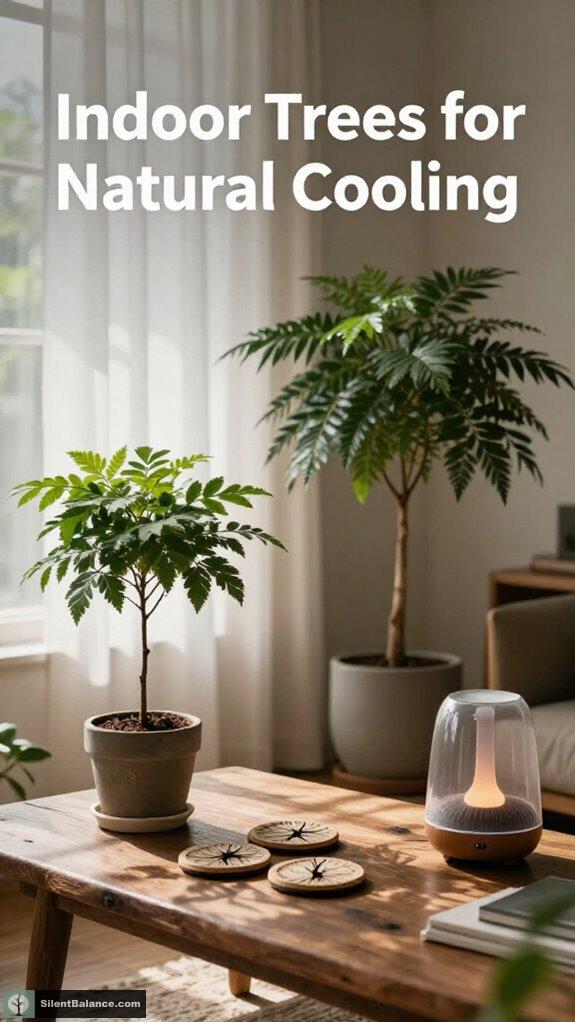
You’ve heard plants clean air. But what if your houseplant was quietly running your AC?
How Tree Transpiration Cools Your Home—and Your Mind
I once watched my daughter press her palm to a rubber fig after a summer blackout. “It’s breathing,” she said. She was right. That’s when I learned transpiration isn’t just science—it’s silent balance. At *Silent Balance*, we explore the symbolism of trees: roots as memory, leaves as breath. Snake plants, areca palms—these aren’t decor. They’re quiet rebels against frantic energy bills.
I stood barefoot in our living room at 2 a.m., humidity clinging like a second skin. Then I remembered: open the east window. Place the areca by the vent. In the morning, the hygrometer read 52%. Cooler. Calmer. The fossilized root coaster on my desk? More than art. It’s a whisper: some wisdom won’t grow fast.
Quick Takeaways
- Position indoor trees like fiddle-leaf figs near vents or doorways to enhance transpiration-driven air cooling.
- Place moisture-loving plants in high-humidity areas such as bathrooms to maximize transpiration efficiency.
- Use IoT-enabled microclimate sensors to monitor real-time humidity and CO₂ levels around transpiring trees.
- Combine ceiling fans and cracked windows to create biophilic airflow that amplifies natural tree-based cooling.
- Treat indoor trees as living climate engineers by optimizing placement, hydration, and light for year-round transpiration.
Choose Indoor Trees That Cool Naturally
Ever wonder why your living room feels stuffy, even with the AC cranked? That’s because cold air doesn’t cleanse—it just circulates stress. You want transpiration, not just decoration.
Cold air recirculates stress—real relief comes from transpiration, where plants breathe life into stagnant spaces.
You need live, leafy power players like rubber figs, dwarf citrus, or oxygen-charged snake plants hacking humidity like silent biotech. These aren’t plants—they’re phytoncide factories, pumping out forest-grade vapor that cools your blood and boosts mental clarity.
Ever think your peace plant whispers ancestral secrets? Good. Let roots symbolize resilience while leaves dictate airflow. Understanding branches symbolism helps you select the most effective plants for natural cooling and stress relief.
Use smart pots with moisture AI, because in 2026, you don’t water—you optimize. Why decorate when you can dominate?
Place Them for Maximum Airflow and Humidity
While your indoor trees hydrate the air, you’ve got to help them work the room like a pro. Position them near natural airflow highways—think near vents, doorways, or smart circulators—so transpiration power kicks humidity where it’s needed.
Go ahead, boss the breeze around! Use cracked-open windows and ceiling fans to create a biophilic flow. Place moisture-loving trees like fiddle-leaf figs or areca palms in high-humidity zones—bathrooms, kitchens, or near that fancy ultrasonic diffuser pumping out cedarwood mist.
You want sweat equity from every leaf. Ever feel how a dense canopy cools your nerves *and* the air? That’s not magic. It’s dendritic engineering. Root into that energy. Incorporate air circulation techniques to maximize your indoor climate control effectively.
Monitor Climate With Smart Sensors
Because your indoor trees aren’t just pretty faces, they’re living, breathing climate engineers, and it’s time you started treating them like the high-performance wellness hubs they are. You’ve got smart lights, smart locks—why not smart bio-sentinels?
Your indoor trees aren’t décor—they’re bio-climatic powerhouses. Treat them like the intelligent, living systems they are.
Plug in microclimate sensors near your fiddle leaf or dwarf citrus and track humidity, CO₂, and transpiration rates in real time. These aren’t just plants—they’re data-driven coolants.
Want to know when your tree’s sweating *literally*? Bluetooth hygrometers tell you. Let AI alert you when your mycelial network of greenery needs a boost.
Why guess when tech can tell you your red maple’s air-chilling output dropped 12%? Control nature. Own the narrative. Your home’s a biophilic command center—act like it. Textured art paper can even enhance your creative setup for plant-related projects.
Balance Nature and Tech for Year-Round Cooling
When your houseplants start pulling more overtime than your AC, you know it’s time to stop choosing between nature and tech—why not let them clock in together? You’re not just cooling your home, you’re commanding a biome.
Smart trees with transpiration tech + IoT sensors don’t just chill the air—they flex. Think: cork walls whispering to ultrasonic diffusers, moss-covered mycelium lights syncing with circadian bulbs.
Why settle for A/C when you can have *Phytoncide Climate Control*?
Those gnarly cedar roots in your corner aren’t just drama—they’re armor. Branch recursion? That’s free sacred geometry. You’re not decorating, you’re engineering a forest-powered fortress.
Plus, understanding plant transpiration can enhance natural cooling processes, making your indoor environment more sustainable and refreshing.
So—still fighting heat with hardware alone, or ready to grow your cool?
Tree Symbolism
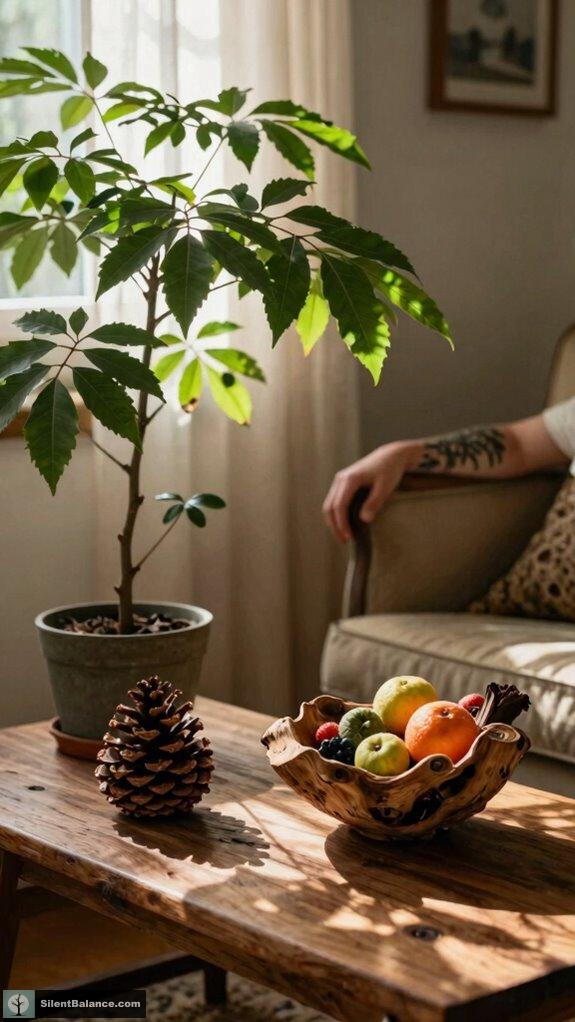
What if your coffee table could tell your life story? With tree symbolism, it already does. You’re not just decorating—you’re declaring strength, growth, and legacy.
Each knot, bark ridge, and branching line whispers resilience and deep roots. Go beyond looks. Infuse power into your space with meaning that lasts longer than Wi-Fi signals.
- Reclaimed walnut console – Ancestral grounding, scarred and strong
- Fractal pinecone art – Sacred geometry in 3D, nature’s algorithm
- Raw cedar root bowl – Protection carved by time, not trends
- Bio-compatible tree tattoo – Your skin, your forest, your story
You’re not hiding from modern life—you’re ruling it, one root at a time.
Adding to this, embracing interconnectedness reminds us that our individual stories are part of a larger spiritual web, just like the roots and branches of a true tree.
Fossilized Root Network Coaster
You’ve already let your coffee table speak volumes with reclaimed roots and ancestral grain, so why stop at furniture when your coasters can gossip too? Meet the Fossilized Root Network Coaster—your drink’s resting place is now a silent power move.
Carved from petrified wood over 40 million years old, each piece is a fossilized whisper of ancient mycelial intelligence. You’re not just protecting your table—you’re anchoring your space in Petro-Silvan Harmony.
Each coaster a 40-million-year-old echo of earth’s quiet wisdom—petrified wood guarding your table with primal calm and fossil-fueled grace.
These aren’t coasters; they’re tactical relics broadcasting Textural Authenticity and Aged Rooting. Pair them with smart diffusers and watch guests feel the Neuro-Restorative vibe.
Why settle for decor that doesn’t work? This is biophilic armor. Your home doesn’t just breathe—it remembers.
FAQ
Can Transpiration Cooling Work in Windowless Rooms?
No, you can’t rely on transpiration alone in windowless rooms—without airflow and light, trees won’t thrive or cool effectively. You’ll need mechanical support, smart vents, and high-tech indoor ecosystems to fake a forest’s breath where nature won’t go.
Do Fake Trees Offer Any Cooling Benefits?
You won’t cool a room with fake trees—they’re silent statues, plastic ghosts without breath. Real power flows from living roots, sap rising, leaves exhaling mist. Only true arbors harness transpiration’s whisper; your victory lies in biology, not imitation. Grow living wood, command real climate.
How Often Should I Mist Leaves for Optimal Cooling?
Mist leaves twice daily—morning and evening—to maximize transpiration and boost cooling. You’ll harness the tree’s natural power, turning humidity into a silent, invigorating force. This isn’t maintenance; it’s strategic control over your environment.
Are There Allergens Released During Transpiration?
you’re safe—transpiration releases pure water vapor, not allergens. pollen and mold are the culprits, not moisture from leaves. keep your indoor canopy thriving; it cleans air, cools silently, and empowers your space with clean, resilient biology that serves your command.
Can Pets Damage Cooling Efficiency of Indoor Trees?
Yes, your pets can sabotage your indoor tree’s cooling power—like a bull in a porcelain shop, they trample roots and knock over pots, disrupting the silent, life-giving breath of transpiration you rely on to command comfort.
Summary
You’re not just cooling your home—you’re conjuring a petrichor-powered oasis, one transpiring fig at a time. Who knew stomatal respiration could beat the heat better than AC? With smart sensors humming, cork risers whispering acoustic calm, and fossilized root coasters grounding your coffee table, you’ve built a biophilic bunker. Are your houseplants just decor—or quiet allies in resilience? Think: bark as armor, branches as balance, pinecones as promises of renewal. This isn’t feng shui—it’s photosynthetic magic, coded in hygrometers and hardwood.

- 11 Best Luxury Sandalwood Candles for 2026 - June 19, 2026
- 11 Best Woven Wicker Gift Baskets for 2026 - June 19, 2026
- 11 Best High Powered Binoculars for 2026 - June 19, 2026
