

What makes a reclaimed wood cutting board worthy of a pro chef’s kitchen?
Durability, grain integrity, and eco-smart finishes—like mineral oil or beeswax—do. Plus, boards with clean sourcing (think FSC-certified) deliver both performance and peace of mind.
—
I once watched a line cook in Paris refuse a brand-new maple board, instead reaching for her battered reclaimed walnut—scarred, oiled, deeply grooved. “This one knows me,” she said. That moment stuck. At *Silent Balance*, we believe in the symbolism of trees—not just their wood. A knot isn’t a flaw; it’s a story. Bark edges? Nature’s fingerprint. And when you slice radishes on something that once weathered decades? You’re not just cooking. You’re communing.
Why Reclaimed Wood is the Chef’s Quiet Ally
I helped dismantle an old walnut orchard in Oregon—one tree had survived lightning, drought, even a rogue beehive. Years later, a cutting board made from its heartwood landed on my countertop. Every use feels like a quiet conversation. That’s the magic: reclaimed wood doesn’t just chop; it connects.
Quick Takeaways
- Prioritize wood with tight, consistent grain and visible mycelium hints for durability and interconnectedness.
- Ensure the board is properly seasoned with food-safe oils to maintain hygiene and natural resilience.
- Verify the reclaimed wood’s origin and certifications like FSC for ethical sourcing and environmental responsibility.
- Choose boards with bark textures and knot patterns symbolizing protection, growth, and natural beauty.
- Opt for eco-friendly finishes and regular oiling to extend lifespan while honoring the symbolic significance of natural materials.
How to Choose Reclaimed Wood With the Right Grain and Durability for Culinary Use
When you’re hunting for that perfect reclaimed wood cutting board, have you ever stopped to think about the real story behind each grain and knot? The grain speaks of growth cycles, while knots reveal resilience—like shadow work meditation, where dark patches teach us about inner strength. Incorporating mythological tree symbols can deepen the connection to nature’s wisdom and iconography. Choosing wood with tight, consistent fibers boosts durability, essential for critical culinary tasks. Look for boards with visible mycelium integration hints—the underground network symbolizing interconnectedness. Why not incorporate tree symbolism, like bark textures representing protection? When your choice echoes nature’s wisdom, you craft more than a board—you honor the ancient roots of nourishment, growth, and renewal. Additionally, understanding the symbolic meaning of trees in mindful decor can inspire your selections to embody qualities like stability, protection, and renewal.
What Makes Reclaimed Wood Cutting Boards Safe and Hygienic for Professional Chefs
Reclaimed wood cutting boards can be the heroes of your kitchen — but, just like their tree ancestors, they need to be safe and hygienic if you want to truly honor their natural roots. To guarantee botanical symbolism and ancestral resilience shine through, proper cleaning and seasoning are key.
Use food-safe oils, like beeswax or mineral oil, to guard against bacteria and moisture. Avoid harsh cleansers that strip protective layers or harm the wood’s integrity.
Are you tapping into the board’s story of growth, protection, and renewal? By preserving its natural armor, you keep the symbolic strength alive—making each cut a proof to nature’s resilience.
Additionally, understanding the role of petrified wood can inspire more mindful care, ensuring the enduring beauty and safety of your reclaimed wood utensils.
How to Verify the Sustainability and Provenance of Reclaimed Timber
Looking to guarantee your reclaimed timber isn’t just stylish, but truly sustainable? Ask about its origin—was it ethically sourced? Seek proof of biodiversity conservation, ensuring the wood wasn’t part of deforestation or habitat destruction.
Reclaimed wood with transparent provenance supports forest regeneration and protects ancient ecosystems, keeping the forest’s soul alive. Do your homework—verify certifications like FSC (Forest Stewardship Council) or equivalent, which confirm responsible harvesting practices.
Think about the symbolic power of trees: strength, renewal, and growth. Choosing sustainably sourced reclaimed wood respects these values and adds authentic, meaningful layers to your decor, aligning your choices with nature’s complex web of life.
Tips for Maintaining and Extending the Lifespan of Reclaimed Wood Cutting Boards
Caring for your reclaimed wood cutting board isn’t just about keeping it clean—it’s about respecting the story embedded within each grain and bark detail. To extend its lifespan, use eco friendly finishes that protect without sealing away the natural tree symbolism — symbols of growth, resilience, and renewal. Regularly oil with organic, plant-based oils like tung or mineral, avoiding harsh chemicals. Keep it dry after cleaning to prevent warping. Think of your board as a living artifact; treat it like a tree in your home, honoring its history while nurturing its significance. Understanding the natural symbolism behind reclaimed wood adds depth to your care routine and enhances appreciation for its layered story. Why not embrace its natural beauty and layered symbolism while ensuring it remains a durable, treasured piece?
Tree Symbolism
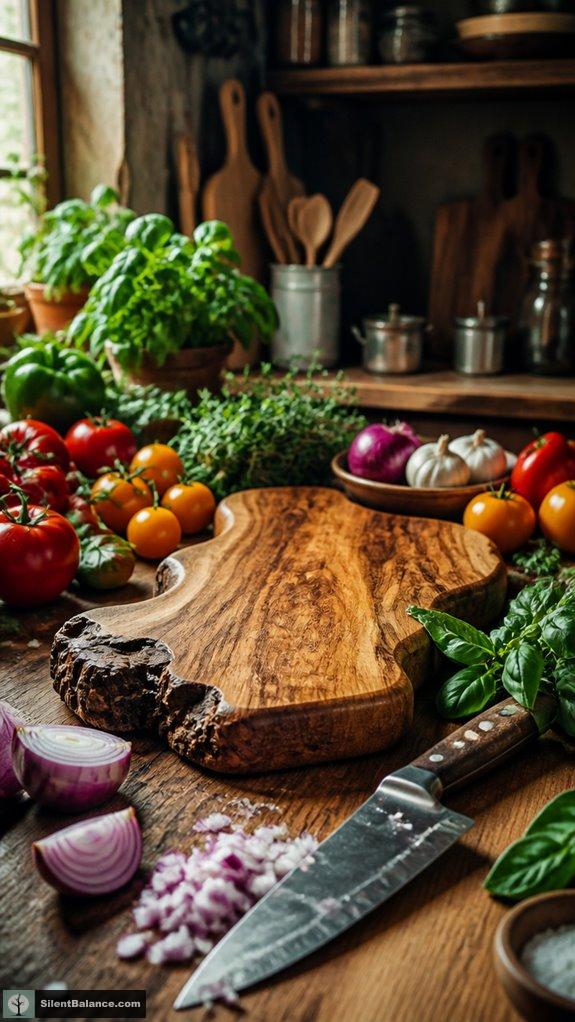
Trees have been symbols of life and meaning for centuries, and in 2026, that symbolism’s only grow richer.
Think about tree roots — they symbolize grounding, stability, a deep connection to ancestry. When selecting reclaimed wood, notice bark textures—each one tells a story of resilience, protection, and natural beauty. These textures often reflect nature-inspired vintage styles, emphasizing organic, aged aesthetics. Why settle for plain when you can embrace bark’s wild, tactile charm? Incorporating these elements into your decor adds layers of spiritual and personal significance. The interconnectedness of elements like roots, branches, and leaves in Chinese mythology further highlights the deep symbolic meanings associated with trees. Can your space reflect the strength of tree roots or the rugged beauty of bark textures? Use these symbols to create a grounded, powerful environment that celebrates growth and renewal.
Reclaimed Wood Cutting Boards
Ever thought about turning everyday kitchen tools into symbols of growth and resilience? Reclaimed wood cutting boards are a perfect example. They connect you to mycelium networks underground, showing how strength and nourishment spread unseen, much like shadow work involves exploring hidden parts of ourselves.
These boards carry stories of trees—roots, bark, knots—that symbolize protection, renewal, and endurance. Using them elevates your space with layered meaning, turning simple prep work into a ritual of mastery.
Why not embrace the energy of living history? The natural imperfections and textures aren’t flaws—they’re proof of nature’s wisdom, waiting to inspire your own growth and resilience.
Forest-Inspired Kitchen Aesthetics
Transforming your kitchen into a forest-inspired haven isn’t just about style—it’s about creating a space teeming with meaning. Tree symbolism plays an essential role here, representing growth, strength, and renewal.
Creating a forest-inspired kitchen blends meaningful symbolism with natural beauty and modern design.
Incorporate sacred geometry—like fractal patterns in branches or pinecones—to add a sense of harmony and precision. Why not make your decor a spiritual anchor? Twigs, bark, and carved wood serve as visual reminders of resilience and protection.
So, ask yourself: are your choices rooted in personal symbolism or just aesthetic?
Blending natural elements with cutting-edge tech creates a masterful balance of beauty and purpose—making your kitchen a living, breathing forest.
FAQ
How Do Reclaimed Wood Cutting Boards Impact Overall Kitchen Sustainability?
Reclaimed wood cutting boards boost kitchen durability while diminishing environmental impact—who knew? They turn your culinary space into a bastion of sustainability, proving that masterful craftsmanship can save the planet, one cut at a time.
Are There Specific Tree Species Preferred for Artisanal Reclaimed Cutting Boards?
You should choose tree species like walnut, cherry, or maple, as they’re highly preferred for artisanal reclaimed cutting boards due to durability, rich grain patterns, and a reputable artisanal history that emphasizes craftsmanship and aesthetic mastery.
Can Reclaimed Wood Boards Be Used for Both Cutting and Serving Purposes?
Yes, reclaimed wood boards suit both cutting and serving, provided you select wood with ideal grain and durability. Your choice of wood influences design aesthetics, ensuring functionality and style resonate with mastery, tradition, and mastery in your culinary presentation.
How Does Wood Aging Influence the Hygiene of Reclaimed Cutting Boards?
Think of wood porosity as a silent gatekeeper—aging increases it, allowing bacterial growth to hide within. To master reclaimed cutting boards’ hygiene, maintain regular oiling, cleaning, and seasoning, preventing bacteria from finding refuge in aged, more porous surfaces.
What Symbolic Meanings Can Be Integrated Into a Chef’s Reclaimed Wood Board Selection?
You can embed cultural symbolism and heritage significance into your reclaimed wood board selection by choosing pieces with historical textures or patterns, reflecting ancestral roots and traditional craftsmanship, which enhances your culinary mastery through meaningful, story-rich tools.

- 11 Best Luxury Sandalwood Candles for 2026 - June 19, 2026
- 11 Best Woven Wicker Gift Baskets for 2026 - June 19, 2026
- 11 Best High Powered Binoculars for 2026 - June 19, 2026
