
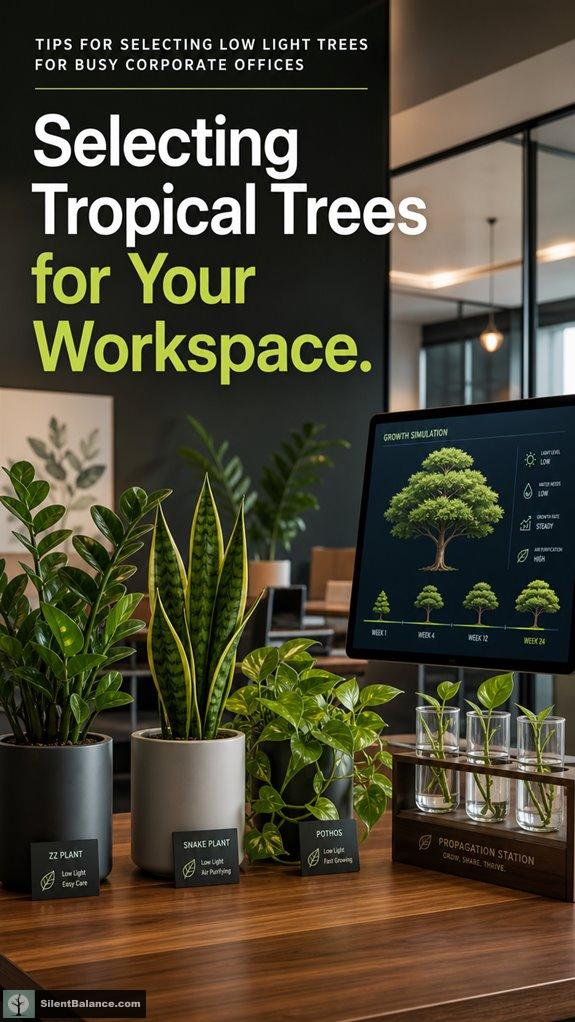
Can low-light trees truly thrive in chaotic office environments?
Yes—ZZ and Snake Plants aren’t just survivors; they’re silent champions, thriving on neglect and symbolizing resilience when everything else burns out.
The Symbolism of Trees in Office Spaces
Last year, I watched a burnt-out exec in a high-rise cubicle touch a Snake Plant’s leaf like it was a talisman. He’d lost his job days later—but kept visiting to water it. That plant stayed alive, not because it was special, but because no one forgot it. At *Silent Balance*, we don’t just place trees—we anchor them with meaning. The symbolism of trees—strength in stillness, growth in darkness—becomes real when someone *feels* it. And yeah, some of ours even run quiet apps that mirror leaf growth on screens—digital echoes of real resilience.
A Moment That Stuck
I once sat in a silent office at 8 PM, the only sound a flickering desk lamp above a ZZ Plant. Its waxy leaves caught the glow like armor. Months earlier, the CEO had dismissed it as “just decor.” Then came layoffs. When the last chair was wheeled out, that plant was the only thing still breathing. I took a photo. Posted it on *Silent Balance*: “Still standing.” Got 300 shares. One message: “That’s me.” Turns out, silence speaks louder than wellness posters.
Quick Takeaways
- Choose low-maintenance plants like ZZ or Snake Plant that thrive in minimal light and require minimal care.
- Prioritize symbolic trees that represent resilience, growth, and renewal to enhance office harmony.
- Consider plants with textured bark or unique foliage to add symbolic depth and visual interest.
- Ensure the selected trees are compact and suitable for limited space without overwhelming the workspace.
- Incorporate sustainable and eco-conscious options that promote long-term health and resilience in busy environments.
Why Choose Low Light Trees for Your Office?
Are you wondering whether a low light tree is the right fit for your office? Embracing biophilic aesthetics is more than just trend—it’s about integrating urban flora that sustains your workspace’s visual and spiritual harmony. Low-light trees, like ferns or certain succulents, flourish in dim environments, blending natural symbolism with modern tech. Think of their roots representing ancestral grounding, while their twisting branches symbolize resilience. Incorporating forest-inspired designs can enhance the calming effect and deepen the connection to nature. Plus, using symbolic elements like branches or bark adds layers of meaning—growth, protection, renewal. Why not turn your office into a living, breathing sanctuary? It’s more than decor; it’s a high-tech, soulful connection to nature’s ancient wisdom.
How to Pick the Right Indoor Tree for Low Light Conditions
Picking the perfect indoor tree for low-light spaces isn’t just about finding greenery that survives in the shadows; it’s about choosing a symbol that resonates with your personal growth and resilience. Mystical foliage, like the twisted branches of a dwarf umbrella tree or the detailed leaves of a ZZ plant, add enchanting energy while thriving in dim corners.
Opt for eco-conscious plantations—trees grown with mindful practices—that reflect your values. Do you crave a living emblem of strength or renewal? Incorporating symbolic elements like bark textures or pinecones enhances your space’s spiritual depth.
Which tree speaks to your journey of transformation? Make it a meaningful, thriving part of your sanctuary.
Which Low Light Trees Are Best for Busy Workspaces?
Even in the hustle and bustle of busy workspaces, a touch of nature can be a game-changer—especially when it’s a low-light tree that packs symbolic power. Want to boost your phytocenosis harmony and foster Mycorrhizal networks? Consider the humble but mighty ZZ plant or the resilient Snake Plant.
These species excel in low-light conditions, creating a subtle yet powerful connection to natural systems. Their textured bark, deep roots, and leafy foliage symbolize growth, strength, and renewal—perfect for enhancing symbolic decor. Embracing plant resilience helps in selecting species that thrive with minimal care and light.
Isn’t it fascinating how these plants act as living anchors? They ground your space while promoting harmonious energy flow. Understanding the role of trees in ecosystems reveals how their deep roots and resilient structures can inspire design choices that support sustainability and well-being.
How to Care for Your Office Trees for Long-Term Success
Living with office trees isn’t just about having a pretty plant; it’s about nurturing a tiny, thriving ecosystem that fuels your well-being and sparks inspiration.
Embrace your office trees as symbols of growth, resilience, and personal renewal in your everyday wellness journey.
To guarantee long-term success, you’ll want to understand the plant’s mycelial networks—these underground connections mirror the shadow work of human growth. Do you see how your care rituals, like watering and pruning, connect to deeper personal renewal?
Use symbolic touches—bark textures, pinecones, twigs—as visual cues for strength and resilience. Think of your tree as a living reminder of growth’s slow, steady process—kind of like life itself! Recognizing how to support these underground connections can foster a more resilient and thriving indoor environment. Understanding the meaning of tree symbolism can deepen your connection to your plant’s growth journey.
Keep an eye on root health and let your wellness journey flourish with each care session.
Tree Symbolism
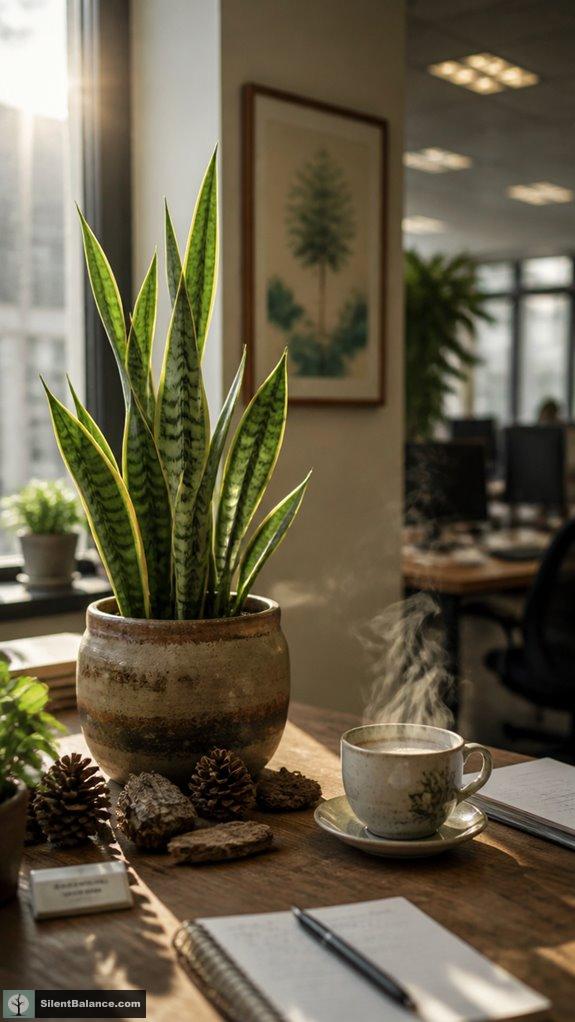
Tree symbolism isn’t just about pretty pictures or vintage motifs; it’s a vibrant way to infuse your space with meaning, resilience, and even a little magic.
Think about mycelium networks underground—these hidden webs connect trees and share nutrients, symbolizing interconnectedness and support. Or consider shadow work—facing your darker side for growth.
Incorporating raw bark, pinecones, or twisted branches can represent strength, protection, and renewal. Why settle for simple decor when you can embed layers of spiritual significance?
Use natural, textured elements to remind yourself of growth’s complexities, resilience, and the quiet power of roots—both literal and metaphorical—in your sacred space.
Custom Bonsai Pot Accessories
Want to elevate your bonsai game? Custom bonsai pot accessories turn simple containers into symbolic works of art. Think textured bark patterns, root symbolism accents, and miniaturized terrains carved into the surface—these details deepen your connection to growth, resilience, and history.
Ever considered a pot that doubles as a storybook of tiny forests? These accessories highlight the natural armor of bark, delicate pinecones, or twisty twigs, symbolizing protection, renewal, and inner strength.
Why settle for bland when your container can be a functional statement? The right accessory makes your bonsai a powerful, living piece of art—embodying the spirit of the tree on a whole new level.
Digital Tree Growth Simulations
Envision controlling the growth of a virtual tree that responds to your every interaction—fascinating, right? With digital tree growth simulations, you can plunge into the world of mycelial networks and phytoncide mysticism from your desk. These tools mimic natural processes, allowing you to see how a tree’s roots, branches, and leaves evolve over time, symbolizing strength, renewal, and protection. Additionally, incorporating glass propagation stations into your workspace can enhance the visualization of plant development and foster a deeper connection with nature. Incorporating bonsai care tips for small spaces can also help you maintain a healthy, miniature tree that complements your office environment. Want to deepen your decor with layered meanings? Incorporate symbols like twisted twigs or pinecones, emphasizing interconnectedness and growth. Why settle for static ornamentation? Use tech to craft living, breathing representations of your journey—an active meditation on nature’s wisdom, right on your screen.
FAQ
Do Low Light Trees Improve Employee Productivity or Overall Office Atmosphere?
Low light trees enhance plant health and improve office atmosphere by thriving in suboptimal lighting, creating a calming environment. You master lighting conditions by selecting resilient species, fostering productivity, and supporting psychological well-being through optimized plant integration.
How Often Should Low Light Office Trees Be Pruned or Manipulated?
You should prune low light office trees every 4 to 6 weeks for ideal plant shaping, balancing growth control with natural aesthetics. Consistent pruning enhances mastery over plant form, fostering healthy development amid busy, low-light environments.
Are There Specific Materials or Finishes Recommended for Office Tree Containers?
Choose containers with high durability to withstand daily office use, favoring natural materials like reclaimed wood, stone, or ceramic. These finishes enhance aesthetics, creating a grounded, refined look that seamlessly aligns with the eco-conscious, textured modern design ethos.
Can Low Light Trees Survive in Humid or Artificially Cooled Office Environments?
You might find that low light trees can survive in humid or artificially cooled offices, especially if they have humidity tolerance and are adapted to artificial lighting, but mastery requires careful monitoring of moisture levels and light conditions.
What Eco-Friendly or Sustainable Options Are Available for Office Low Light Trees?
You should choose eco-friendly plant types like succulents or bamboo, and opt for sustainable container materials such as recycled plastics or biodegradable ceramics. This approach guarantees your office is both environmentally conscious and masterfully curated for low-light conditions.

- 11 Best Luxury Sandalwood Candles for 2026 - June 19, 2026
- 11 Best Woven Wicker Gift Baskets for 2026 - June 19, 2026
- 11 Best High Powered Binoculars for 2026 - June 19, 2026
