
Elevate Your Japandi Aesthetic with Bonsai Greenery
Bonsai trees are the unsung heroes of timeless design.
Years ago, a friend gifted me a Ginseng Ficus. Its intricate branches wrapped around my living space like a warm embrace.
The symbolism of trees resonates deeply within me. They represent resilience, balance, and harmony—values that echo through our blog, Silent Balance.
Imagine a bonsai flanking your sunlit window. It’s not just decor; it’s nature’s poetry painted in green.
And honestly, who wouldn’t want that? Dive into the tranquility these masterpieces bring, and transform your minimalist haven.
The Aesthetic Appeal of Bonsai in Japandi Design
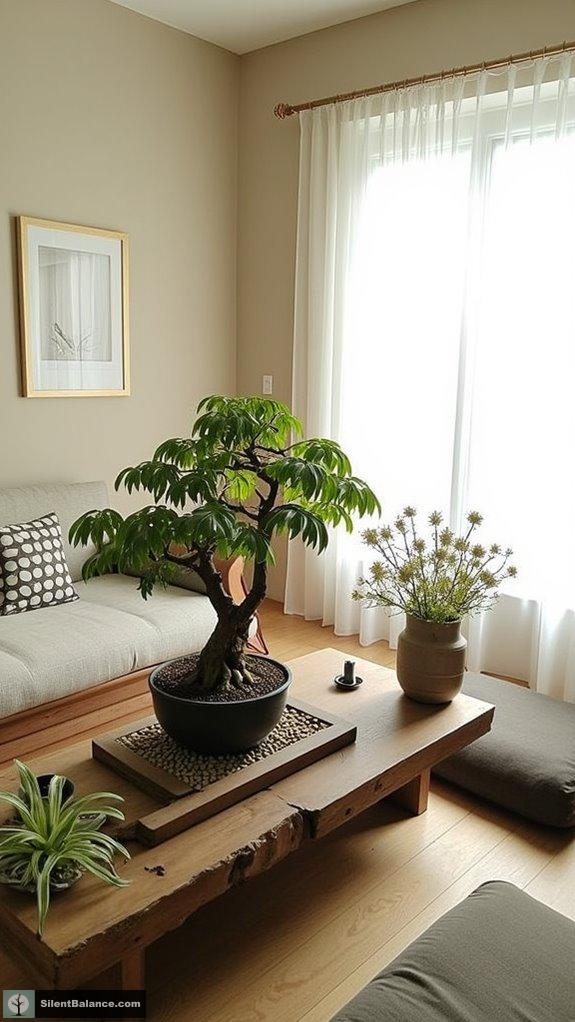
Bonsai, a tiny tree with a towering impact, considerably shapes the aesthetic appeal of Japandi design.
These miniature marvels embody serenity, cultivating a sense of mindfulness that harmonizes beautifully with minimalism. Their intricate design, stemming from cultural symbolism, reflects a deep connection to nature and tradition.
Ever notice how their slow, deliberate growth mirrors wabi-sabi, that knack for embracing imperfection?
Placed wisely, bonsai act as living centerpieces, symbolizing nature’s poetry and seasonal shifts.
Plus, they maintain those clean lines, keeping our spaces clutter-free—who can resist that?
When nestled among natural materials, they enhance our muted palettes, adding subtle warmth. Houseplants can also enhance the aesthetic and air quality in our spaces.
Could anything be more enchanting?
Grab your shears, and let’s explore this art!
Selecting the Right Bonsai Species for Your Space
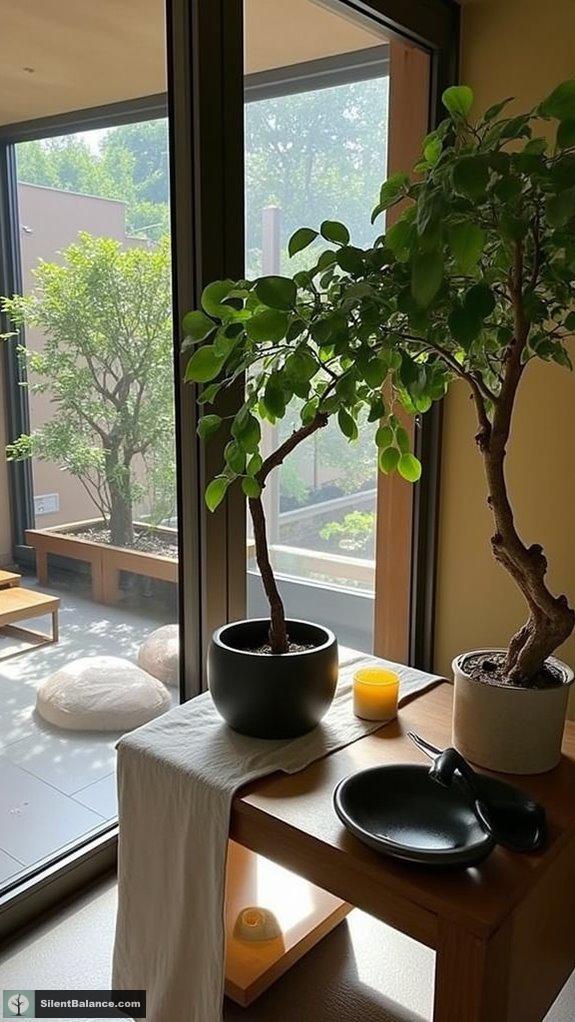
When it comes to selecting the perfect bonsai for your Japandi sanctuary, knowing which species thrives indoors makes all the difference.
I’ve found a few contenders that’ll really elevate your space:
- Ginseng Ficus: Compact and low-maintenance, it fits snugly into small nooks. Additionally, many bonsai species have meditative qualities that can enhance your living environment.
- Chinese Elm: Adaptable and perfect for detailed shaping, it adds a touch of sophistication.
- Jade Tree: This succulent needs minimal watering—ideal for forgetful caretakers.
- Weeping Fig: With its umbrella canopy, it offers dramatic flair. These trees are also a great choice for enhancing your indoor air quality.
- Dwarf Boxwood: Responds beautifully to pruning, creating subtle green accents.
Which one intrigues you?
Placement Strategies for Optimal Light and Design
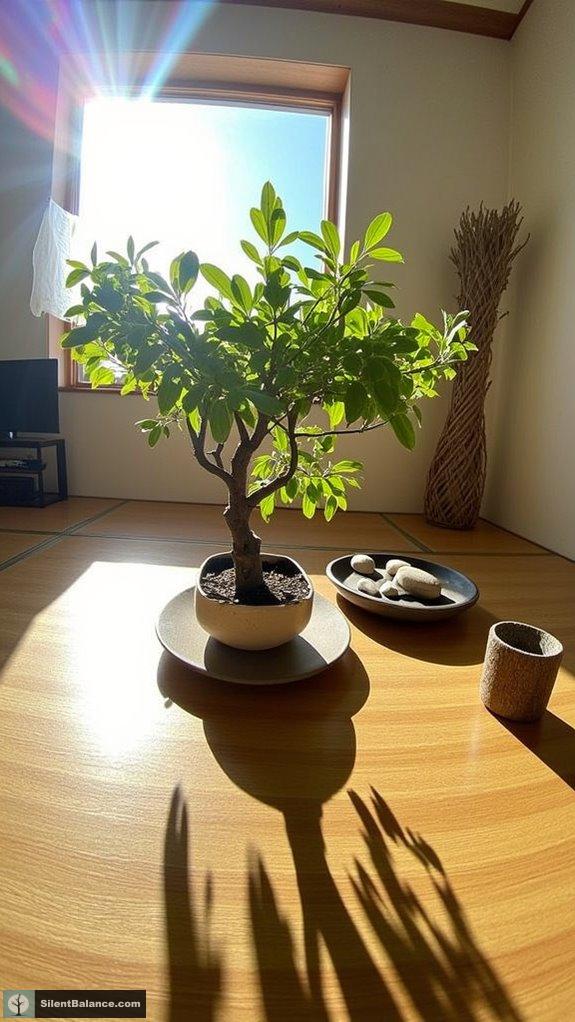
Creating the perfect placement for your bonsai not only enhances its vigor but also weaves it beautifully into your Japandi haven.
Imagine your little tree basking in morning light, close to a south-facing window. That’s where the magic happens! But don’t let it bake in direct sunlight—ouch, leaf burn alert!
Consider airflow and humidity, too; a humidity tray can work wonders for your Ficus, especially since bonsai plants thrive in humidity.
Space your bonsai thoughtfully to avoid clashing with your serene layout. After all, it deserves its moment in the spotlight without the stress of clutter.
Ready to pour your bonsai soul into this aesthetic dance? Let’s get growing!
Creating a Cohesive Look With Other Natural Elements
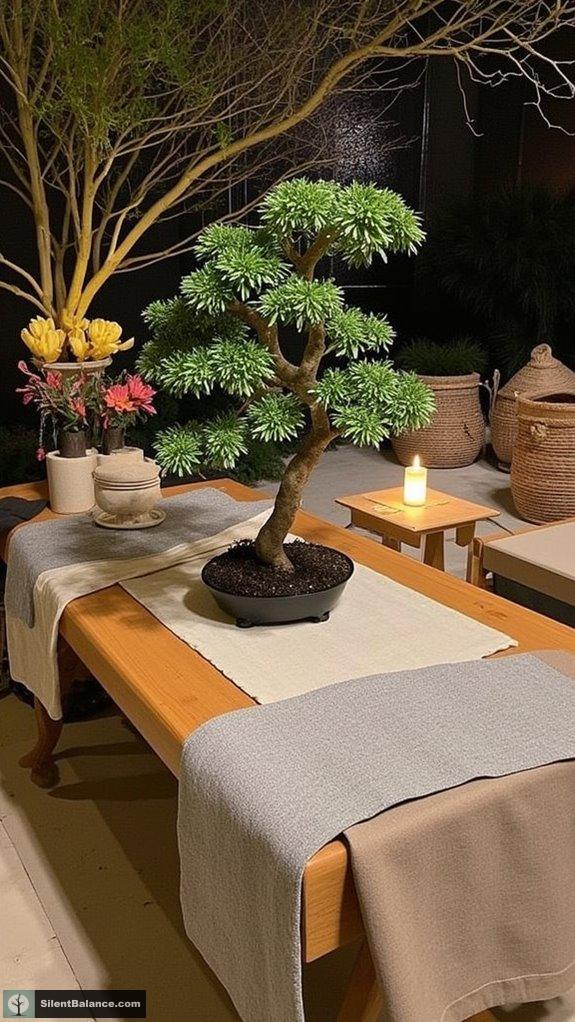
To truly nail that Japandi vibe, you’ve got to think beyond just your bonsai and consider how it plays with other natural elements in your space.
After all, what’s the point of a stunning bonsai if it’s hanging out with unsightly decor?
Here are some ways to create that cohesive look:
- Integrate natural wood accents in warm, muted tones.
- Use light-colored stone for countertops and decor.
- Choose textiles made from linen or cotton in earthy shades.
- Add water features for tranquility and softness.
- Incorporate tactile items like woven baskets or sculptural branches.
Additionally, incorporating traditional accessories like stone lanterns or bamboo can further elevate the serenity of your arrangement.
Let’s create harmony together!
Bonsai Care: Maintenance Tips for Lasting Beauty
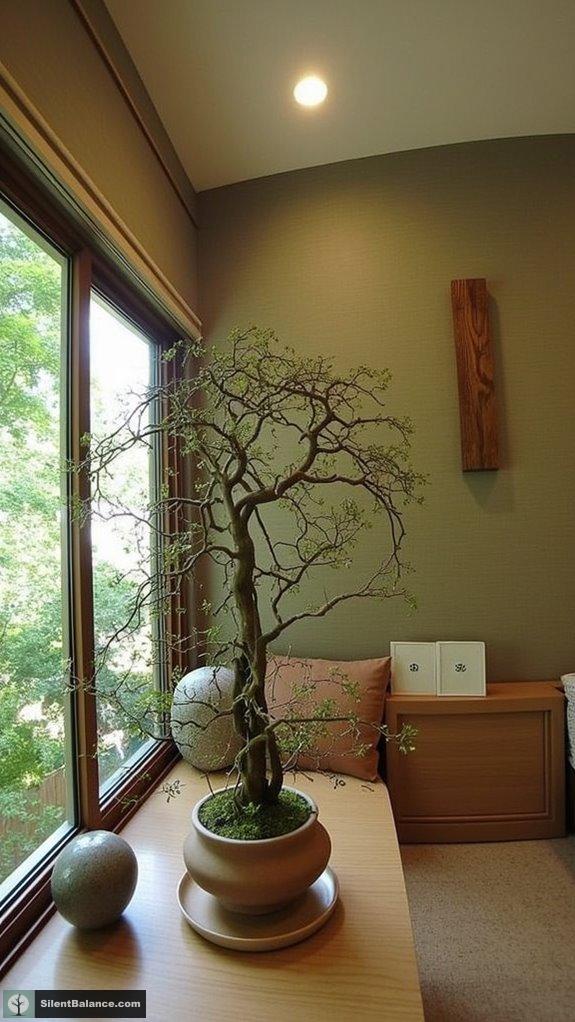
You’ve mastered the art of harmonizing your bonsai with other natural elements, but let’s talk about what really keeps that living masterpiece thriving.
Watering frequently is the name of the game—your bonsai’s shallow soil dries out fast. Are you checking for moisture daily?
Pruning every few months, and wiring those branches keeps your tree looking sharp and balanced, right?
Don’t forget to give it a snug pot every few years to avoid root crowding!
And, of course, a touch of fertilizer during the growing season helps nourish those roots.
Your little green friend deserves the best—it’s time to show it.
Mindfulness and Mood Enhancement Through Bonsai
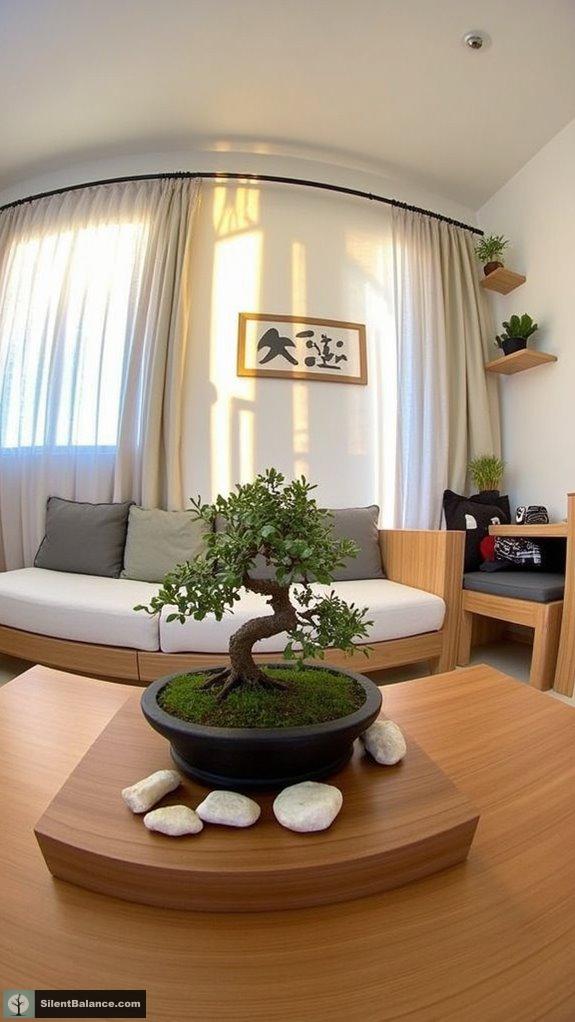
When it comes to finding serenity and elevating your mood, bonsai trees can be your unsung heroes. Engaging with these miniature masterpieces nurtures mindfulness and boosts emotional well-being.
Here’s how bonsai can enhance your life:
- Promotes meditative focus: Pruning and wiring quiet the mind.
- Reduces stress: Lower cortisol levels grant you peace.
- Boosts emotional awareness: Connects you with nature’s rhythms.
- Encourages reflective solitude: Your personal sanctuary awaits.
- Fosters joy: The care and artistry spark fulfillment.
Cultural Roots of Tree Symbolism
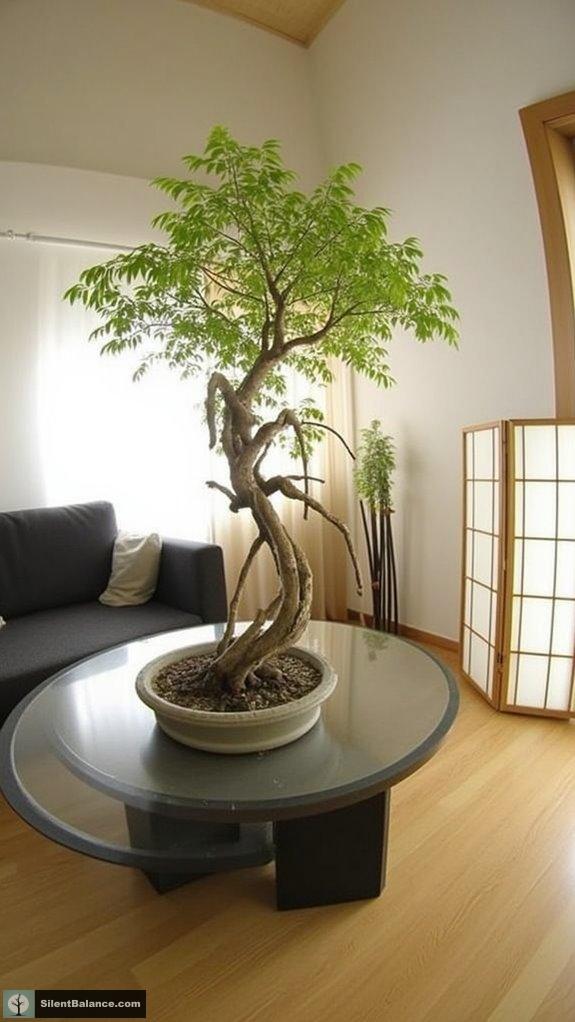
Tree symbolism runs deep, intertwining with cultures across the globe like the roots of a mighty oak.
From the sacred Bodhi tree in Buddhism, marking enlightenment, to the Banyan symbolizing immortality in Hinduism, trees are rich with meaning.
Have you ever felt the weight of a wise old oak?
Celtic lore even sees trees as gateways to the divine, while the Baobab stands tall as a “Tree of Life” in African culture, offering sustenance and shelter.
Bonsai enthusiasts resonate with this essence, embracing the art of miniaturizing these majestic symbols.
Isn’t it fascinating how rooted we all are? 🌳✨
Questions and Answers
How Often Should I Fertilize My Bonsai Tree?
So, you’re wondering how often to fertilize your bonsai? I like to go for every two weeks during the growing season—spring through summer.
If you’ve got a deciduous species, weekly’s your jam until those leaves drop.
Just keep in mind, skip the fertilizer during dormancy.
Keep an eye out for those tell-tale signs—crispy edges or a yellowing vibe!
It’s all about finding that sweet spot to keep your little green friend thriving.
Can Bonsai Be Grown Outdoors in Certain Climates?
Absolutely, bonsai can thrive outdoors, but the climate is key!
In temperate regions, those Japanese beauties love their winter dormancy. Tropical species? They need some cozy indoor time during colder months.
Ever tried a Ficus outside in summer? They adore that! Just think about sun exposure, humidity, and frost protection.
Choosing hardy species like Japanese maple makes a difference. Isn’t it rewarding to nurture these tiny trees in their ideal outdoor palace?
What Tools Are Essential for Bonsai Pruning?
Envision sculpting nature’s miniature masterpieces, where the right tools transform a wild vision into leafy perfection.
For bonsai pruning, you’ll need pruning shears, concave cutters, and branch cutters—your trusty sidekicks in this creative journey.
Add a pruning saw for thicker branches, and don’t forget specialty shears for those delicate accents.
Choosing quality tools isn’t just smart; it’s an investment in your bonsai adventure.
Ready to trim your way to mastery? Let’s get snipping!
Are There Pet-Friendly Bonsai Species Available?
Absolutely, there are pet-friendly bonsai species!
I’ve found that the Chinese elm and prayer plant are excellent options. Not only are they non-toxic, but they thrive indoors too.
Have you heard about the parlour palm? It’s a gem for pet owners.
Just keep in mind, while most pets steer clear of munching on these beauties, it’s still smart to place them up high.
After all, curiosity can bring chaos, right?
How Can I Propagate My Bonsai Tree?
So, you wanna propagate your bonsai tree?
First, grab those lively cuttings—2-4 inches long is the sweet spot. Trim half the leaves to help it focus on rooting.
Feeling fancy? Try air layering for a robust result! Wrap the wounded branch with moss and hold that moisture tight!
If you’re lucky enough to have a Ficus, just pop those cuttings in water, and watch them thrive!
Are you ready to become a bonsai propagation ninja?
References
- https://www.styldod.com/blog/japandi-interior-design
- https://www.deltafaucet.com/il/style-design/what-japandi-interior-design
- https://www.housebeautiful.com/room-decorating/a45851530/japandi-interior-design-style/
- https://basq.livelarq.com/design/what-is-japandi-interior-design/
- https://www.masterclass.com/articles/japandi
- https://www.youtube.com/watch?v=Wxyq0RsJZLs
- https://www.happyhouseplants.co.uk/blogs/houseplant-blog/what-is-japandi-houseplant-styling
- https://www.jaipurrugs.com/blog/japandi-interior-design-fusion
- https://int.japanesetaste.com/blogs/japanese-taste-blog/japandi-the-cozy-fusion-of-japanese-scandinavian-design
- https://delhibonsai.com/bonsai-elevating-the-interior-designer-homes/

- 11 Best Luxury Sandalwood Candles for 2026 - June 19, 2026
- 11 Best Woven Wicker Gift Baskets for 2026 - June 19, 2026
- 11 Best High Powered Binoculars for 2026 - June 19, 2026
