

Transform Your Space with Bonsai Magic
Ever thought a tiny tree could change your life?
Bonsai trees are more than decor—they symbolize wisdom, strength, and harmony.
I remember the first time I brought a *Ficus* home. I placed it by the window, and it felt like the whole room breathed.
At Silent Balance, I share that journey. Discovering the tranquility these trees offer sparked my passion for feng shui living.
Two years ago, I gifted a bonsai to a friend. She was amazed by how its presence brightened her days, serving as a reminder to stay grounded.
Let’s delve into the best placements and species for your home. Your interior awaits a touch of natural elegance!
Harmonizing Bonsai With Modern Interiors
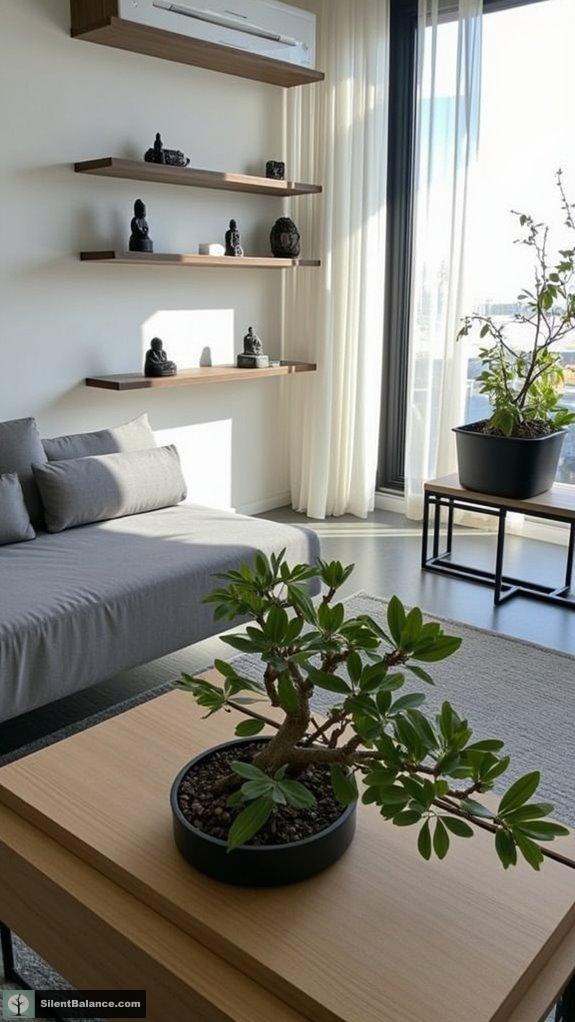
When it comes to harmonizing bonsai with modern interiors, you might wonder, why not let these little green wonders take center stage?
These botanical beauties create natural focal points that breathe life into static spaces. Incorporating bonsai trees can also offer high humidity benefits, which is particularly useful in office settings.
Visualize an Aralia bonsai on your coffee table, its airy foliage complementing sleek decor.
Consider pairing bonsai with quirky decor, like Buddha heads, to reinforce your Japandi minimalism.
With modular furniture featuring bonsai holders, you can easily engage with your plants while keeping everything stylish. Incorporating bonsai trees not only adds aesthetic appeal but also improves air quality, enhancing the overall indoor environment.
Enhancing Minimalism With Linear Bonsai
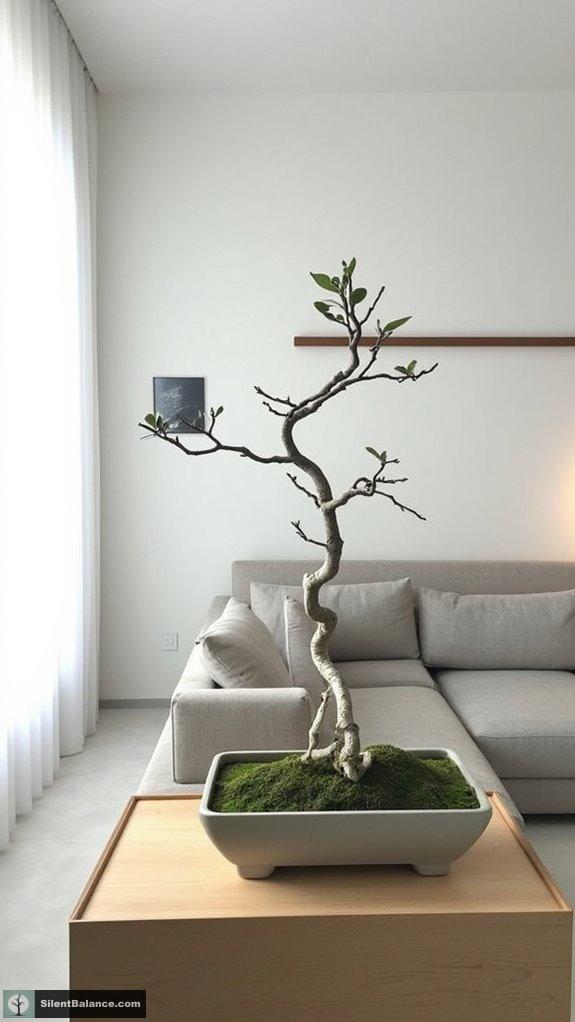
Embracing the sleek lines and understated elegance of linear bonsai can transform your minimalist space into a serene sanctuary.
Imagine striking vertical shapes that elevate your décor, creating a visual rhythm amid horizontal surfaces. Proper care, including consistent watering and adequate light, is essential for maintaining their health and beauty.
These bonsai embody simplicity with their sparse leaves and architectural forms, effortlessly fitting into narrow spaces like shelves or side tables. Pair them with neutral planters to keep the focus sharp. Bonsai can be covered with green moss for realism, enhancing their subtle beauty.
Why clutter up your sanctuary?
A solitary linear bonsai serves as a Zen focal point, inviting tranquility.
Japandi Style: A Blend of Nature and Simplicity
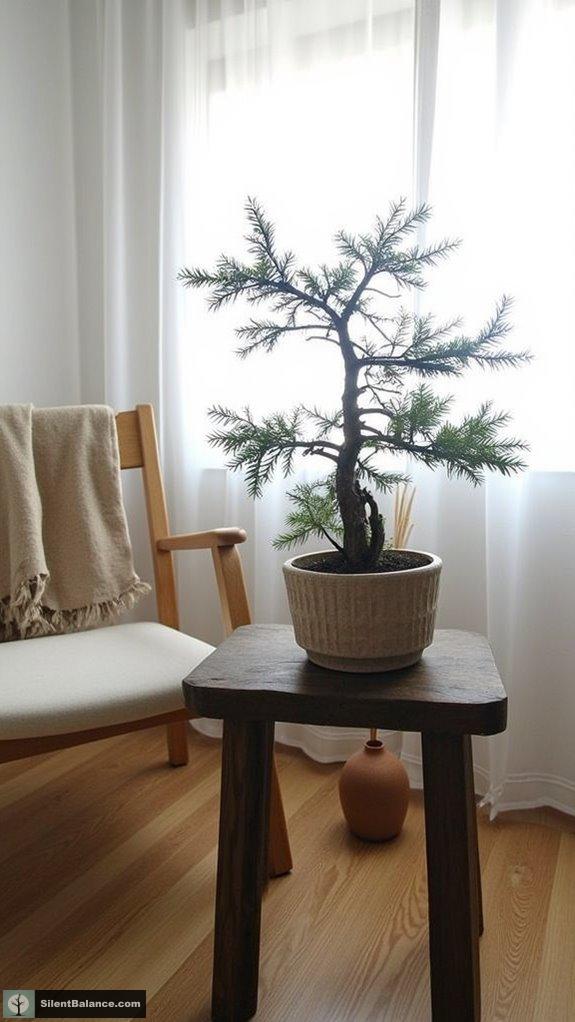
Japandi style captures a harmonious blend of Japanese wabi-sabi and Scandinavian hygge, creating a stunning visual narrative that speaks to our love for nature and simplicity. This aesthetic celebrates natural materials and organic shapes, making bonsai trees a perfect fit. Picture a delicate juniper bonsai, its twisted trunk embodying wabi-sabi’s imperfection, bringing a sense of tranquility. Isn’t it fascinating how the textures of natural fibers and muted palettes enhance this vibe? Incorporating bonsai trees into your space not only elevates the design but also promotes a sense of calm and mindfulness, aligning perfectly with the principles of hygge.
The Impact of Placement and Display Techniques
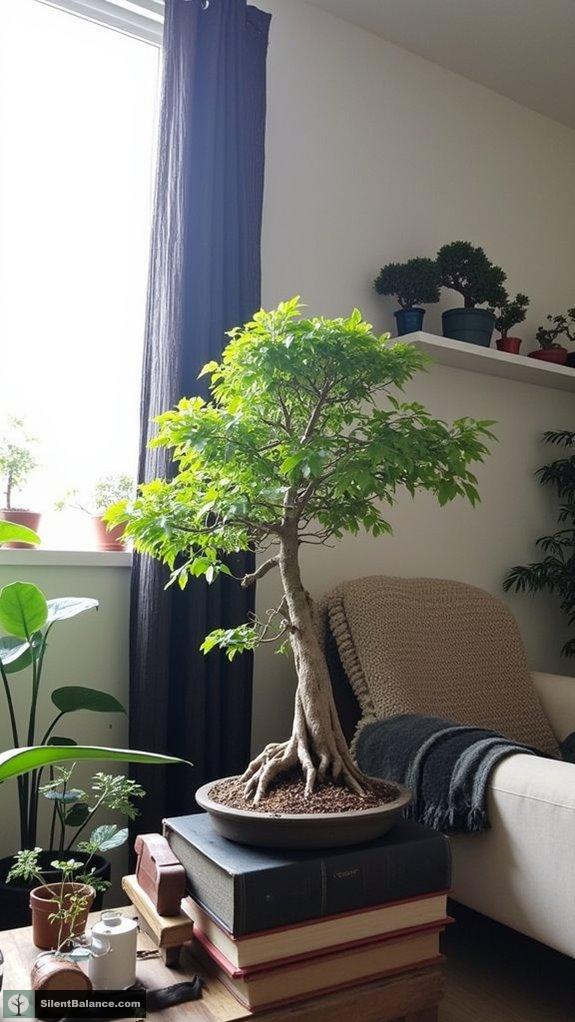
Placement of your bonsai isn’t just a matter of decor; it’s an essential factor that influences its health and liveliness. Ever think about the sunlight? Your bonsai craves at least 4-6 hours of direct sunlight daily. Place it near a south-facing window, where light’s a constant companion. And let’s not forget air flow; a good breeze keeps fungal foes at bay. Elevated stands? Absolute game-changer! They improve circulation and keep roots happy. Additionally, different bonsai species have varied light requirements that can affect their growth and vitality.
Choosing the Right Species for Indoor Environments
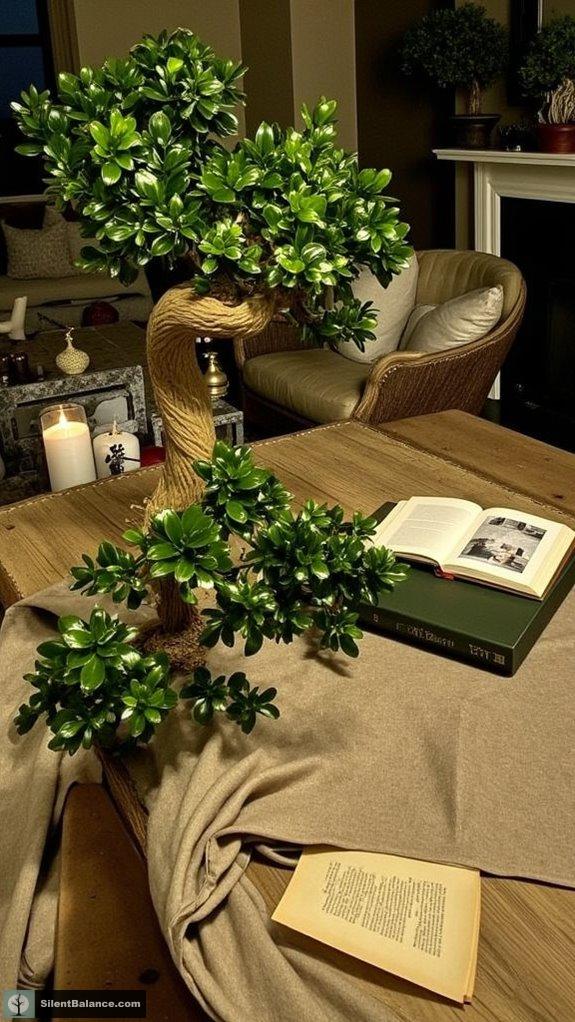
Selecting the right bonsai species for your indoor space can feel like an intimidating task, but it doesn’t have to be!
Here are four great options that thrive indoors:
- *Ficus* varieties need bright, indirect sunlight and can handle indoor conditions beautifully.
- *Jade Bonsai* is a drought-tolerant, hardy gem that’s perfect for beginners.
- *Fukien Tea* offers lovely glossy leaves and gnarled bark for character.
- *Kumquat* bonsai not only looks good but even bears fruit indoors!
With these choices, you’re well on your way to creating a stunning indoor bonsai setting. Ready to dig in?
Integrating Bonsai With Other Design Elements
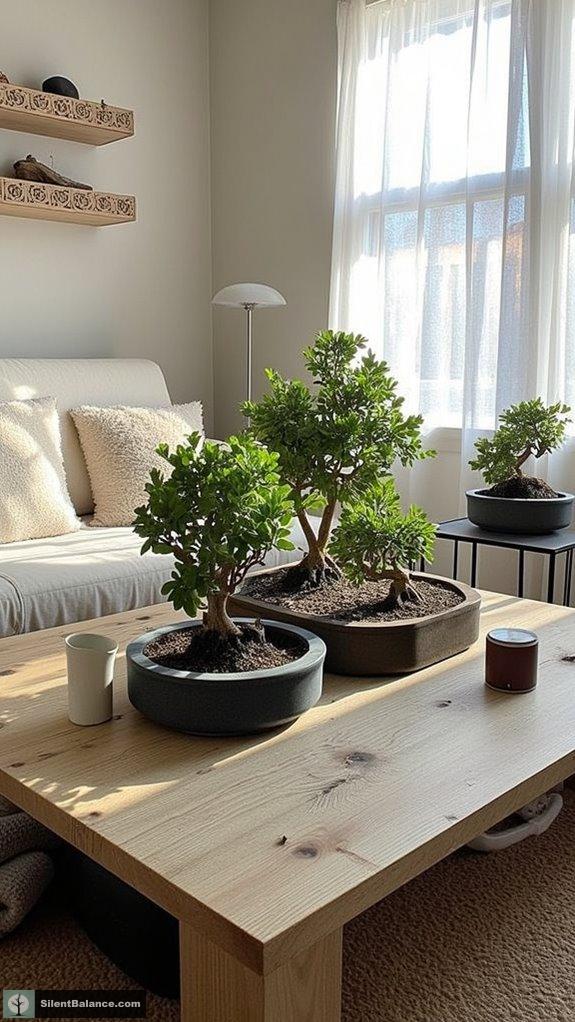
Just think about how you can harmonize these tiny trees with your home’s aesthetic.
Picture a delicate aralia sitting on your kitchen counter, subtly merging modern decor with nature.
Have you considered grouping small bonsai sets to create your indoor forest? It’s pure magic!
Placing them in minimalist rooms adds a pop of life without cluttering.
Experiment with textures—pair your bonsai with wooden furniture or stones, and you’ll amplify that organic vibe.
Don’t forget, proper lighting can highlight their enchanting shapes.
Maintenance Tips for Thriving Indoor Bonsai
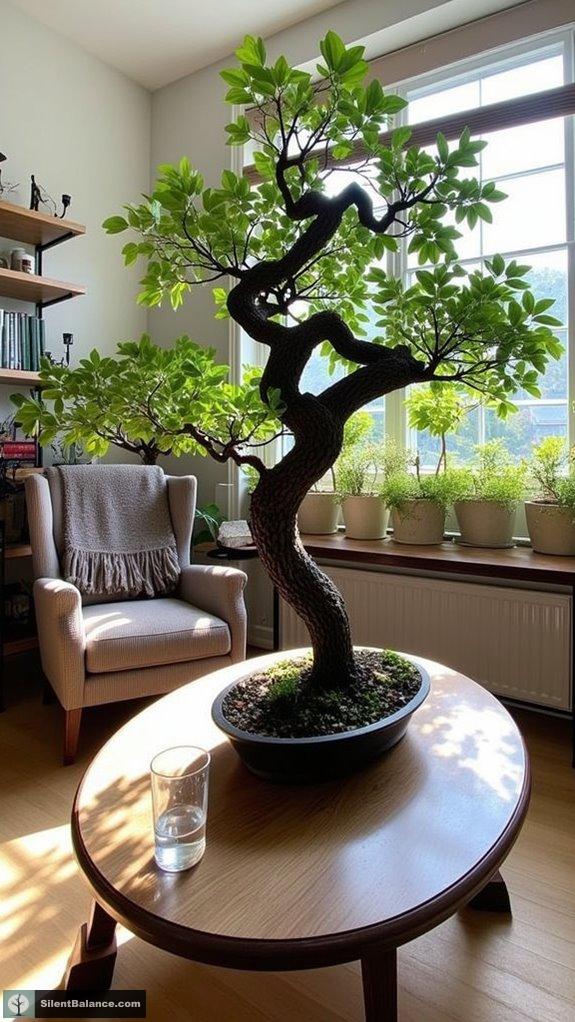
When you’re nurturing indoor bonsai, it’s essential to recall their needs can be a bit particular—kind of like a diva who requires just the right spotlight to shine, if you will.
Here are some key maintenance tips I’ve found invaluable:
- Water when the soil’s surface feels dry, and soak thoroughly until water drains.
- Position your bonsai near airy windows for at least a few hours of direct sunlight each day.
- Mist regularly to boost humidity and keep those leaves happy.
- Fertilize bi-weekly with a balanced mix to keep growth robust.
Mastering these basics helps me maintain thriving bonsai effortlessly!
Cultural Meanings of Trees
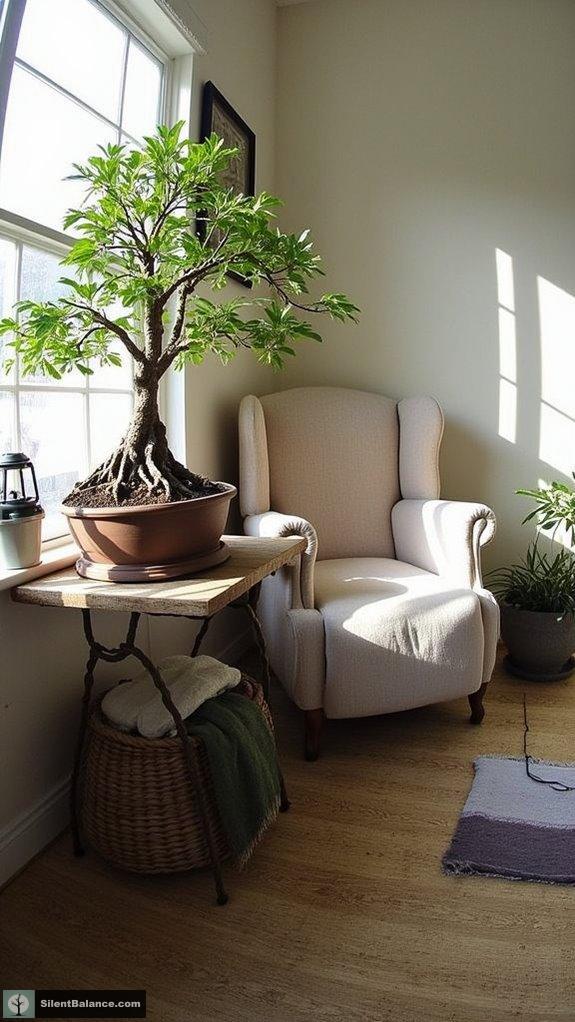
Bonsai trees aren’t just miniature masterpieces of nature; they carry rich cultural meanings that resonate deeply across various traditions. Take the Peepal tree in Hinduism, often considered sacred and tied to divine figures like Brahma and Shiva.
Isn’t it fascinating how trees symbolize life, growth, and resilience across cultures?
Imagine a bonsai oak in your living room, embodying endurance and strength with every leaf. These tiny wonders invite spiritual harmony indoors, serving as vibrant reminders of our connections to heritage.
Plus, who doesn’t want a little wisdom in their space?
Let’s embrace these living symbols and cultivate our own piece of nature’s artistry!
Questions and Answers
How Do Bonsai Trees Improve Indoor Air Quality?
Bonsai trees are like tiny air superheroes! They soak up carbon dioxide while releasing fresh oxygen, making our indoor spaces feel crisp and invigorating.
Plus, these little guys munch on common pollutants like formaldehyde—who knew they were such efficient air purifiers?
This combo not only helps us breathe easier but also enhances our well-being.
Can Bonsai Trees Thrive in Low-Light Environments?
Can bonsai trees thrive in low-light environments? Absolutely, if you choose wisely! I’ve found that tropical species like Ficus or Jade are rock stars in low light. They adapt easily, and with a little TLC, they’ll flourish. Just keep in mind to keep an eye on that leggy growth; it’s a telltale sign they’re craving light. So, position them near a bright window, or consider some reliable grow lights. Your bonsai will thank you!
Are There Any Bonsai Species That Are Pet-Friendly?
If you’re looking for pet-friendly bonsai, consider species like the parlour palm or the Chinese elm.
They’re not just safe for your furry friends, but they also bring a touch of nature to your space.
Just keep in mind, even non-toxic bonsai can cause tummy troubles if nibbled.
So, maybe keep an eye on your curious critters while they’re exploring their green surroundings, alright?
After all, we want happy pets and healthy bonsai!
What Tools Are Essential for Indoor Bonsai Maintenance?
Keeping your indoor bonsai thriving is like nurturing a petite jungle—tools matter!
You’ll need pinching shears for those delicate trims, and robust pruning shears for the thicker stuff.
Pair that with bonsai wire to shape those branches into elegant arcs, and a trusty root rake for repotting.
Don’t forget your watering can with a fine spout, because no one likes muddy roots!
Ready to plunge into the art? Let’s grow together!
How Long Does It Take for Bonsai to Mature Fully?
How long does it take for a bonsai to reach full maturity, you ask?
Well, it usually takes about 4 to 10 years if you’re starting from scratch.
Some folks opt for pre-grown beauties, aged 5 to 7 years, to accelerate the wait.
But hey, patience is key in bonsai culture!
Recall, even when they seem mature, the journey of styling and refining can go on for many more years.
Exciting, right?
References
- https://www.veronneau.com/en/trends/indoor-decor-trends/top-5-bonsai-tree-ideas/
- https://www.home-designing.com/2012/09/bonsai-in-interior-settings
- https://ibonsaiclub.forumotion.com/t5344-bonsai-for-interior-decoration
- https://www.pinterest.com/ideas/natural-bonsai-tree-decor/896675911767/
- https://www.pinterest.com/pin/modern-interior-decor-with-bonsai-plant–376332112592501153/
- https://delhibonsai.com/bonsai-elevating-the-interior-designer-homes/
- https://www.shutterstock.com/search/bonsai-on-window
- https://decoholic.org/the-most-beautiful-bonsai-trees/
- https://www.youtube.com/watch?v=aZXtEesXBxw
- https://www.instagram.com/p/DEp4NVAhKjl/

- 11 Best Luxury Sandalwood Candles for 2026 - June 19, 2026
- 11 Best Woven Wicker Gift Baskets for 2026 - June 19, 2026
- 11 Best High Powered Binoculars for 2026 - June 19, 2026
