
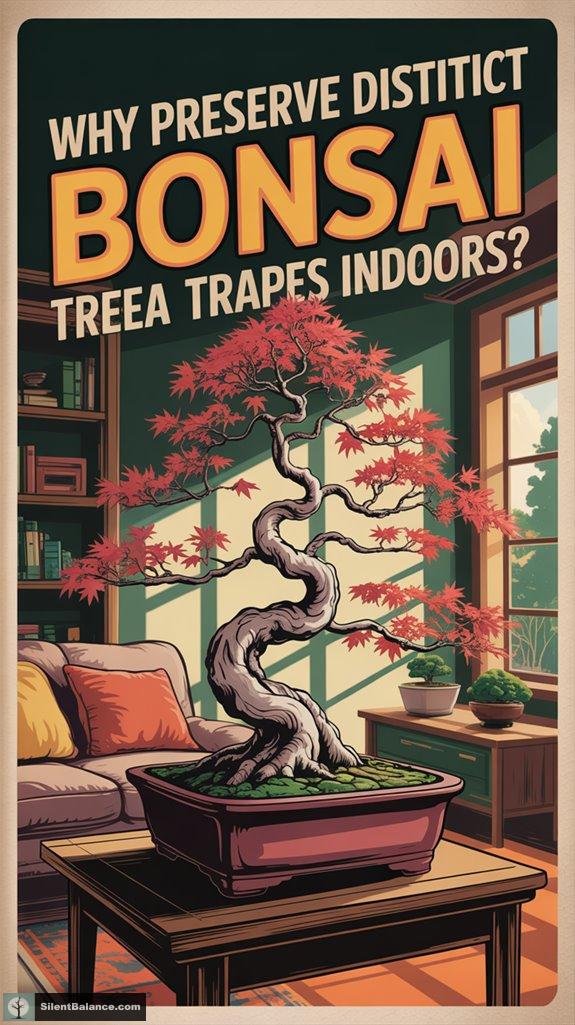
The Beauty of Indoor Bonsai: More Than Just Plants
Bringing distinct bonsai shapes into your home is like decorating with living art.
Each tree is a storyteller, embodying centuries of tradition and the deep symbolism of trees.
They offer mindfulness amidst our fast-paced lives.
Ever shared a laugh about how your bonsai’s twisty branches remind you of your quirky uncle? Yeah, me too.
At our blog, Silent Balance, we explore the deep connection between these green wonders and our well-being.
One unforgettable afternoon, I found my grandmother pruning her cherished bonsai.
As she shared the tree’s symbolism, I realized it represented resilience.
In that moment, I not only learned about bonsai but also discovered my family’s roots and lessons on perseverance.
Now, I carry that wisdom with me, sharing it with all of you.
Quick Takeaways
- Distinct bonsai shapes enhance aesthetic appeal, creating visual interest and emotional responses in indoor environments.
- These trees serve as striking focal points, contributing to a serene and calming atmosphere in living spaces.
- Maintaining different bonsai styles allows for artistic expression, reflecting the balance between nature and design.
- Bonsai care promotes mindfulness and patience, fostering a deeper connection with nature and personal growth.
- The rich cultural history behind bonsai artistry adds significance, making them valuable living artifacts in interior decor.
Understanding the Aesthetic Appeal of Bonsai Shapes
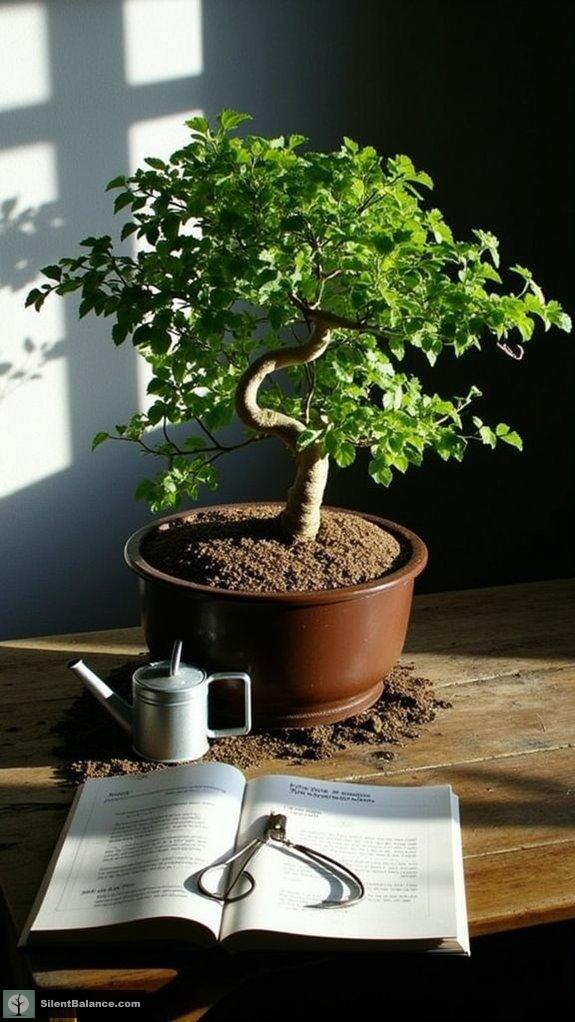
When you plunge into the fascinating world of bonsai, you quickly realize that every twist and turn of a tree’s branches tells a story—don’t you just love that?
Every angle of a bonsai reveals a new narrative, inviting you deeper into its enchanting saga.
Visual balance is the heart of bonsai aesthetics, where each trunk, limb, and leaf dances in harmony. It’s like nature’s arithmetic; too heavy on one side, and the whole vibe feels off, right?
Take the formal upright (Chokkan) style, with its symmetrical grace, or the dynamic cascade (Kengai), suggesting wind’s gentle caress as it flows. Single-trunk styles emphasize the unique characteristics and requirements that reflect natural growth conditions, showcasing the cultural significance of these miniature trees in our lives.
And let’s not forget negative spaces; they’re the unsung heroes that let the viewer lean into the experience.
The Role of Pruning Techniques in Shape Maintenance
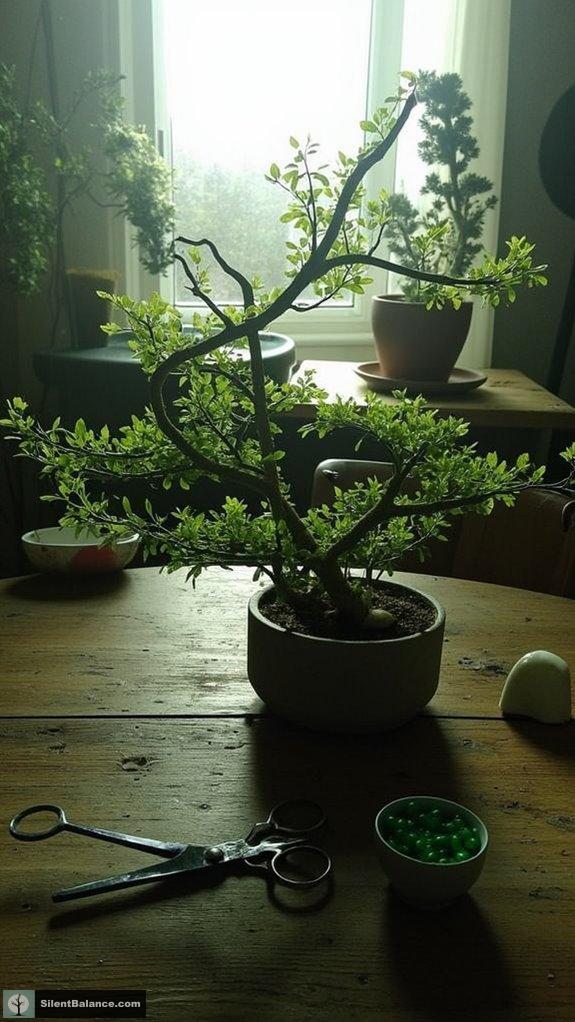
Pruning techniques aren’t just crucial for bonsai shape maintenance; they’re the secret sauce that keeps our miniature trees looking sharp and well-groomed.
Here’s what makes pruning so important:
- Encouraging Density: It directs growth hormones where we want them, ensuring our bonsai’s gorgeous foliage bursts forth evenly. This is particularly vital because apical dominance can lead to a lack of growth in the inner branches, which can be detrimental to the overall aesthetic appeal of the bonsai.
- Avoiding Overgrowth: Regular pruning prevents that wild, chaotic look—who wants a bonsai version of a bad hair day?
- Cultivating Compactness: Trimming shoots to just a few leaves preserves the intended shape, maintaining that artful elegance we love.
Environmental Considerations for Bonsai Preservation
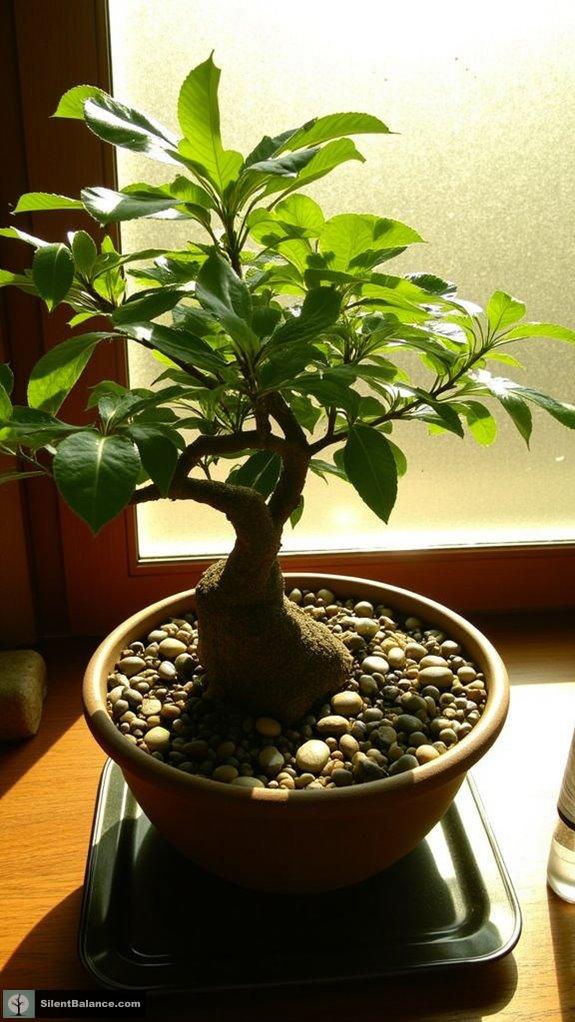
While I’ve got you here, let’s explore the world of environmental considerations for preserving our beloved bonsai.
First off, humidity is your bonsai’s BFF! Placing pebble trays beneath your pots and misting those iconic leaves keeps them hydrated, just like a tropical vacation.
What about light, you ask? Aim for that golden south-facing window, where your bonsai can bask without burning.
Too much sun? It’s like a bad sunburn for your little tree!
Temperature stability—think of it as a cozy blanket. Keep them away from heat sources that roast more than nurture.
Finally, air circulation is absolutely essential, so let those gentle breezes flow, but not the icy drafts! Just as the symbolism of bonsai conveys a deeper connection to nature, maintaining these environmental factors is vital for your bonsai’s longevity.
Trust me, your bonsai will love you even more for it!
Nutritional Strategies for Optimal Growth
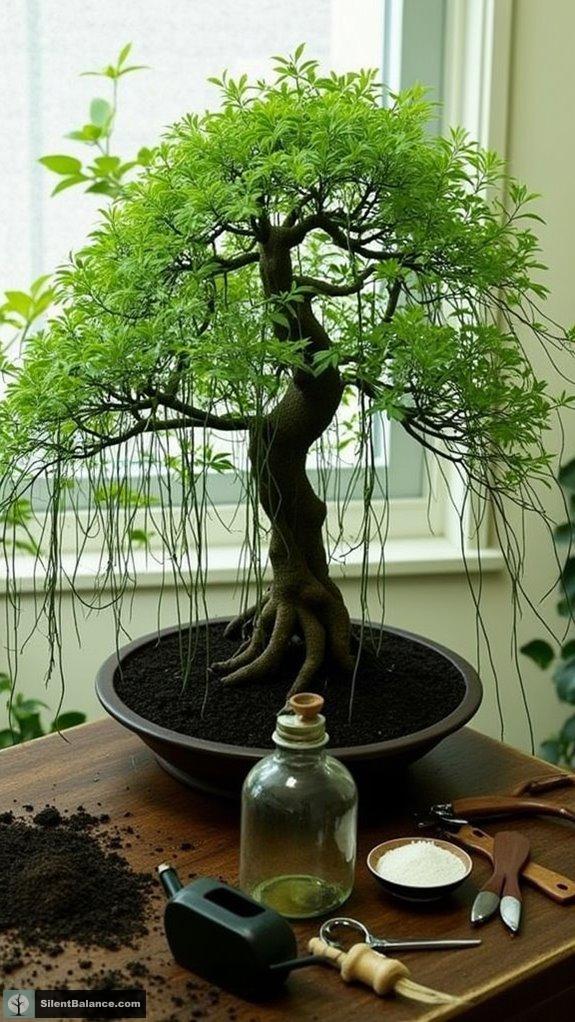
To really thrive, your indoor bonsai needs a solid nutritional game plan, don’t you think?
To flourish, your indoor bonsai requires a well-thought-out nutritional strategy, wouldn’t you agree?
When it comes to feeding your green gem, here are three key strategies:
- NPK Balance: Opt for a balanced fertilizer like 6:10:6 to keep growth steady year-round.
- Liquid Gold: Use liquid fertilizers for ideal absorption, especially during active growth phases.
- Micronutrient Magic: Don’t forget micronutrients; they’re essential for combating deficiencies.
Physiological Benefits of Shape Preservation
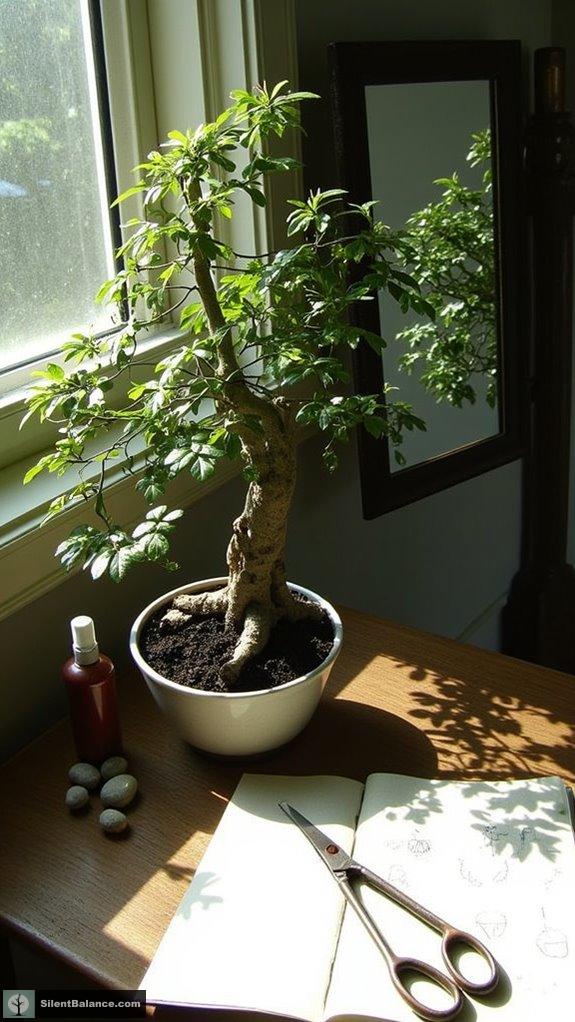
When you think about shaping your bonsai, it’s not just about aesthetics—it’s about physiology too.
Preserving unique shapes strengthens your tree’s branches and trunk, making it more resilient to indoor stresses. Ever noticed how a well-pruned tree adapts better in low-light conditions? That’s not magic; it’s effective design!
By minimizing excessive leaf loss, you keep your bonsai humming along, creating a lovely little microclimate. With a robust structure, it requires fewer corrective interventions, which means less jostling and stress.
And let’s not forget water balance—a well-maintained shape optimizes root efficiency while reducing the risk of root rot.
Cultural Insights Into Bonsai Artistry
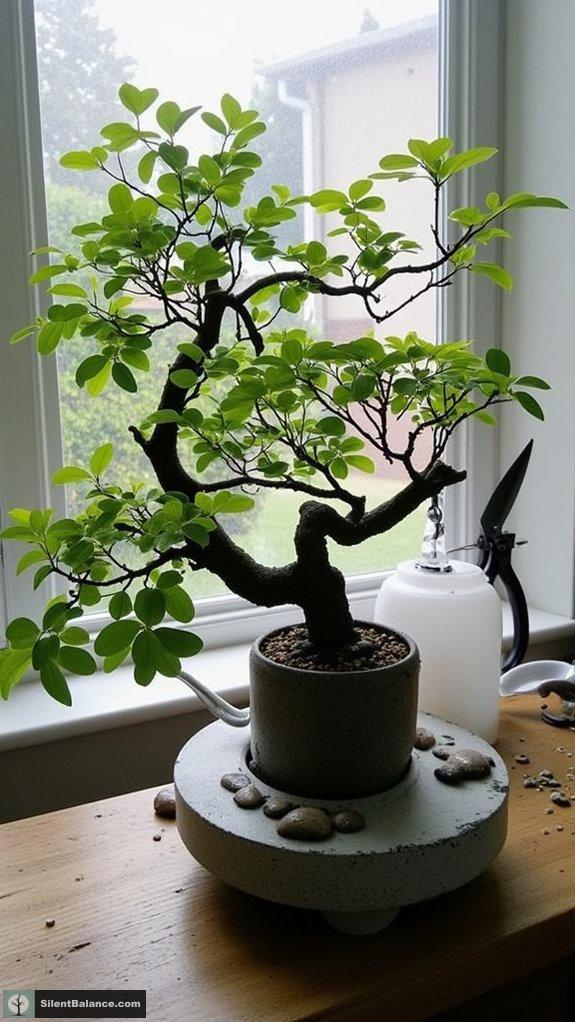
Bonsai artistry isn’t just a hobby; it’s a rich cultural tapestry woven through history, philosophy, and aesthetics.
Have you ever wondered what makes these miniature trees so meaningful? Here are three perspectives that warm my heart:
Exploring the significance of bonsai reveals a world of history, mindfulness, and cultural richness that captivates the heart.
- A Historical Journey: From China’s Han Dynasty to Japan’s 12th-century aristocracy, bonsai embodies centuries of evolution and artistry.
- Zen Influence: Shaped by Zen Buddhism, bonsai’s elegance mirrors simplicity and mindfulness, inviting reflection.
- Cultural Narratives: Tales of selflessness, honor, and beauty in imperfection resonate deeply in the Japanese psyche, like a cherished old friend.
Enhancing Interior Spaces With Distinctive Bonsai Forms
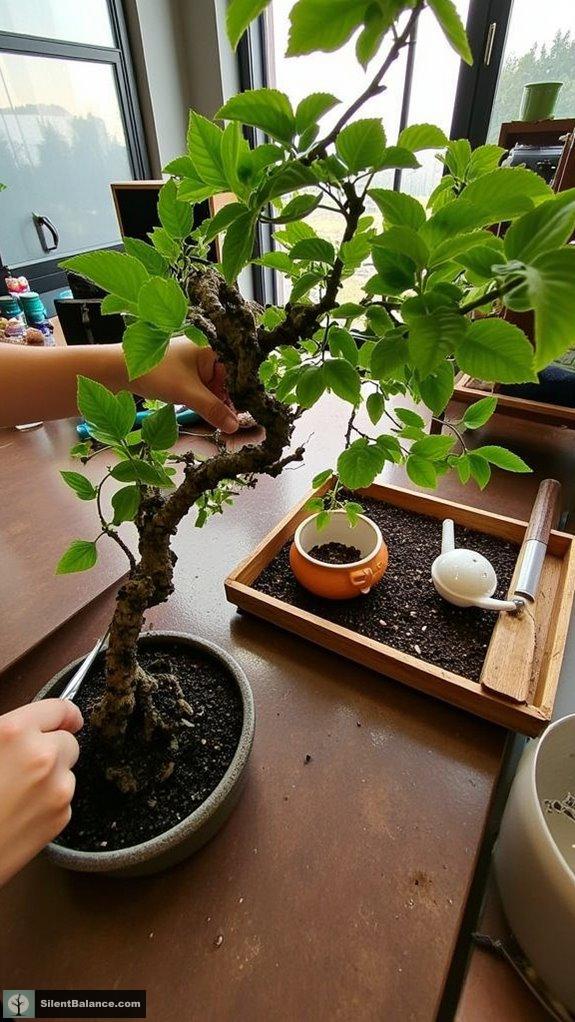
Visualize stepping into a room where a perfectly shaped bonsai tree immediately draws your eye, its artistry breathing life into the space. Isn’t it stunning how these miniature marvels can transform a flat interior into a dynamic environment?
Whether you’re a minimalist or an eclectic connoisseur, bonsai forms seamlessly fit your vibe, acting as striking focal points. Their elegant lines invite curiosity, adding both sophistication and an organic touch to your decor.
Imagine placing a twisted juniper on your windowsill. It not only purifies the air but also sparks joy.
And let’s face it, who wouldn’t feel inspired by a flourishing piece of nature? So, why not embrace bonsai artistry and let these charming trees usher tranquility into your home?
Watering Frequency for Bonsais
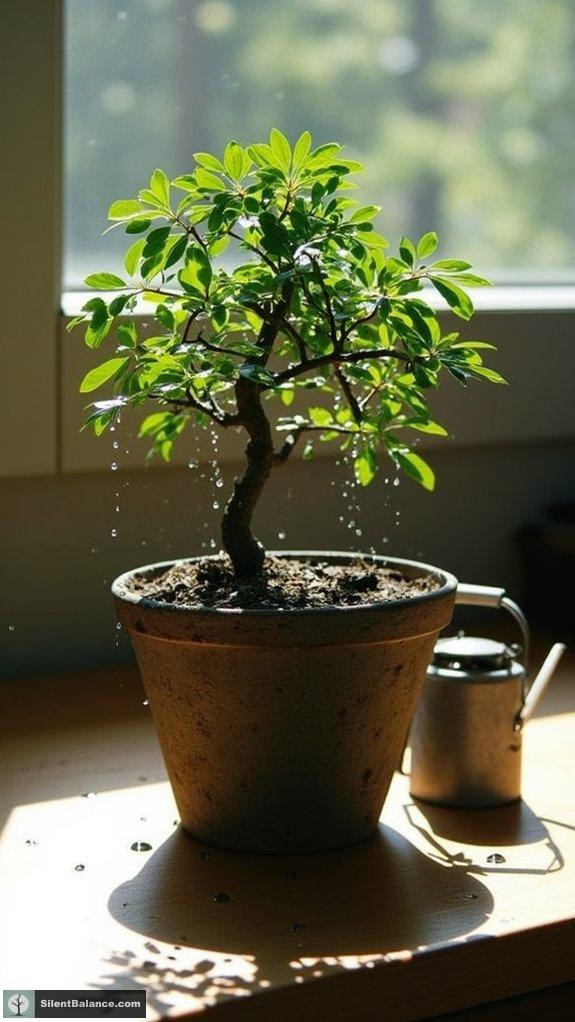
Creating a striking and harmonious interior isn’t just about aesthetics; it’s also about understanding the needs of your beloved bonsai trees, especially when it comes to their watering frequency.
Creating a beautiful interior means understanding your bonsai trees’ unique needs, especially their watering requirements.
Here are three essential tips for keeping your bonsais thriving:
- Species Sensitivity: Each bonsai species has unique moisture preferences—know yours!
- Pot Size Matters: Smaller pots dry out quickly; be vigilant and check daily.
- Watch the Climate: Adjust your watering during heat waves and seasons—those tiny trees can’t handle neglect!
Water thoroughly, ensuring roots get soaked, but don’t drown them! Morning is the best time—let them sip before the day heats up.
Ready to keep your little green friends happy? Your indoor oasis depends on it!
Cultural Heritage of Trees
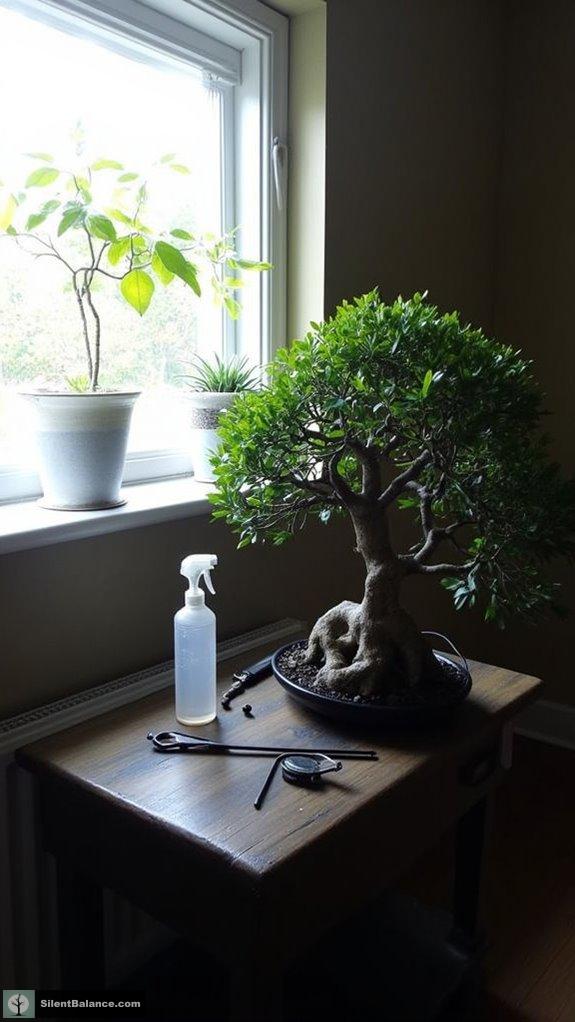
While many may think trees are just tall plants, embracing the rich cultural heritage of bonsai reveals an enchanting world steeped in history and philosophy.
Can you envision, for instance, that bonsai art began in China over 2,000 years ago? The Han Dynasty saw miniature settings that mirrored nature’s majestic forms, echoing animals and myths.
When Japan adopted bonsai, it became a Zen treasure, elegantly merging spirituality with horticulture. Think of the *hachi-no-ki* style—a bowl tree that emphasizes aesthetics!
As we nurture bonsai indoors, we connect with an artistic legacy, cultivating patience and reflection.
Each small tree is a living cultural artifact, whispering tales from centuries past. Isn’t it fascinating how a humble plant can encapsulate such profound artistic expression?
Questions and Answers
How Long Can a Bonsai Tree Maintain Its Artistic Shape Indoors?
How long can a bonsai tree keep its artistic shape indoors? Well, it’s all about commitment!
With diligent pruning every few months and timely wiring, I’ve seen trees retain their stunning forms for years. But neglect them, and you could lose your masterpiece in just months.
You’ve got to stay on top of growth cycles, lighting, and nutrition—after all, a well-fed bonsai is a happy bonsai. Isn’t that the real art of bonsai?
What Common Mistakes Affect the Preservation of Bonsai Shapes?
So, let’s plunge into those common bonsai blunders, shall we?
First off, picking the wrong species is a killer—what good’s a Juniper indoors, right?
Then there’s the watering game; over or under can spell doom for our little green buddies.
Oh, and don’t forget light! Uneven exposure can turn your masterpiece into a lopsided joke.
With consistent care, you’ll keep those artistic shapes thriving—your bonsai will love you for it!
Can Indoor Bonsai Shapes Be Altered Significantly Without Harming the Tree?
Can indoor bonsai shapes be altered considerably without harming the tree? Well, sure, but it’s a delicate dance.
Think of it like a bonsai makeover—pruning and wiring can give those little champs a fresh look. Just keep in mind: go slow!
Overdoing it can stress your tree out, and we don’t want that.
Are Certain Bonsai Varieties Better for Indoor Shape Preservation?
Think of your indoor bonsai as a miniature masterpiece, sculpted by your hands.
Certain varieties, like Carmona and Zelkova, shine in shape preservation. Their dense branching and fine leaf structure make them perfect for detailed pruning.
Ever tried wiring a Ficus? It’s like teaching a tree to dance!
With regular care—pruning, wiring, and just the right light—your bonsai will thrive and maintain its artistic flair, turning your space into a lively botanical gallery.
How Can Indoor Humidity Levels Be Monitored for Bonsai Health?
Monitoring indoor humidity for our beloved bonsai is essential, right?
I typically go for a digital hygrometer—it gives me that precise reading, so I know when my little trees are gasping for moisture.
I also use humidity trays; they’re lifesavers! If I catch crispy leaf tips or yellowing, I’m on it, adjusting my misting game.
How about you? Have you noticed those signs too? Let’s keep our bonsai thriving!
References
- https://www.youtube.com/watch?v=kX3XNdR00J4
- https://bonsaiwest.com/resources/bonsai-care/
- https://thursd.com/articles/indoor-bonsai-tree-care
- https://brusselsbonsai.com/recommended-care/
- https://www.ftd.com/blog/bonsai-tree-care
- https://cincinnatibonsai.org/bonsai-tree-style-guide
- https://hookedonbonsai.com/bonsai-styles-and-soil-preferences-from-cascading-to-formal-upright/
- https://en.wikipedia.org/wiki/Bonsai_aesthetics
- https://longwoodgardens.org/blog/2023-05-17/beauty-bonsai-styles
- https://www.pubs.ext.vt.edu/426/426-601/426-601.html

- 11 Best Luxury Sandalwood Candles for 2026 - June 19, 2026
- 11 Best Woven Wicker Gift Baskets for 2026 - June 19, 2026
- 11 Best High Powered Binoculars for 2026 - June 19, 2026
