

If you’re in search of the perfect bonsai tree gift for your home, look no further than the beautiful Ficus or the delightful Dwarf Jade.
When I first embraced the art of bonsai, I had no idea how much these small trees would transform my space. They became my little green companions, radiating tranquility. The mere presence of a bonsai often symbolizes resilience and harmony—qualities we all cherish.
At Silent Balance, we delve deep into the unique symbolism of trees and the joy they can bring into our lives.
I fondly remember gifting a Ficus to my grandmother. Her eyes sparkled with joy as she placed it by her window. That moment wasn’t just about the tree; it was about the memories we’d create together watching it grow.
Bonsai trees are more than just decor; they’re a lifestyle enhancement. Consider gifting one, and you may be surprised at how it can elevate both your space and your spirit!
Quick Takeaways
- Ficus Bonsai: An excellent choice for beginners, fitting well into home decor with its minimal care needs and adaptability to indoor lighting conditions.
- Dwarf Jade: A low-light tolerant option, this bonsai is ideal for those seeking a hardy, attractive gift that requires minimal maintenance.
- Fukien Tea: With its charming small leaves and delicate flowers, it’s perfect for novice bonsai gardeners looking to add beauty to their home.
- Chinese Elm: Easy to shape and prune, this versatile species flourishes indoors, making it a favorite among bonsai enthusiasts and decor lovers.
- Gift Presentation: Enhance the gifting experience with elegant packaging, care guides, and optional customization like personalized pots to add a thoughtful touch.
Benefits of Gifting Indoor Bonsai Trees
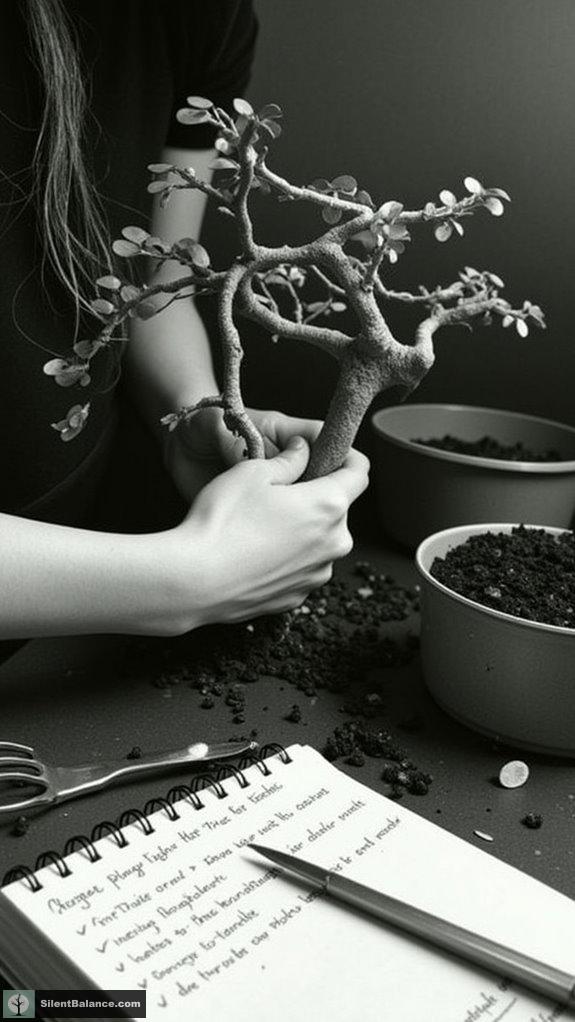
When it comes to gifting, indoor bonsai trees rank high on the list for several reasons that are as impressive as they’re rewarding.
First off, these incredible green friends enhance your indoor environment, breathing life with their artistic shapes. Who wouldn’t want a living piece of art that purifies the air? Additionally, bonsai trees embody the essence of balance and harmony, which can significantly enrich any minimalist living space.
Plus, they symbolize growth and resilience, perfect for showing someone you believe in their journey. Envision gifting a tree representing prosperity—talk about thoughtful! A living tree that grows and thrives for years adds even more value to the gift.
Symbolizing growth and resilience, a bonsai tree is a heartfelt gift to inspire someone’s journey toward prosperity.
And let’s be real, caring for bonsai is like attending a mindfulness retreat in your living room. It’s a rewarding hobby!
Top Indoor Bonsai Species for Home Decor
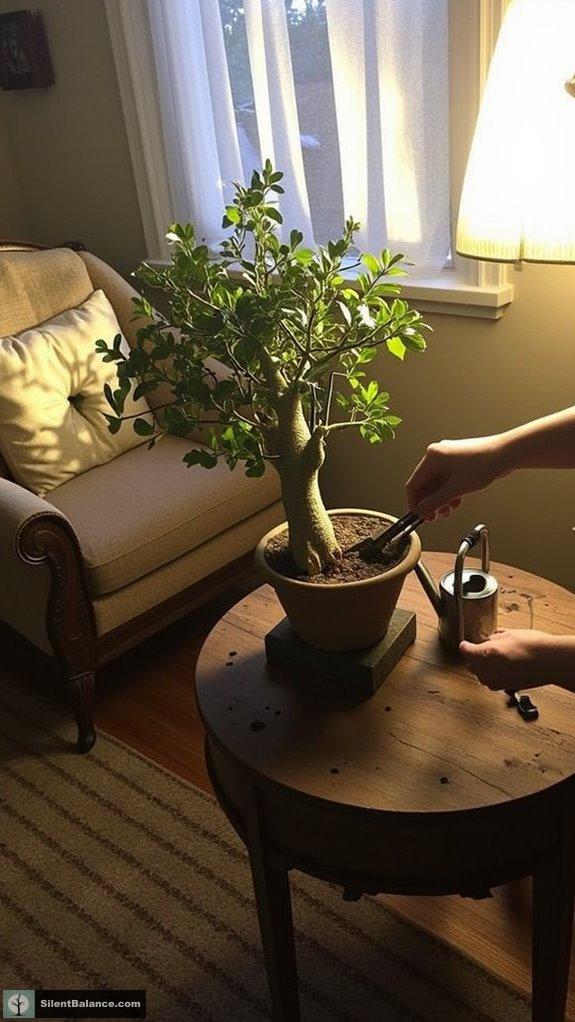
As you immerse yourself in the world of indoor bonsai, you’ll find that selecting the right species can transform your home decor from ordinary to extraordinary.
Here are my top picks to evaluate:
- Ficus Bonsai: Resilient and perfect for beginners, it basks in warm, indirect light. Tropical trees thrive in these indoor environments, making them ideal choices for decoration. The spiritual significance of Japanese versus Chinese bonsai often influences the selection of species.
- Dwarf Jade: This succulent shines in low-light conditions and asks for minimal fuss.
- Fukien Tea: With its charming small leaves and delicate flowers, it’s a delightful addition for any novice.
- Chinese Elm: Easy to shape and prune, it flourishes, making it a quintessential indoor companion.
Each species brings its own unique flair, so why not create your own bonsai oasis at home?
Your space deserves that quirky touch!
Care Requirements for Indoor Bonsai Gifts
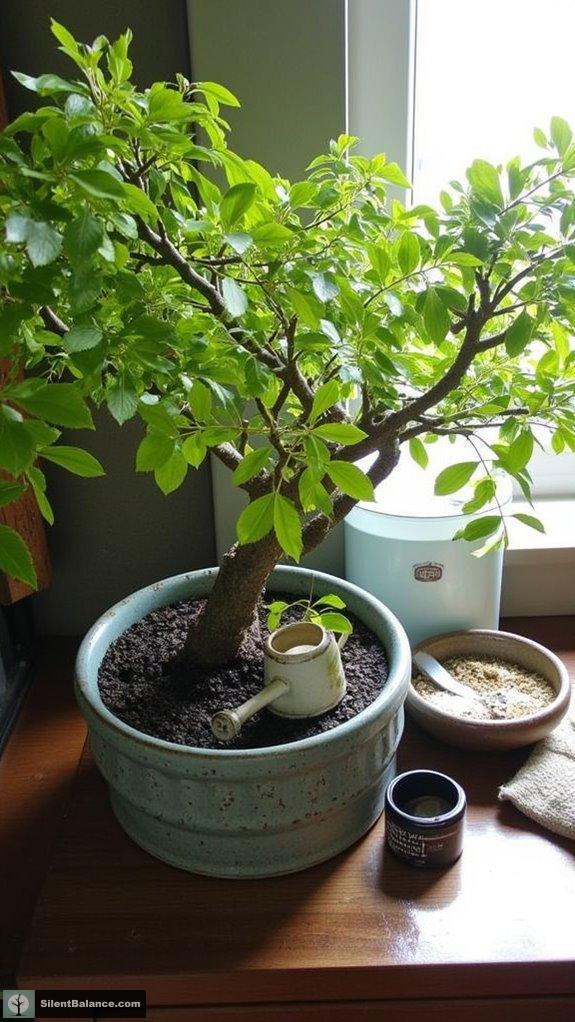
Selecting the perfect bonsai species for your home is just the beginning of your bonsai journey; you’ll want to give your leafy friend the right care to thrive.
These trees crave several hours of direct or bright indirect sunlight daily—think of it as their morning coffee. Position yours near a southeast or west-facing window.
Watering? Simple! When the soil’s dry on top, hydrate that lovely root mass thoroughly.
And don’t forget to mist daily; they adore humidity.
Consistent temps around 15-20°C are key—keep ’em cozy but not too hot.
Fertilize every couple of weeks with special bonsai food to keep them vibrant. Proper bonsai care is vital for a healthy tree.
What’s the catch? Just don’t overdo it!
Ready to nurture your green masterpiece?
Price Range and Accessibility for Bonsai Gifts
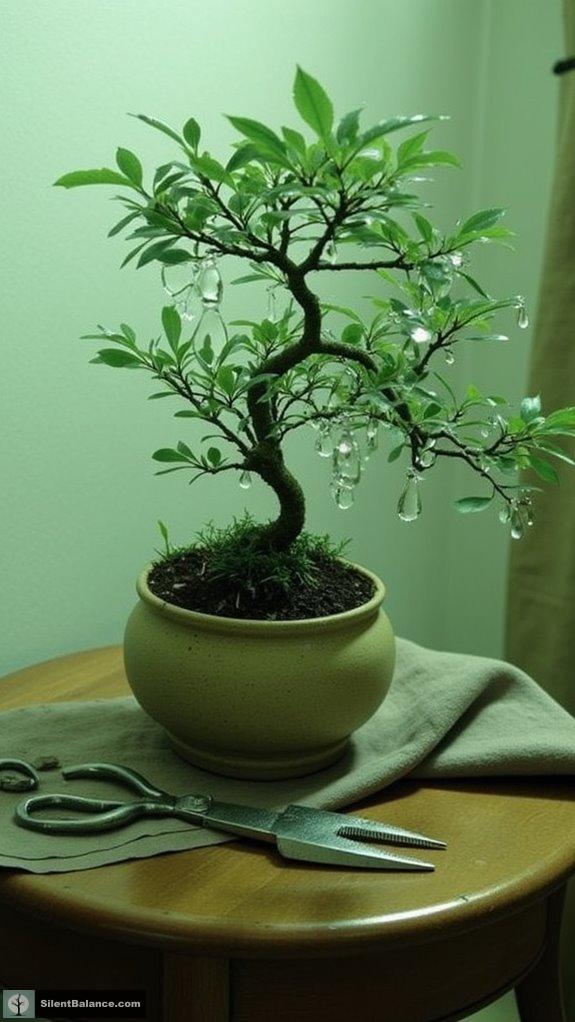
Finding the right bonsai gift doesn’t have to feel like searching for a needle in a haystack, especially when you know what to look for!
Selecting the perfect bonsai gift can be a breeze when you know the options available!
Here’s a simple price guide to help you navigate:
- Starter Bonsai ($8 – $20): Perfect for those new to the bonsai world.
- Mid-Range Trees ($25 – $50): Includes beautiful varieties like Dwarf Jade and Boxwood, striking a balance between quality and accessibility.
- Premium Options ($75 – $180+): Think of artistic gems like Rock Junipers and Japanese Maples.
- Specialty Gifts (from $100): Eye-catching, decorative pots that scream, “Look at me!”
With online retailers offering nationwide shipping and care instructions, gifting a bonsai is a breeze.
Easy peasy, right?
Ideal Bonsai Options for Beginners
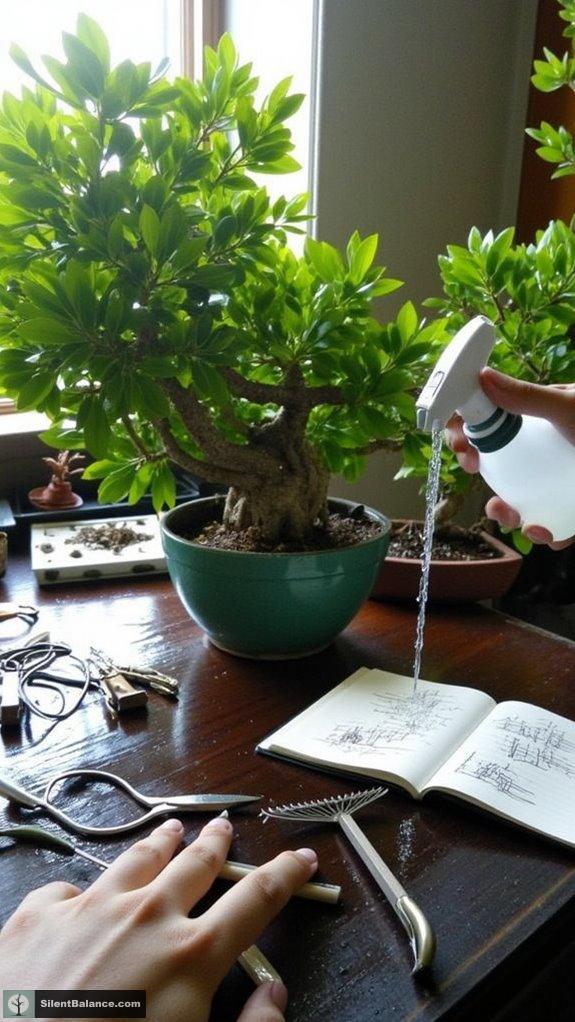
When you’re diving into the enchanting world of bonsai, it helps to know which species will welcome you with open branches.
I’d recommend starting with the Chinese Elm—it’s like the friendly neighbor of the bonsai family, offering vigorous growth and easy styling through clip-and-grow techniques.
Then there’s the Willow Leaf Ficus, which is forgiving and keeps up a cozy vibe indoors.
Miniature Boxwood? Talk about adaptable; it thrives under a variety of lighting conditions!
For a hardy option, you can’t go wrong with the Ponytail Palm—its bulbous base and low maintenance needs scream beginner-friendly.
Environmental Considerations for Indoor Bonsai
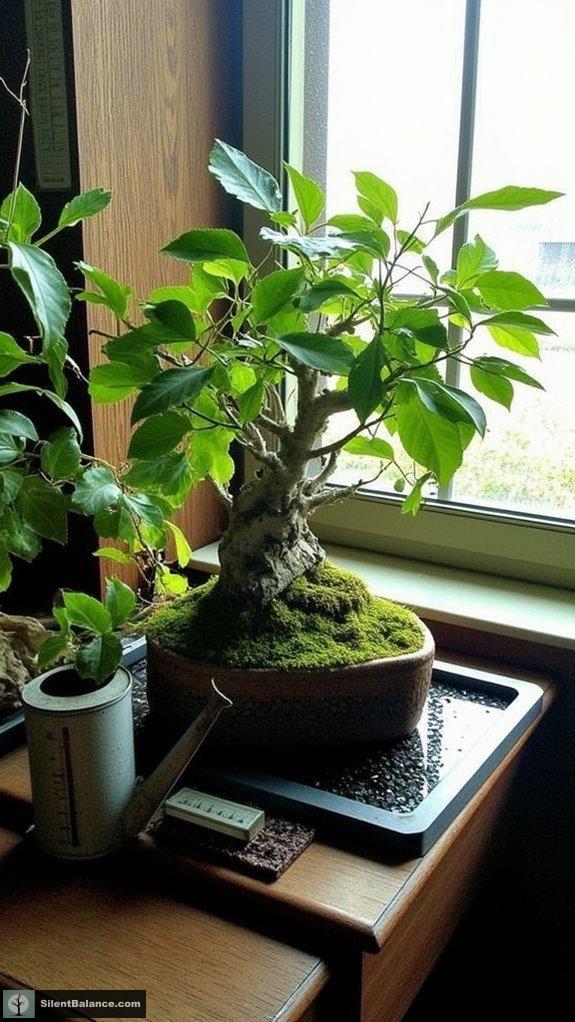
While bonsai trees might seem like tiny living sculptures, they actually require a delicate balance of environmental factors to thrive indoors.
To create a nurturing atmosphere, consider these essentials:
- Humidity: Use humidity trays filled with water and pebbles. This boosts local humidity without waterlogging your bonsai’s roots.
- Light: Position your bonsai near southeast, south, or west-facing windows for ideal sunlight.
- Temperature: Keep indoor temperatures above 55°F (13°C), avoiding sneaky drafts.
- Watering: Master the art of watering, ensuring the soil is moist—but not a swamp!
With these tips, your indoor bonsai not only survives but thrives, giving you proud moments bragging to your friends about your “green thumb.”
Who’s ready for a little bonsai adventure?
Symbolism and Meaning Behind Bonsai Trees
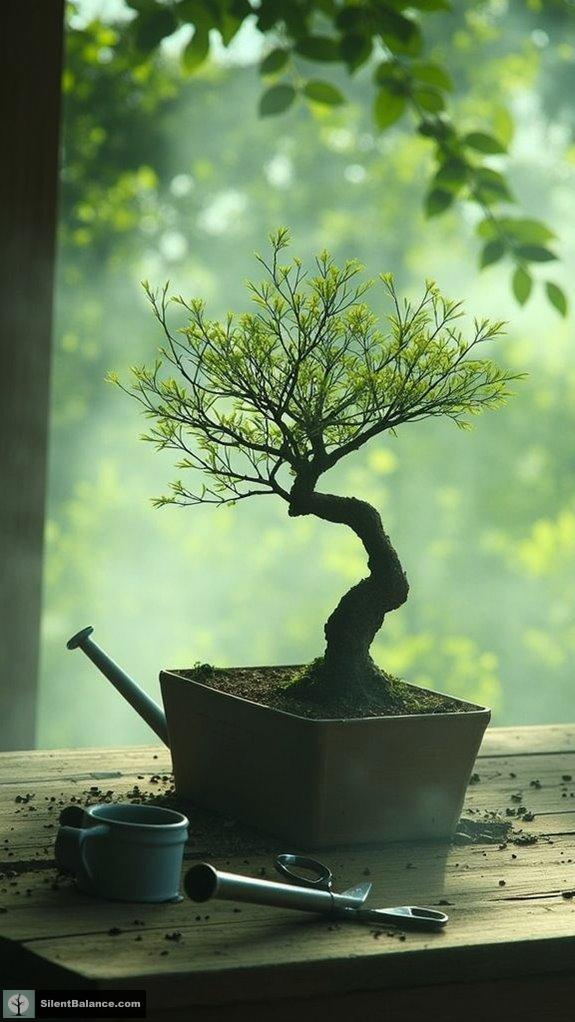
Bonsai trees aren’t just stylish decorations; they carry a treasure trove of symbolism and meaning that can brighten up any space.
Think about it—these miniature wonders reflect harmony, balance, and peace, embodying nature’s order right in your living room. Originating from the rich traditions of Japan and China, they’re not just plants; they’re a bridge to spiritual calm.
When you gift a bonsai, you’re conveying good wishes and promoting mindfulness. Each species has its own unique vibe; isn’t that nifty?
Plus, shaping them involves patience and discipline, reminding us that growth takes time.
Watering Frequency Guidelines
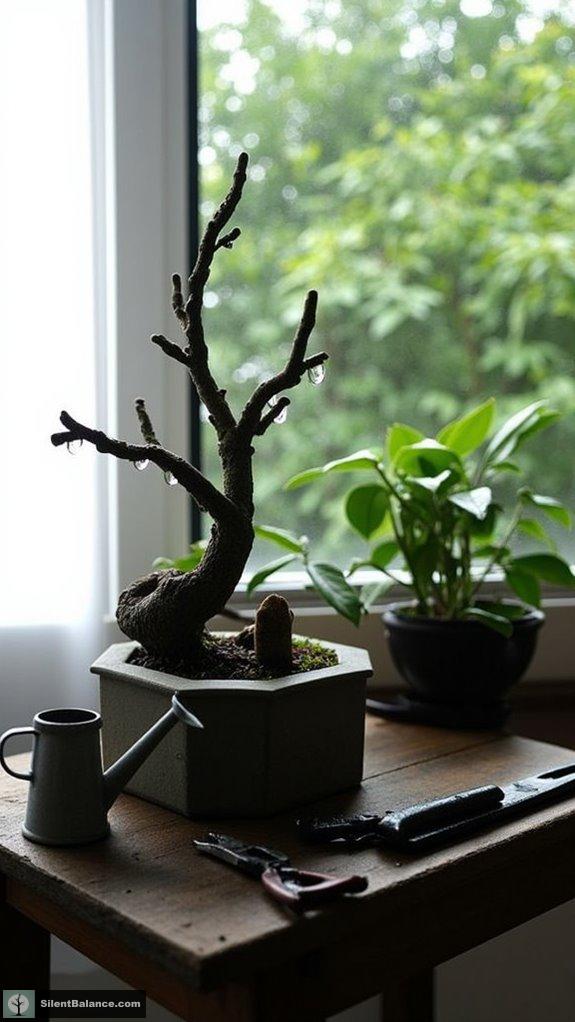
Keeping your bonsai thriving requires a keen eye on its watering needs, and trust me, it isn’t as simple as just pouring a little water and calling it a day!
To truly nurture your little tree, consider these guidelines:
- Location Matters: Outdoor bonsais need more love than those basking inside.
- Temperature Check: Warmer days mean quicker drying, asking for more frequent watering.
- Pot Size Pondering: Smaller pots don’t hold moisture like their bigger siblings.
- Soil Savvy: Well-draining soils require more attention to keep roots happy.
Always monitor soil moisture, and don’t stick to a strict schedule—your bonsai will reward your attentiveness with vibrant growth!
Cultural Significance of Trees
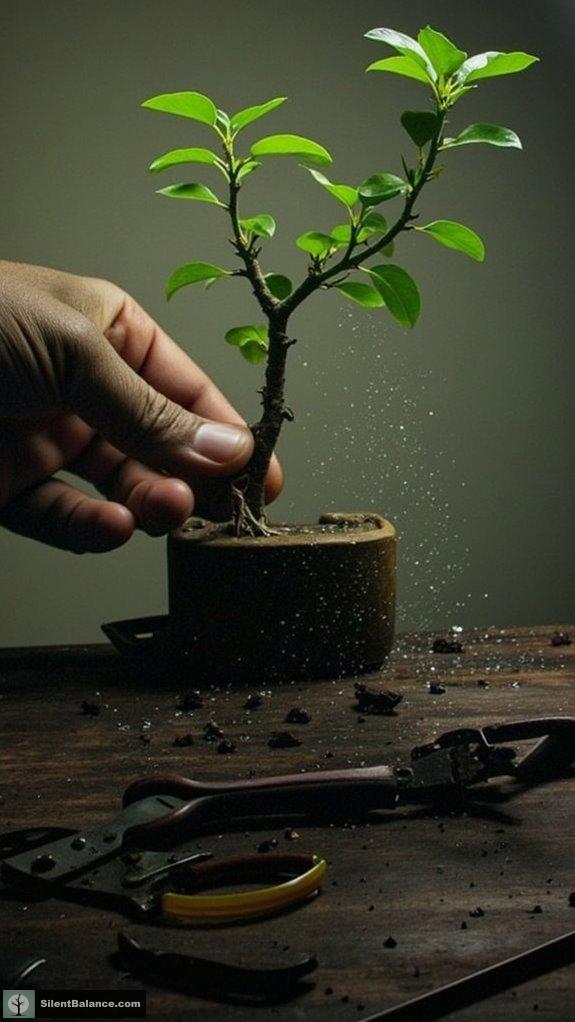
When you think about trees, it’s easy to overlook their profound cultural significance, isn’t it?
Bonsai, for instance, isn’t just about gardening; it’s a delicate dance of history, art, and philosophy. Originating from China over 2,000 years ago, bonsai found a spiritual home in Japan, transforming into a beautiful symbol of harmony between nature and humanity.
Here’s a quick glance at some key aspects:
| Origin | Cultural Role | Symbolism |
|---|---|---|
| China | Historical significance | Prestige and honor |
| Japan | Zen and aesthetics | Impermanence and virtue |
| Modern | Mindfulness practice | Patience and care |
Questions and Answers
Can Bonsai Trees Help Improve Indoor Air Quality?
Ever felt like your indoor air needs a little freshening up?
Bonsai trees aren’t just stunning; they’re air quality superheroes!
These mini marvels absorb carbon dioxide and release oxygen like tiny green factories.
They tackle pesky indoor pollutants too, making your space healthier and more vibrant.
Plus, their delightful presence can boost your mood!
Who wouldn’t want a living art piece that also cleans the air?
It’s time to welcome nature into your home!
Do Bonsai Trees Attract Pests or Insects?
Absolutely, bonsai trees can attract pests, but don’t panic—I’m here to help!
You might notice those pesky spider mites or sticky aphids if your tree’s stressed.
Regular inspections keep you ahead, right?
A quick spray of soapy water works wonders before you break out the big guns.
Have you tried blasting them off with water? It’s surprisingly satisfying!
How Long Do Bonsai Trees Typically Live?
Bonsai trees can live anywhere from a decade to several centuries! Isn’t that amazing?
For instance, Ficus bonsai thrive for over 100 years, while some Junipers cap out around 50. It’s all about care and conditions.
You’ve got to treat them like the little divas they are, with consistent watering, proper pruning, and protection from those pesky pests.
Think you’re ready to nurture a tiny forest? Let’s get growing! 🌳✨
Can Bonsai Trees Be Kept Outside During Summer?
Ah, the age-old debate: “Can bonsai trees be outside in summer?” It’s like asking if you can take your cat for a swim.
Yes, my friend, the right species loves basking in the summer sun. Just be sure nighttime temps stay cozy above 50°F.
Keep in mind to monitor that moisture—your bonsai doesn’t do well with soggy feet! Give them morning sun but avoid the midday scorch, and they’ll thank you with lovely foliage.
What Is the Best Way to Display a Bonsai Tree?
When it comes to showcasing your bonsai, eye-level placement is key!
I love using short poles—a little elevation can make a big statement.
Consider a simple backdrop, like a neutral wall, so the tree can shine without distractions.
And hey, don’t overcrowd the scene; let your bonsai steal the spotlight!
Got a favorite pot? That’s a great way to add some flair while keeping the elegance intact.
Happy displaying!
References
- https://www.bonsaiempire.com/tree-species/indoor-bonsai
- https://easternleaf.com/indoor-bonsai-trees-s/547.htm
- https://forum.bonsaimirai.com/t/best-trees-for-indoor-bonsai/11363
- https://www.bonsaiboy.com/catalog/recommended.html
- https://www.bonsaioutlet.com/beginner-bonsai-trees/
- https://hookedonbonsai.com/how-to-gift-a-bonsai-tree-that-feels-thoughtful-and-special-this-christmas/
- https://bonsai2u.co.uk/how-to-choose-the-perfect-bonsai-tree-gift/
- https://www.bonsaidirect.co.uk/bonsai-tree-meanings-beautiful-gifts/
- https://www.bonsaify.com/blogs/news-and-more/giving-a-bonsai-tree-as-a-gift
- https://www.youtube.com/watch?v=Jrn4xjwuDaU

- 11 Best Luxury Sandalwood Candles for 2026 - June 19, 2026
- 11 Best Woven Wicker Gift Baskets for 2026 - June 19, 2026
- 11 Best High Powered Binoculars for 2026 - June 19, 2026
