
Looking to sprinkle some zen vibes into your space with miniature bonsai trees? First, pick a beginner-friendly species like a Ficus or a Chinese Elm—perfect for those of us who aren’t plant whisperers! Make sure you place them near generous sunlight, ideally a south-facing window, while keeping humidity levels cozy with trays. Don’t forget to keep an eye on watering! With these tips, you’ll have a vibrant bonsai oasis in no time. Ready to dig deeper into the bonsai world?
Quick Takeaways
- Select beginner-friendly species like Chinese Elm or Ficus for easy care and vibrant décor in small spaces.
- Position miniature bonsai near south-facing windows to maximize sunlight exposure and avoid drafts for optimal health.
- Maintain 40%-60% humidity indoors using humidity trays, ensuring tropical species receive even higher humidity levels.
- Implement consistent watering routines, monitoring soil moisture closely to prevent root rot while promoting healthy growth.
- Rotate bonsai regularly to prevent one-sided growth, enhancing its aesthetic appeal and longevity as a decorative piece.
Selecting the Right Bonsai Species for Your Space
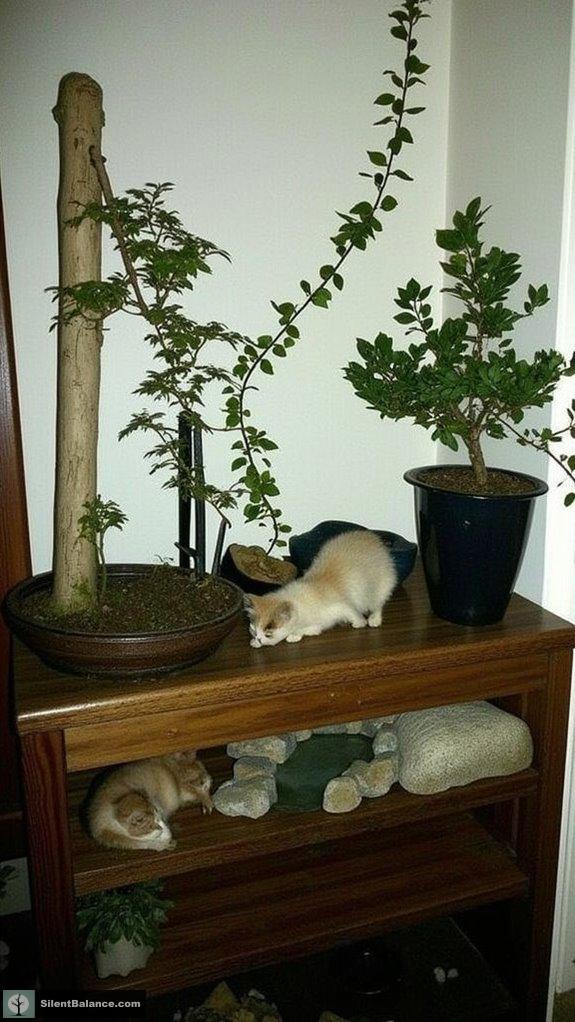
When it comes to selecting the right bonsai species for your space, it’s not just about finding a pretty plant—though let’s be honest, that’s a big part of the charm!
Choosing the ideal bonsai isn’t just about aesthetics; it’s the joy of finding a perfect companion for your space!
To kick off your journey, think about size. If space is tight, mame bonsai under 6 inches are perfect. For a bit more flair, consider shohin bonsai, which range from 6-8 inches. One of the smallest bonsai species to consider is the Acer Momiji, recognized as the smallest bonsai tree. Miniature bonsai landscaping can add a serene aesthetic to your home decor.
As a beginner, I recommend species like Chinese Elm or Ficus varieties. They’re forgiving and thrive indoors!
Keep an eye on light and temperature; Ficus is a champ in low light, while Junipers prefer the great outdoors.
Ideal Placement Strategies for Indoor and Outdoor Bonsai
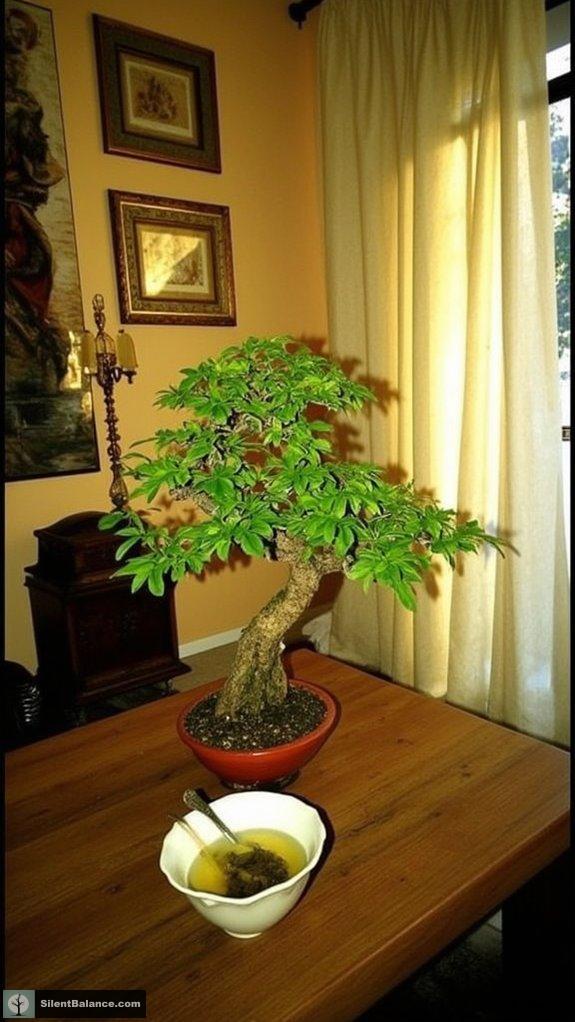
Creating a thriving bonsai environment goes beyond just picking the right species, although that’s definitely the first step.
When it comes to common bonsai varieties, their ideal placement can make all the difference. For indoor plant care, I always recommend positioning your bonsai near a south-facing window to soak up that glorious sunlight. Just keep in mind, drafts are a bonsai’s arch-nemesis. Proper placement is crucial for maintaining the health and longevity of your bonsai.
Outdoors, select bright spots but don’t forget to give them some afternoon shade during those steamy summer months.
Seasonal changes? Oh, they love it!
And let’s not forget humidity trays—your bonsai will thank you for keeping its environment cozy.
Maximizing Sunlight Exposure for Healthy Growth
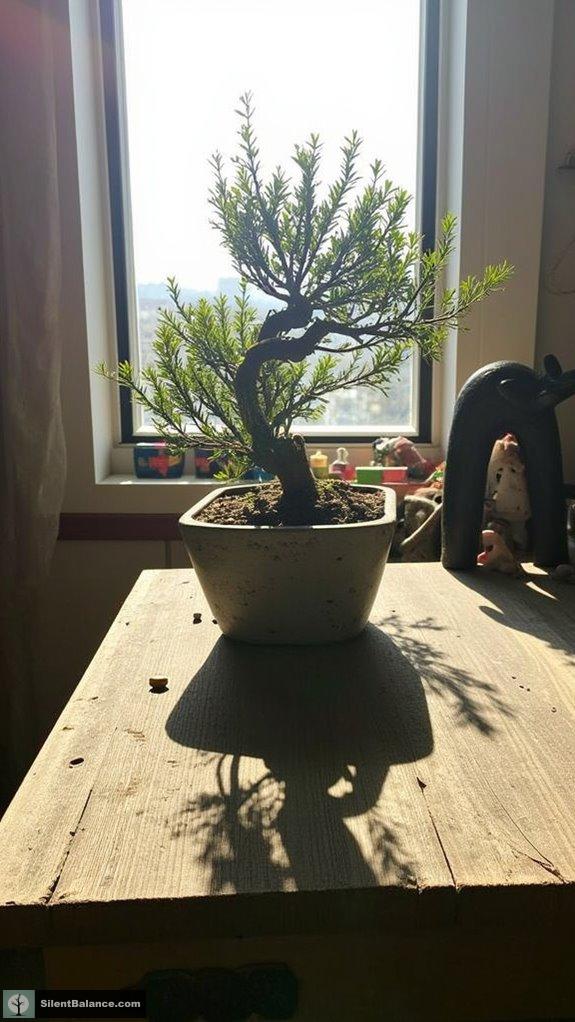
Sunlight isn’t just a nice-to-have for bonsai; it’s the lifeblood that fuels their impressive growth and energy. To thrive, most bonsai need about 5 to 6 hours of sunlight daily. If you’ve got a juniper bonsai, you’re in luck—it craves up to 15 hours of direct sun!
Sunlight is essential for bonsai health—5 to 6 hours a day for most, but junipers thrive on 15!
When placing your bonsai, think south-facing windows indoors for that juicy indirect light. And keep in mind to rotate it every now and then—no one likes a one-sided tan!
During warmer months, outdoor bonsai will soak up the rays, but keep in mind that peak noon sunshine can be a bit too intense for some. Additionally, understanding the perfect placement tips for your bonsai can help ensure it receives optimal light exposure.
Balanced sunlight duration and light intensity make all the difference for your tiny majestic tree!
Maintaining Optimal Humidity Levels Around Your Bonsai
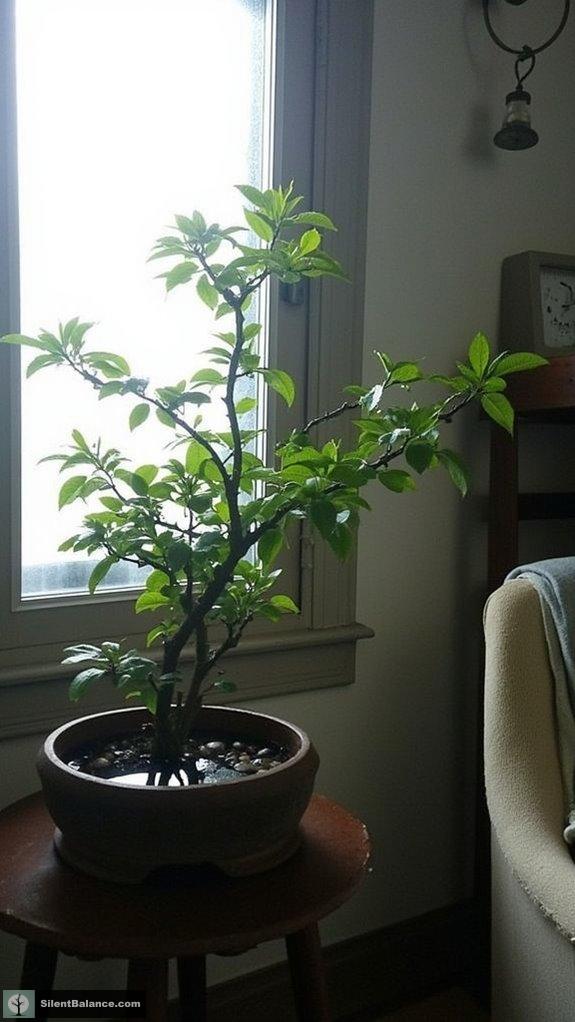
Maximizing sunlight is just the beginning of your bonsai care journey; humidity plays an essential role, too.
Did you know that most indoor bonsai thrive at 40% to 60% humidity? Tropical species, like the Fukien Tea, enjoy a toasty 50% to 70%!
To keep your bonsai happy, I recommend humidity monitoring with hygrometers.
Place humidity trays under your pots and mist your leaves—a little moisture magic goes a long way!
Remember, avoid hot drafts from HVAC—those can sap your bonsai’s health faster than you can say “leaf drop.”
If you’re indoors, consider a gasping humidifier.
Balancing indoor vs outdoor humidity is key to a flourishing bonsai, as different environmental conditions significantly affect their overall health.
Your little green friend will thank you!
Effective Watering Techniques for Bonsai Care
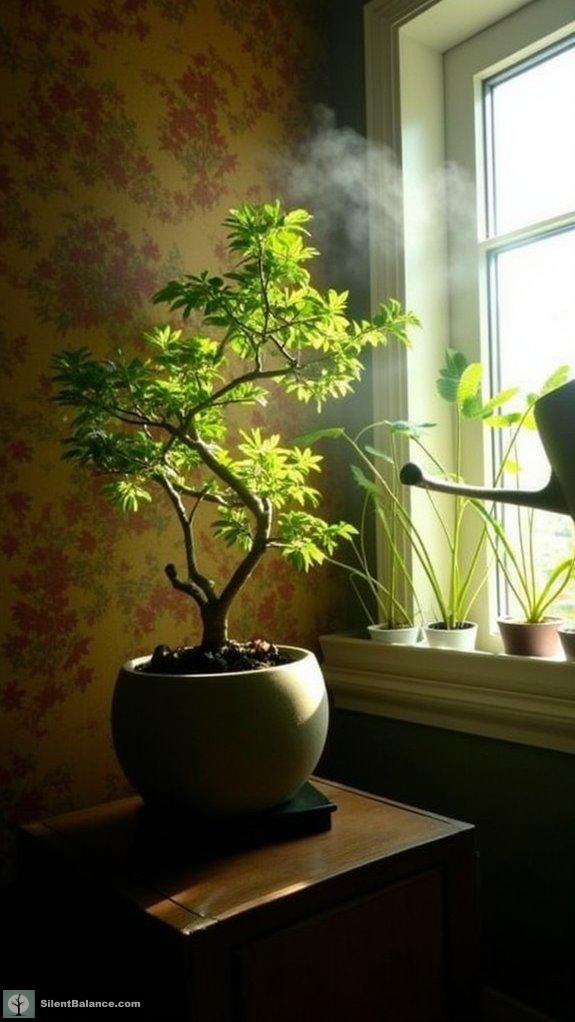
When it comes to keeping your bonsai happy, effective watering techniques are essential—after all, who wants a thirsty tree sulking in a pot?
Finding the right watering frequency is a game changer. You’ll want to monitor soil moisture like a hawk; when it feels slightly dry, it’s showtime for your watering can. Recall, these little beauties can’t store water, so consistency is key!
Top watering works wonders, just let the water flow evenly until it drains out the bottom.
Prefer something more hands-on? Go for bottom watering—soak those roots for a deep drink!
Oh, and keep an eye on leaf conditions. They’ll tell you more than a chatty neighbor.
Keep it innovative, and your bonsai will thrive!
Fertilizing Your Bonsai for Robust Health
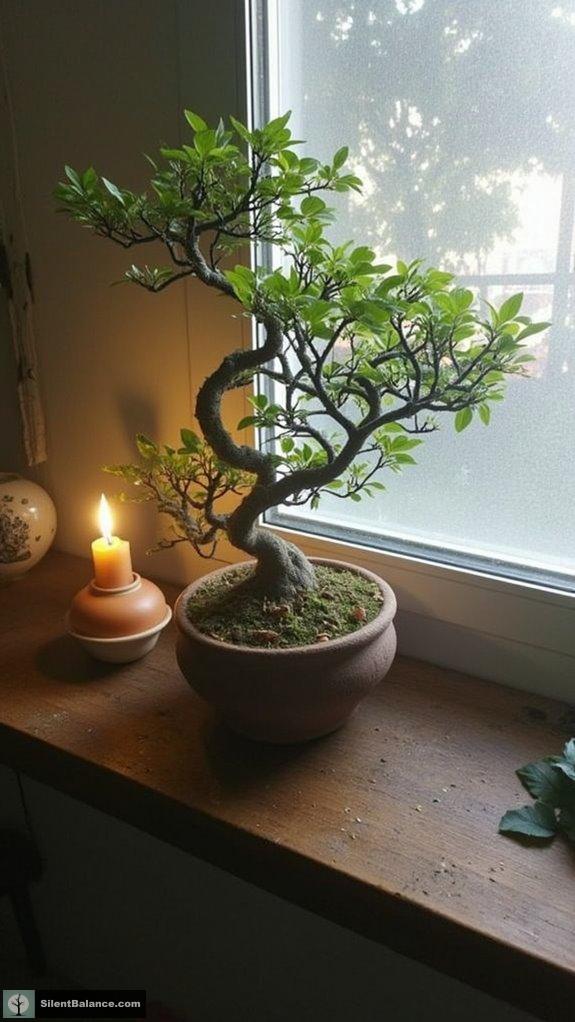
While keeping your bonsai thriving might sound like a rewarding challenge, understanding how to fertilize your little tree can feel like deciphering a secret code.
But fear not! First, let’s talk fertilizer types. You’ve got your organic goodies, like bone meal and seaweed extract, which work wonders slowly.
Then there’s the synthetic stuff—commercial brands like Miracle-Gro—perfect for a quick boost.
Now, pay attention to nutrient ratios: high nitrogen in spring (think 10:6:6), balanced in summer (6:6:6), and lower nitrogen for autumn (3:6:6).
Top-dressing releases nutrients steadily, while liquid feeding is great for indoor bonsai on a growth spree.
Just keep in mind, moderation is key! Overdoing it can lead to a fertilizer meltdown—yikes! When in doubt, start slow, and your bonsai will reward you with leafy delight!
Pruning Techniques to Shape Your Bonsai Aesthetically
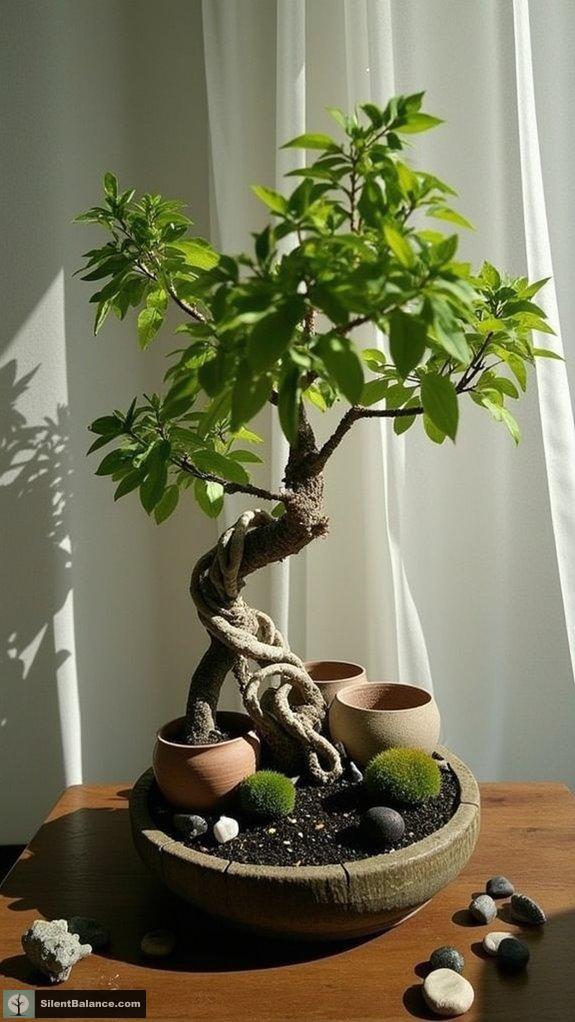
Pruning your bonsai is like giving it a stylish haircut—it’s not just about keeping it neat but shaping its personality too!
To achieve that stunning aesthetic, I always focus on a few key techniques:
Achieving that breathtaking look involves mastering essential pruning techniques that refine and define your bonsai’s character!
- Maintenance pruning: This refines the existing shape and promotes healthy growth.
- Structural pruning: A bit more adventurous, this defines the primary shape, perfect for bold bonsai styling.
- Directional pruning: It’s crucial for keeping branches in check, avoiding chaos!
- Thinning foliage: Allowing light to sneak in rejuvenates inner growth, keeping your bonsai vibrant.
Isn’t it fascinating how these techniques shape our trees?
Embrace the process, and watch your bonsai flourish with personality!
Enhancing Decor With Pebble Trays and Ground Covers
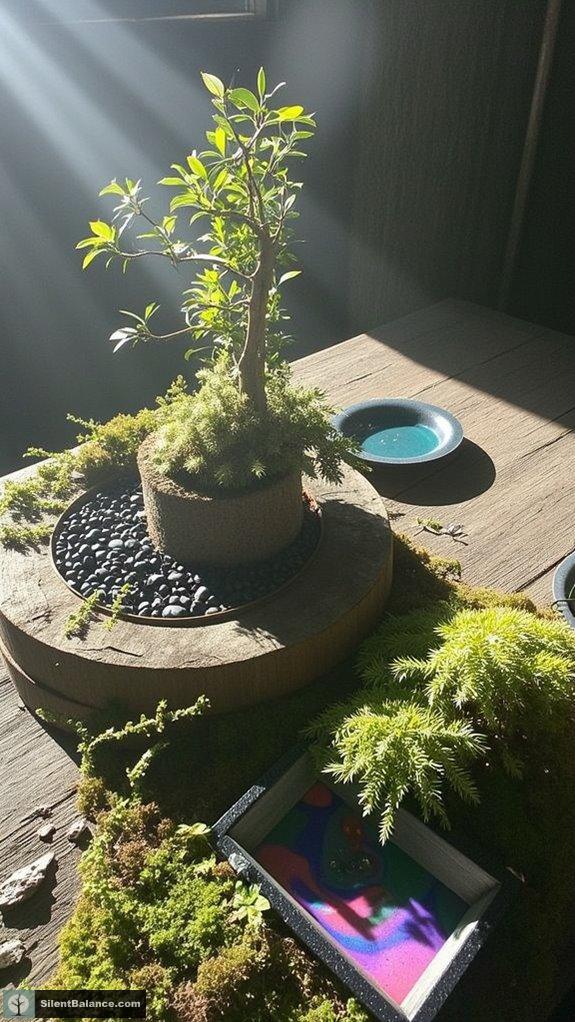
If you’re looking to jazz up your miniature bonsai scene, incorporating pebble trays and ground covers can work wonders.
Trust me, pebble tray benefits are hard to ignore. They increase humidity, prevent root rot, and elevate your bonsai game effortlessly.
Now, picture grounding that moisture oasis with lush ground cover options like mosses or ferns. Not only do they enhance the visual drama, but they also help retain moisture—what a double whammy!
Mixing vibrant pebbles with artful greenery creates a forest-like microenvironment, transporting you to serene vistas.
And let’s face it, who wouldn’t want to show off a chic, zen-inspired setup to friends?
Protection Measures Against Environmental Stressors
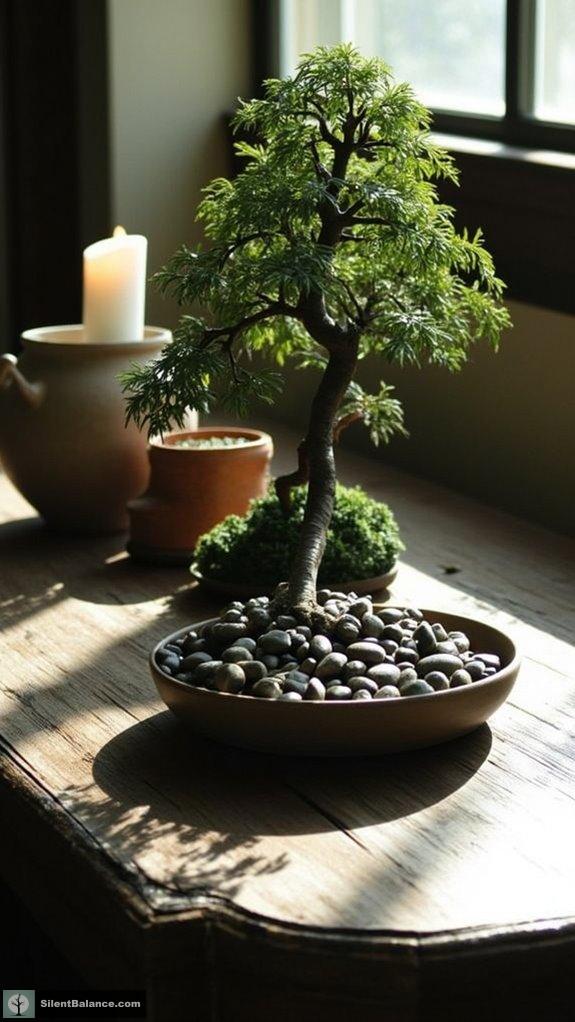
Keeping your miniature bonsai thriving amidst environmental stressors is like being its personal bodyguard—steadfast yet discreet. I take this responsibility seriously because I’ve learned that eco-friendly practices help build its nature resilience.
Here’s how I protect my leafy companion:
- Use shade cloth to shield from harsh midday sun, preventing leaf scorch.
- Switch up its spot seasonally to avoid freezing or heat stress.
- Create a moisture oasis with pebble trays or localized humidity devices.
- Water consistently, avoiding those sneaky root rot culprits.
Regular Maintenance Routines for Long-lasting Bonsai Beauty
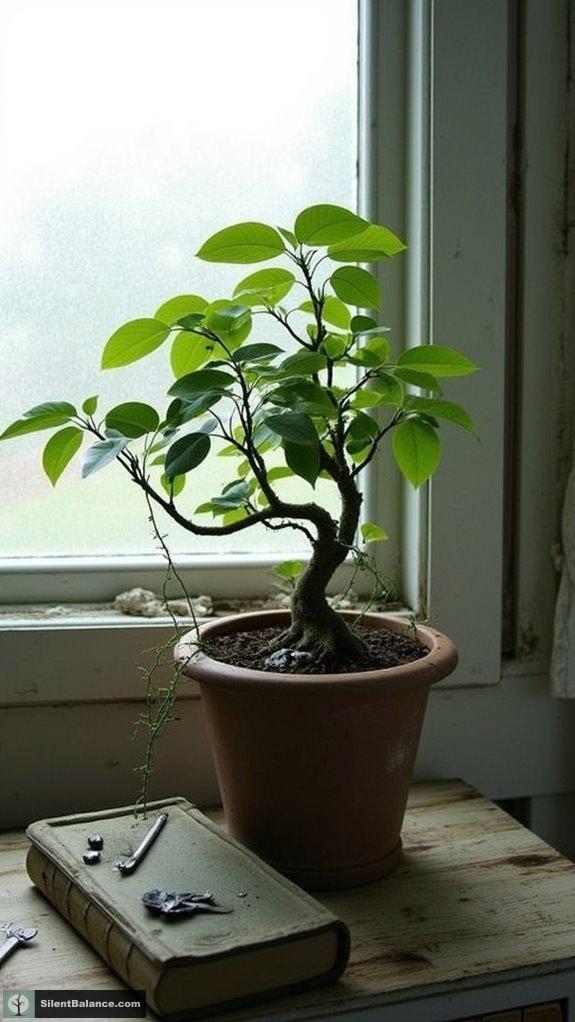
After putting up a solid defense against environmental stressors, it’s time to guarantee your miniature bonsai maintains its stunning charm and vigor.
Regular maintenance is your bonsai’s lifeblood.
Start with a watering routine that’s as precise as a Swiss watch—water deeply when the topsoil is slightly dry. I mean, nobody wants a thirsty bonsai, right?
Next up, consider seasonal adjustments for potting and feeding schedules—spring’s your repotting buddy, while summer’s the time for hearty fertilization.
And don’t forget pest management! A little too much carelessness, and you’ll have uninvited guests.
Keep your bonsai fresh, vibrant, and free of pests, and it’ll thrive in your space, leaving you with that leafy masterpiece you’ve dreamed of!
Tree Symbolism
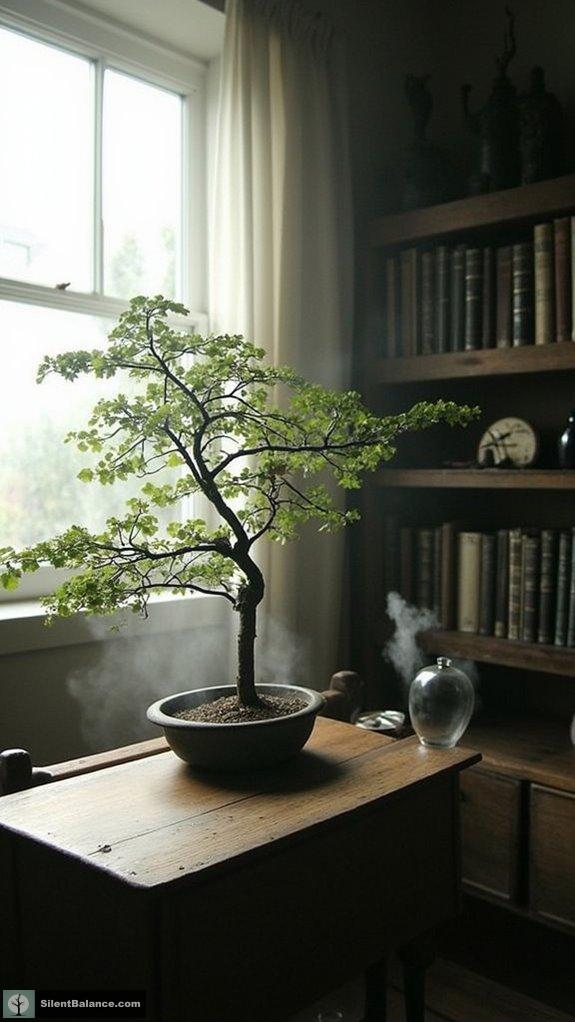
Trees are more than just mere plants; they’re nature’s storytellers, each whispering tales of growth, strength, and resilience. When I think about tree symbolism, I can’t help but marvel at its depth.
Here’s how trees hold significance across cultures:
- Roots symbolize foundation, connecting us to our heritage.
- Branches represent expansion, driving us socially or spiritually.
- Leaves evoke renewal, reminding us of life’s cycles.
- In various traditions, trees signify wisdom and immortality.
These rich cultural interpretations reflect growth significance in our lives.
Take bonsai, for example; it embodies patience and miniaturized nature, inviting us to cultivate balance and harmony.
Bonsai Tree Symbolism
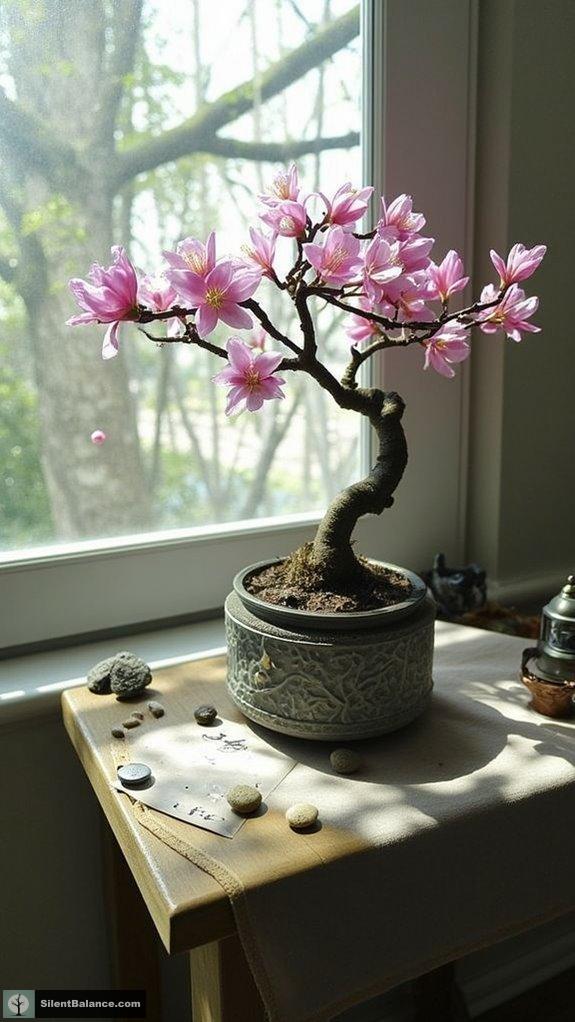
Embracing the essence of bonsai symbolism captivates my spirit in ways that transcend mere greenery.
These miniature marvels embody profound bonsai meanings, representing harmony, balance, and spiritual symbolism deeply rooted in Zen traditions. Each species carries unique cultural significance; take the azalea bonsai, for example—it’s a lovely expression of femininity, love, and passion, making it an ideal gift symbolism.
Picture gifting a bonsai as more than just exchanging a plant—it’s a thoughtful dialogue of appreciation!
In our busy lives, bonsais teach us patience and mindfulness, encouraging a slower, more intentional approach to living.
Questions and Answers
How Long Does It Take for a Bonsai Tree to Mature?
I’ve found that a bonsai tree’s maturity timeline varies, often taking 4 to 5 years through its growth stages. Patience is key, as each stage shapes its journey into a stunning living art piece.
Can I Use Regular Potting Soil for Bonsai?
I wouldn’t recommend using regular potting soil for bonsai. Its soil composition often hampers drainage—try mixing akadama and pumice instead. Trust me, those drainage tips can make all the difference for healthy bonsai growth!
What Are Signs of Over-Watering in Bonsai?
Ah, the ineffable art of bonsai! I’ve observed that overwatering symptoms reveal themselves through yellow leaves, soggy soil, and unstable roots. Ensuring good drainage is paramount to maintaining my bonsai’s health and essence.
How Can I Propagate My Bonsai Tree?
To propagate my bonsai tree, I use root cuttings for quicker results. For a more adventurous approach, I also experiment with seed propagation, exploring new growth potential while fostering unique characteristics in my bonsai collection.
Are Bonsai Trees Safe for Pets?
When it comes to bonsai pet safety, it’s essential to reflect on bonsai toxicity. Some species can be more harmful than a lion’s roar! Always research and keep toxic plants out of your pets’ reach for peace of mind.
References
- https://bonsaiwest.com/resources/bonsai-care/
- https://www.bonsaiempire.com
- https://www.ftd.com/blog/bonsai-tree-care
- https://www.youtube.com/watch?v=Gd10lsl8tQU
- https://www.bonsaiempire.com/basics/bonsai-care/
- https://www.bonsaiempire.com/inspiration/top-10/smallest-bonsai
- https://www.bonsaify.com/blogs/news-and-more/bonsai-tree-species-that-can-live-on-your-office-desk
- https://www.epicgardening.com/bonsai-trees/
- https://forum.bonsaimirai.com/t/whats-on-your-bonsai-wish-list/4316
- https://www.bonsainut.com/threads/ten-best-species-for-beginners.707/

- 11 Best Luxury Sandalwood Candles for 2026 - June 19, 2026
- 11 Best Woven Wicker Gift Baskets for 2026 - June 19, 2026
- 11 Best High Powered Binoculars for 2026 - June 19, 2026
