

When your bonsai’s in dormancy, think of fertilizers as its cozy winter blanket! I prefer organic options – like compost or manure blends – because they’re gentle on those delicate roots. A balanced, low-nitrogen fertilizer is ideal, providing just what your tree needs without overwhelming it. Timing matters too; fertilize just before bud activity begins. Recall, moderation is key! Curious to learn more about keeping your bonsai thriving through its sleepy season? There’s plenty more to explore!
Quick Takeaways
- Organic fertilizers provide gentle nourishment without shocking dormant bonsai roots, making them an ideal choice.
- Low-nitrogen, balanced fertilizers support root health during dormancy without overwhelming the tree.
- Liquid fertilizers offer quick nutrient absorption and can be adjusted in concentration for dormant trees.
- Application timing is crucial; fertilize just before new bud activity for best results.
- Use less fertilizer than usual during dormancy, focusing on moderation to maintain plant health.
Understanding Bonsai Dormancy
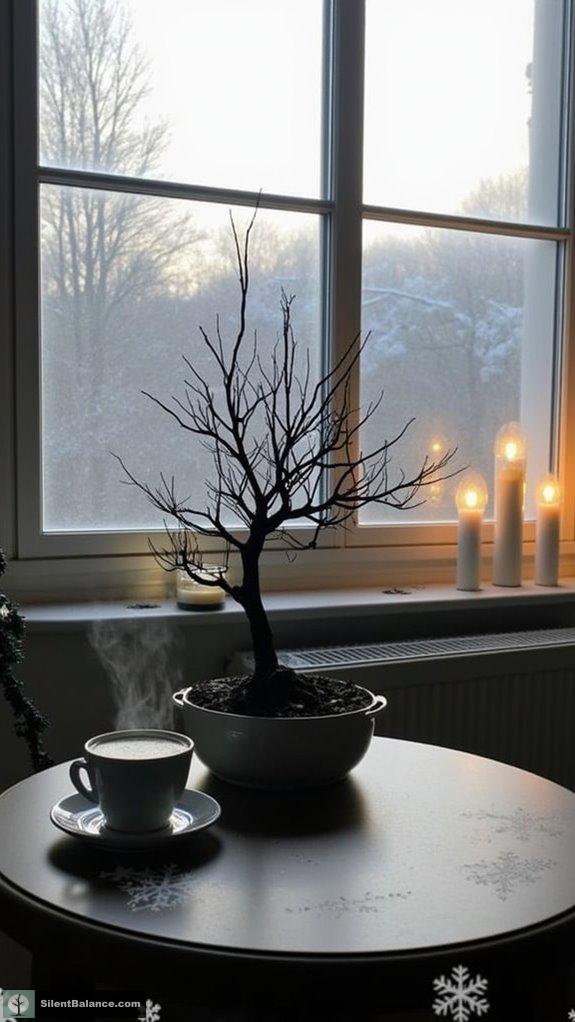
When it comes to understanding bonsai dormancy, I like to think of it as nature’s way of pressing the pause button. This period is essential for our little trees, as they enter a phase of dormant growth, conserving energy and recharging for the vibrant seasons ahead.
Don’t fret! This isn’t a sign of a dying bonsai; it’s a natural rhythm that demands our attention.
Your seasonal care shifts during dormancy, with a focus on maintaining proper watering and minimizing stress.
Have you ever tried to wake a hibernating bear? Yep, that’s like waking a dormant bonsai!
Nutrient Needs of Bonsai Trees During Dormancy
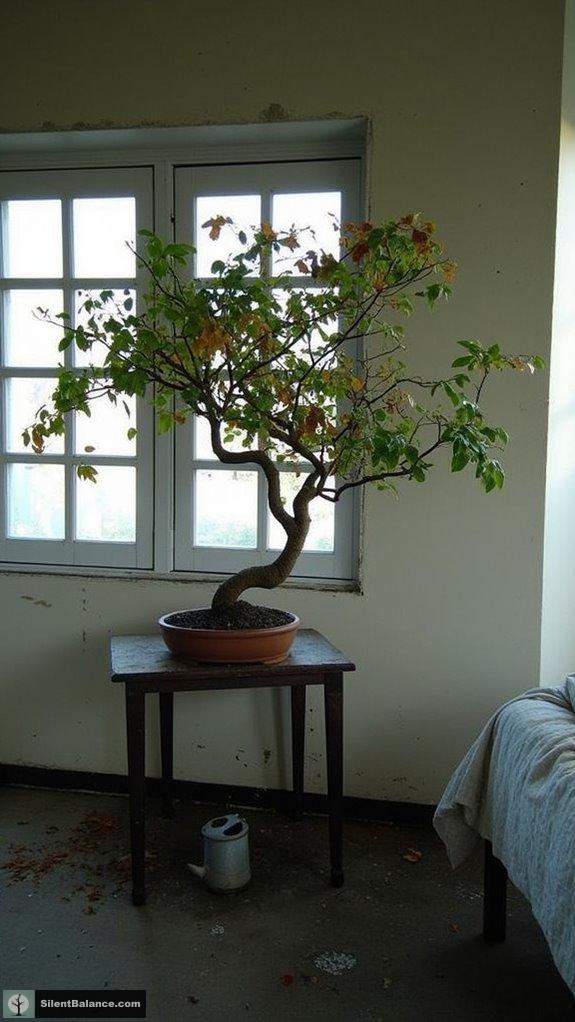
While your bonsai might be snoozing away during dormancy, it doesn’t mean its nutrient needs are on holiday too.
Even in dormancy, your bonsai’s nutrient needs remain critical for its spring revival.
If you want your tiny tree to emerge stronger in spring, you’ll need to keep an eye on potential nutrient deficiency.
Here’s what I often focus on during dormancy care:
- Nitrogen Level: A bit of nitrogen helps maintain root health.
- Phosphorus and Potassium: These guys promote strong roots and overall vigor.
- Micronutrients: Don’t forget those little guys; they’re essential for processes like photosynthesis.
Types of Fertilizers Suitable for Dormant Bonsai
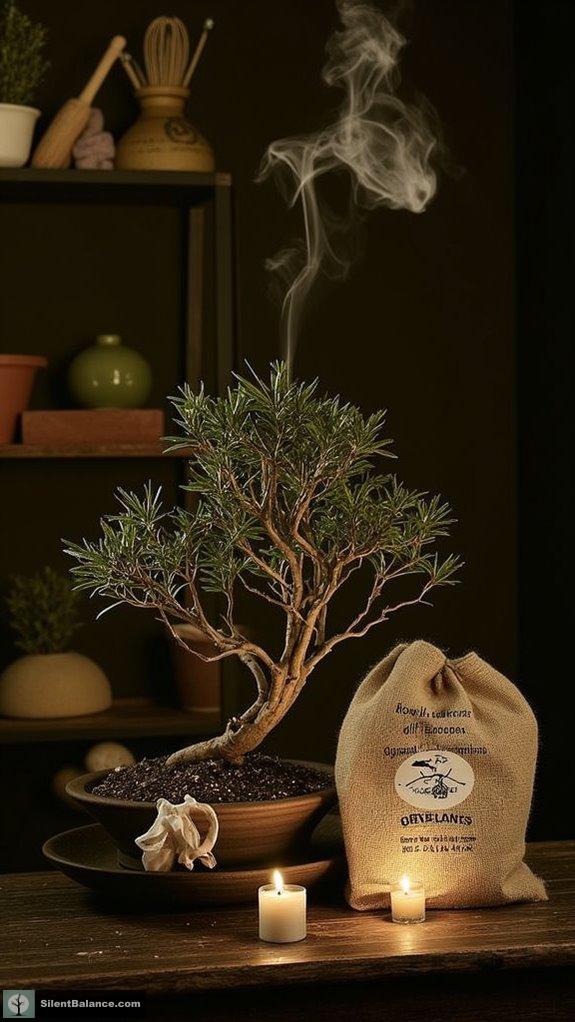
Choosing the right fertilizer for your dormant bonsai can feel like traversing a maze—dozens of options out there, and all claiming to be the best!
First off, I can’t get enough of organic fertilizers. They’re like the comfort food of the bonsai world—nutrient-rich and gentle on your tree’s roots.
Think of compost or manure-based blends; they’ll nourish without shocking your bonsai.
Now, don’t overlook liquid fertilizers! They’re quick-acting and fantastic for those who want to bypass the fuss.
Plus, you can easily adjust the concentration.
Application Guidelines for Fertilizing During Dormancy
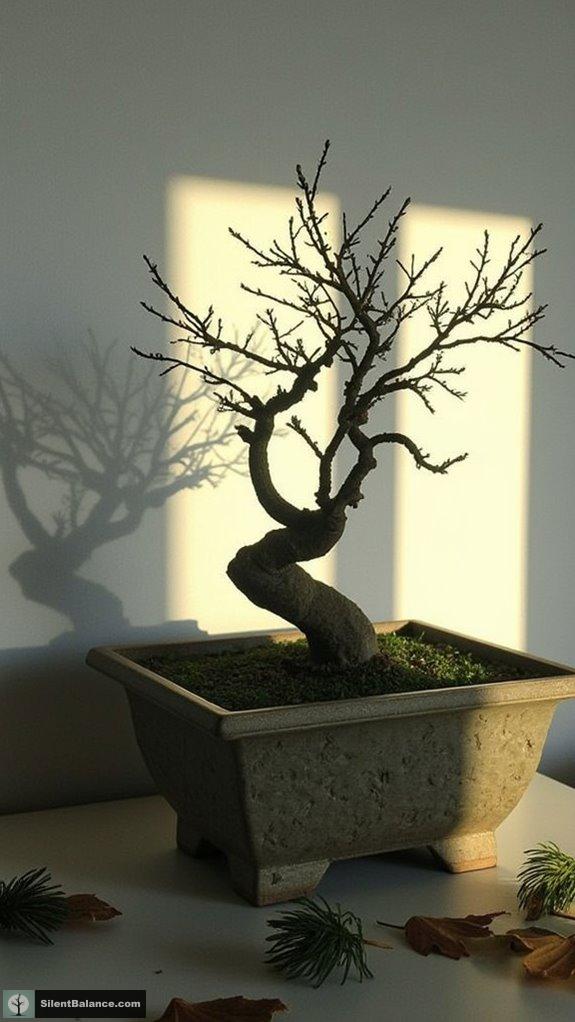
Understanding how to apply fertilizer during the dormant season can feel like deciphering an ancient bonsai scroll—there’s a delicate balance to strike.
Here’s how I manage my fertilizer application during this quiet phase of growth:
Here’s my approach to fertilizing during bonsai’s dormant phase: patience, moderation, and thoughtful choices lead to healthier growth.
- Timing is Key: I wait until late winter, just before signs of new bud activity. This approach encourages healthy growth as my bonsai awakens.
- Use Less: I cut back the usual amount of fertilizer; a little goes a long way during dormant growth.
- Choose Wisely: I opt for a balanced, low-nitrogen fertilizer—think of it as a light snack instead of a full meal. Additionally, ensuring proper seasonal care during dormancy can enhance the tree’s overall health and vitality.
Signs of Healthy Dormancy in Bonsai Trees
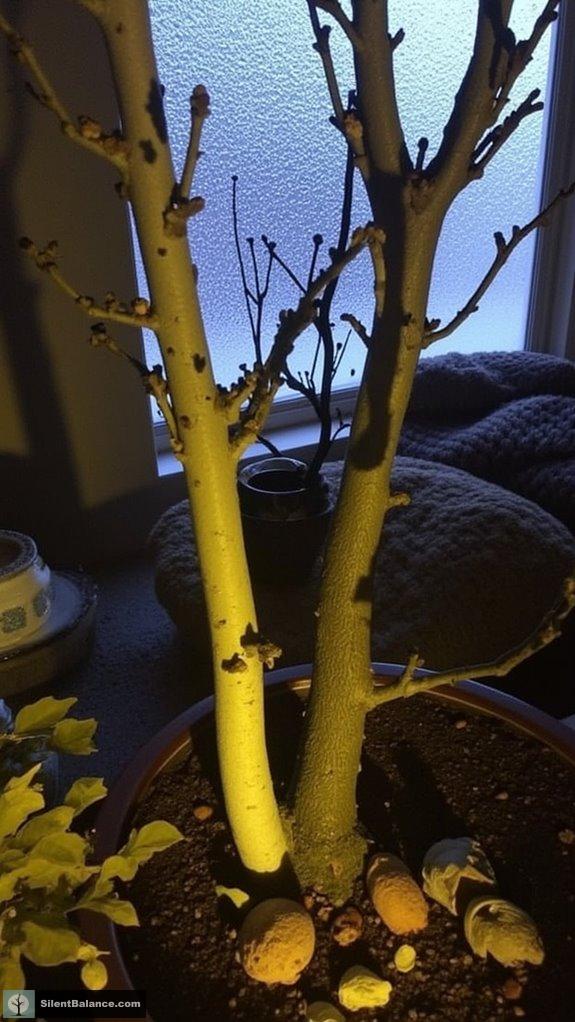
When you take a moment to observe your bonsai during its dormancy, you’ll likely spot some unmistakable signs that it’s thriving rather than just hanging on by a thread.
Look for those dormancy indicators—your tree’s leaves might be shedding, but that’s normal! Healthy growth means those roots are still alive and well, drawing energy from the soil.
Check for firm, plump buds; they’re a sign that your bonsai is gearing up for the next season. Moreover, the bark should appear vibrant, not dull or cracked.
Ever seen a bonsai that seems to glow even in winter? That’s the sign of a well-cared-for tree. Additionally, similar to the sugar maple trees, your bonsai’s overall health is enhanced when it is nurtured properly during this dormant period.
Bonsai Tree Symbolism
Bonsai tree symbolism carries a depth that’s both profound and enchanting, inviting us to explore the complex relationship between art and nature.
When I think about the tree meanings and cultural significance, I find it fascinating to see how bonsais embody our aspirations and values.
Here are three key ideas that truly resonate:
- Harmony: Bonsai represents balance and tranquility, a perfect reminder to find calm amid life’s chaos.
- Resilience: The art of pruning and shaping emphasizes strength, showing how beauty can thrive despite challenges.
- Patience: Growing a bonsai takes time, teaching us the virtue of waiting for our dreams to unfold.
Isn’t it amazing how a tiny tree can hold such big life lessons? Additionally, different cultures have imbued spiritual significance into their bonsai practices, enriching our understanding of these miniature trees.
Let’s dig deeper into our connection with these little giants!
Tree Symbolism
Trees have long been celebrated as powerful symbols in various cultures, each species carrying its own distinct meaning.
Isn’t it fascinating how different trees embody unique cultural significance?
Take the oak, for example, representing strength and endurance.
Then there’s the willow, symbolizing flexibility and resilience.
In the world of bonsai, these meanings deepen, intertwining with spiritual meaning.
As I shape my beloved Ficus or meticulously wire a Juniper, I’m reminded that each twist and turn reflects not just artistry but a connection to something greater.
What’s your favorite tree and its symbolism?
Isn’t it wonderful how trees can ground us, offering lessons on patience, balance, and growth in this chaotic world?
They’re not just plants; they’re reminders of life’s deeper truths.
Questions and Answers
Can I Use Organic Fertilizer During Bonsai Dormancy?
Absolutely, you can use organic fertilizer during dormancy, but you’ve gotta be strategic about it.
While the trees are sleeping, they still benefit from the nutrients, but don’t overdo it! Think of it like a winter snack.
Organic fertilizer not only feeds them but also enriches the soil, promoting healthy roots.
A good rule of thumb? Use it sparingly, and watch for signs your tree’s waking up!
How’s that for dormancy care?
How Often Should I Check My Bonsai During Dormancy?
Checking your bonsai during dormancy is like keeping a secret garden—it requires respect and attention!
I usually inspect my trees every two weeks. This dormant inspection frequency helps me monitor their health, ensuring they’re snug and safe.
Are the branches intact? Is the soil moist but not soggy? Recall, a little TLC goes a long way during these quiet months. It’s all about knowing when they’re ready to wake up!
Is Liquid Fertilizer Better Than Granular for Dormant Bonsai?
When it comes to fertilizer choice, I often find myself pondering the pros and cons.
Liquid fertilizer packs some serious advantages, like quick absorption and precise application—perfect for those micronutrient boosts.
On the other hand, granular fertilizer has its perks too, providing a slow release that feeds my trees over time.
Can Over-Fertilization Harm My Bonsai Trees During Dormancy?
Over-fertilization can lead to fertilizer burn, which turns your beautiful bonsai’s leaves crispy and brown—not a pretty sight, right?
During dormancy, your tree’s nutrient uptake slows down; it doesn’t need as much. I usually stick to a light feeding schedule to avoid that nasty shock.
Remember, we’re not trying to force-feed our trees! Just a sprinkle of balanced nutrients usually does the trick.
Happy bonsai-ing!
Should I Change My Regular Watering Routine During Dormancy?
When it comes to watering during dormancy, think of it as walking a tightrope—balance is essential!
Dormancy effects on your bonsai mean it’ll use less water, so adjust your watering frequency accordingly.
I find it’s best to check the soil moisture level rather than sticking to a rigid schedule. If the top inch feels dry, give it a sip, but don’t drown it!
Your little tree needs a break, too. How often do you check?
Summary
In the world of bonsai, a tiny tree needs tender care, even during dormancy. Picking the right fertilizer can be a puzzling process, but with a bit of knowledge, you’re set for success. Keep in mind, slow-release fertilizers feed your tree gently, while micronutrients enhance its health. So, don’t let winter worry you—nurture your dormant bonsai with the right nutrients, and watch it thrive when spring arrives. After all, isn’t a vibrant bonsai your pride and joy?

- 11 Best Luxury Sandalwood Candles for 2026 - June 19, 2026
- 11 Best Woven Wicker Gift Baskets for 2026 - June 19, 2026
- 11 Best High Powered Binoculars for 2026 - June 19, 2026
