

When it comes to bonsai, choosing between organic and synthetic fertilizers can feel like picking your favorite child. Organic options slowly release nutrients and boost soil health, while synthetic rivals give that quick nutrient jolt, perfect for impatient gardeners. However, synthetic can lead to nutrient spikes, causing chaos in your bonsai’s complex balance. Plus, let’s not forget that organic options are kinder to Mother Nature. Want to know more about how these choices affect your bonsai’s growth?
Quick Takeaways
- Organic fertilizers promote long-term soil health, improving microbial activity and soil structure for sustainable bonsai growth.
- Synthetic fertilizers provide an immediate nutrient boost but can lead to nutrient spikes and inconsistent growth patterns in bonsai.
- Organic options reduce environmental impact and support biodiversity, while synthetic fertilizers can cause runoff and harm local ecosystems.
- Organic fertilizers generally require more frequent application and practices like composting, while synthetic options demand careful use to prevent over-fertilization.
- The choice between organic and synthetic impacts bonsai aesthetics and resilience, influencing whether slow or rapid growth is desired.
Nutrient Composition
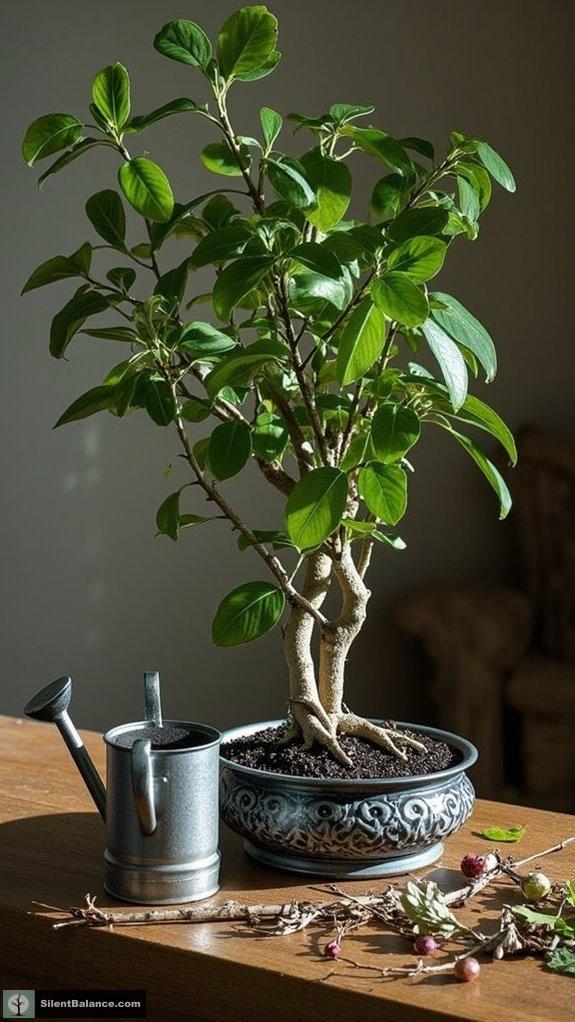
When you’re diving into the world of bonsai, choosing the right fertilizer can feel a bit like walking a tightrope, especially with the two primary options: organic and synthetic.
Let’s break it down. Organic nutrients, like fish emulsion or seaweed, are the natural goodies your bonsai craves. They promote healthy microbial activity in the soil, keeping your tree thriving and vibrant.
On the flip side, synthetic additives might give you the instant boost you’re looking for, but they can mess with that delicate balance. The choice between these fertilizers can also reflect your values and connection to nature, reminiscent of how Japanese and Chinese bonsai embody spiritual significance.
So, ask yourself: do you want to nurture the natural ecosystem, or are you after the quick fix?
I’ve found that truly understanding these nutrient compositions gives me the control I crave over my bonsai’s growth.
Release Rate
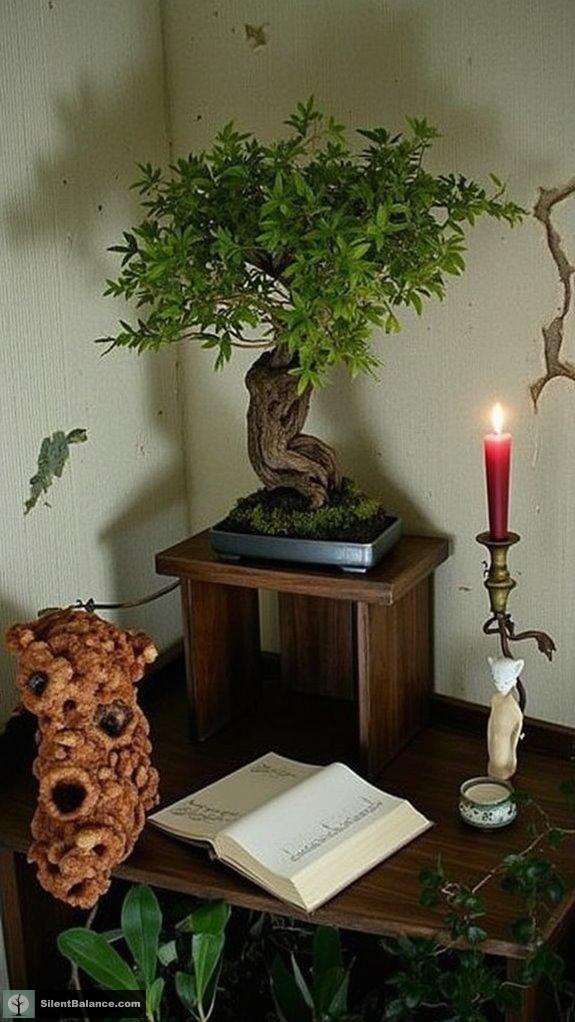
The release rate of fertilizers is a game changer in the bonsai world, and trust me, it’s worth paying attention to.
The release rate of fertilizers can transform your bonsai care routine—it’s a crucial factor to consider.
Understanding how your chosen fertilizer disperses nutrients can completely revolutionize your tree care routine.
Here are the key differences:
- Organic fertilizers often feature slow release mechanisms, which means nutrients are available over time, matching your bonsai’s growth phases.
- Synthetic fertilizers typically have rapid release rates, delivering an instant nutrient boost, great for immediate needs but can lead to over-fertilization.
- Nutrient timing is essential—knowing when your bonsai needs these nutrients helps you avoid those dreaded nutrient spikes.
Environmental Impact

It’s easy to get lost in the intricacies of bonsai care, but let’s talk about something just as important as release rates: environmental impact.
When we use synthetic fertilizers, we risk fertilizer runoff, which can harm our local ecosystems.
Just picture the chaos—nutrient overload in waterways leads to algae blooms, throwing off the ecological balance.
On the other hand, organic fertilizers offer a gentler touch.
They break down naturally and feed our precious bonsai without the chemical chaos.
Choosing wisely isn’t just about your little tree; it’s about being a responsible steward of nature. Additionally, forests play a vital role in carbon absorption and maintaining ecological balance, making our choice of fertilizers even more significant.
Availability and Cost
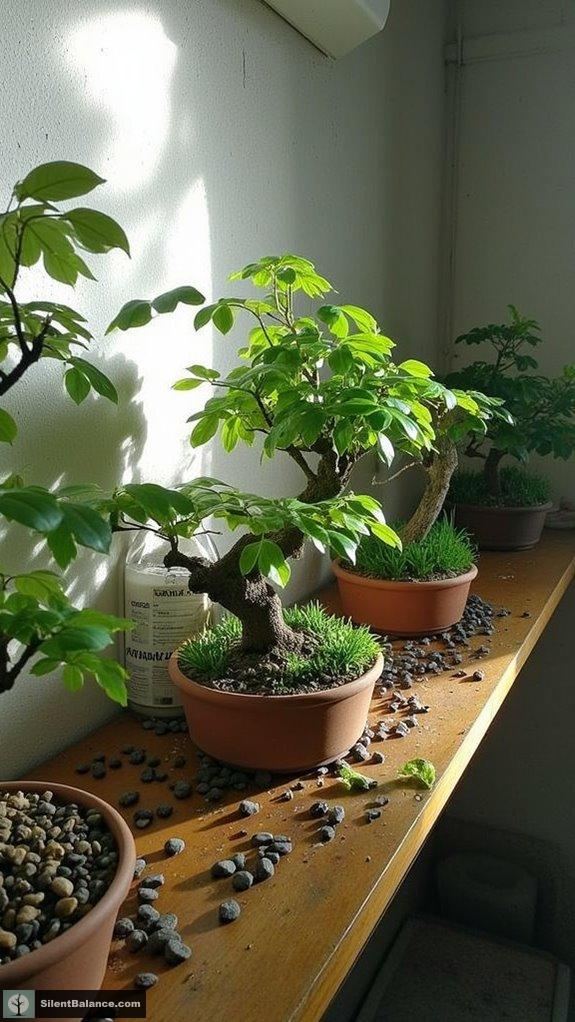
Steering through the world of bonsai fertilizers can feel like wandering through a dense forest, but let’s talk about something that shouldn’t be as complicated as training a bonsai tree: availability and cost.
Navigating bonsai fertilizers can be tricky, but understanding their availability and cost shouldn’t be!
When it comes to pricing strategy, I’ve noticed some key differences between organic and synthetic options that can impact your fertilizer affordability.
- Organic fertilizers may be less available in big box stores, but they often shine at local garden shops.
- Synthetic fertilizers are typically easier to find—they’re practically everywhere!
- Pricing can vary wildly, so always check for bulk options to save a few bucks.
Soil Health and Microbial Activity
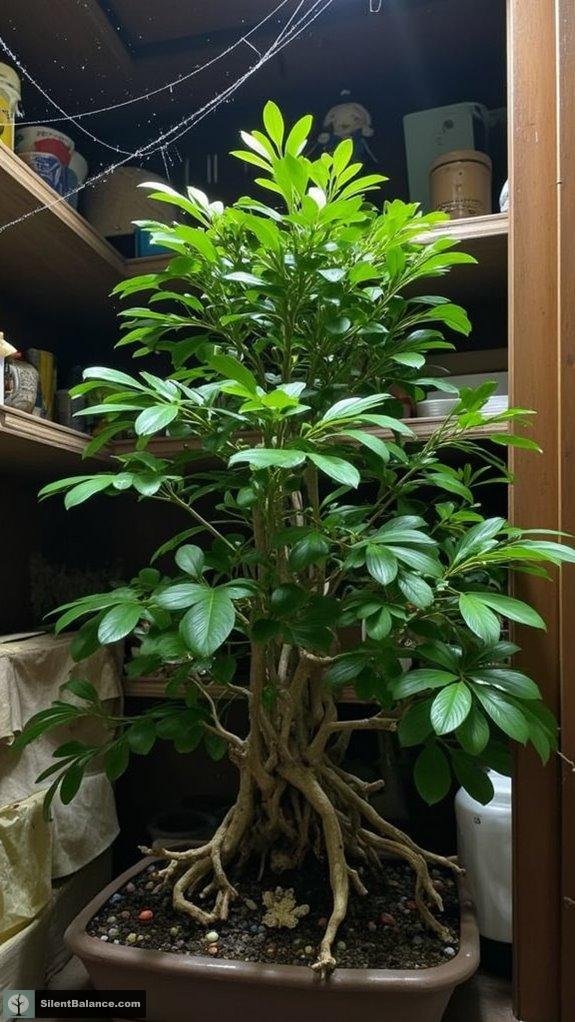
Bonsai enthusiasts know that healthy soil is the beating heart of a thriving miniature tree.
When cultivating our bonsai, we must prioritize soil diversity. A mix of organic materials fosters an environment teeming with beneficial microbes.
Just envision a bustling community of microorganisms breaking down nutrients, creating that vital synergy we all crave for our trees! Boxelder trees, known for their adaptable growth, also benefit from rich soil environments that enhance soil diversity and promote overall health.
These microbial benefits aren’t just about making plants grow faster; they improve resilience against pests and diseases too.
Are you ready to give your bonsai the upper hand?
User Experience and Application
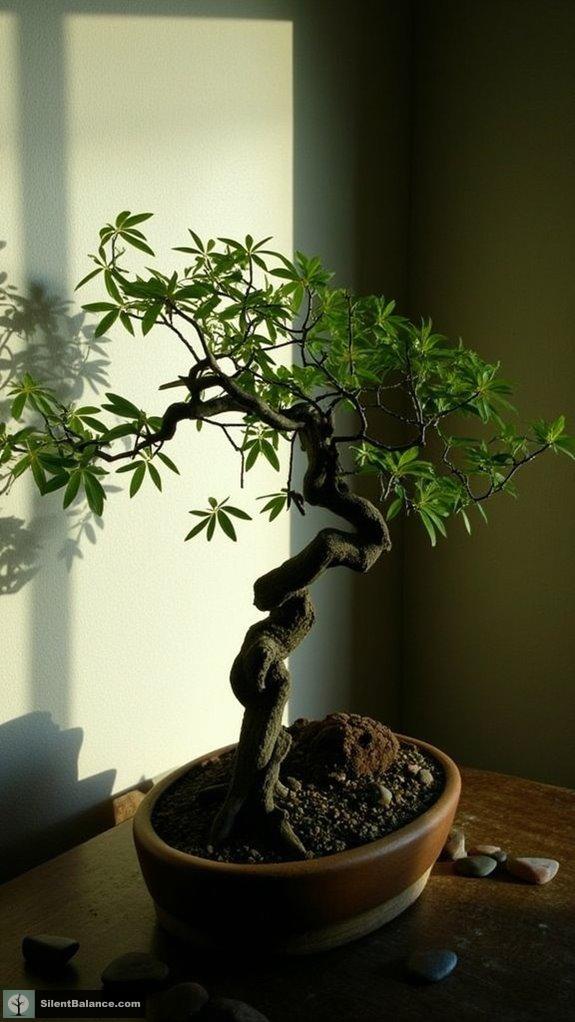
When it comes to nourishing our beloved bonsai, choosing the right fertilizer isn’t just a matter of grabbing whatever’s on sale at the local garden center.
The user experience really matters, and I’ve learned a ton by listening to user feedback and noticing user preferences.
Understanding user feedback and preferences is key to enhancing the experience for bonsai enthusiasts.
Here’s what I prioritize when selecting a fertilizer:
- Ease of Application: I want something that’s simple to use without creating a mess.
- Immediate Results: Watching my bonsai thrive quickly is incredibly satisfying.
- Balanced Nutrition: A quality mix guarantees my little green giants get all they need.
Trust me, investing time in finding the right fertilizer pays off. Your bonsai won’t only thank you but showcase its beauty as well.
Ready to jump in?
Long-Term Effects on Bonsai Growth
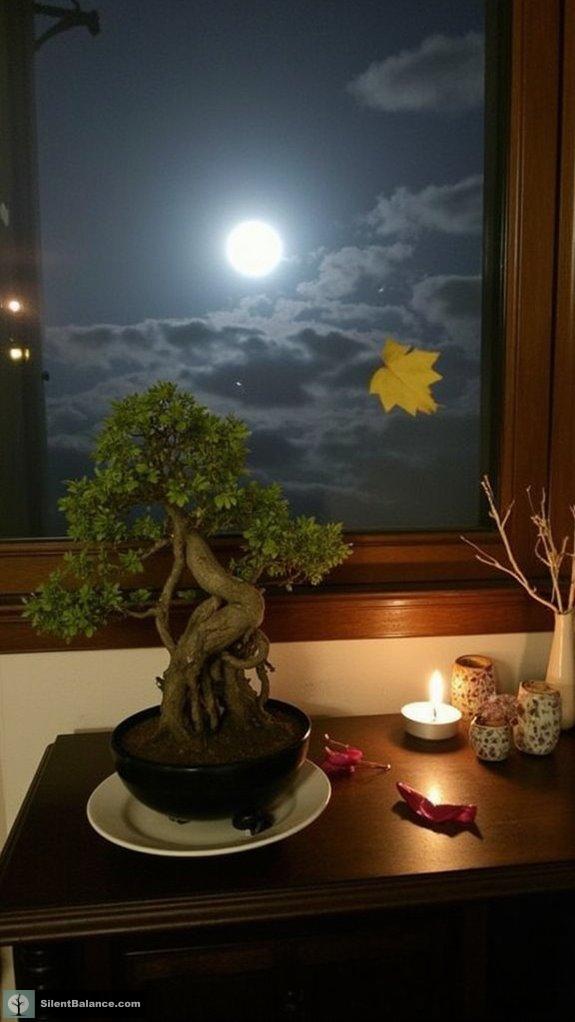
Choosing the right fertilizer can have lasting impacts on the growth of your bonsai, shaping its health and overall beauty for years to come.
When I first ventured into bonsai, I quickly discovered that organic fertilizers generally promote slow, steady growth patterns. They’re like that patient mentor, nurturing roots and branches over time.
On the flip side, synthetic fertilizers can lead to vigorous but sometimes erratic growth, which might leave you chasing your bonsai’s nutrient uptake like it’s a runaway train!
Each choice has a ripple effect on your bonsai’s future.
Want a resilient masterpiece or a flashy sprinter? It’s up to you. So, what kind of aesthetic are you aiming for with your bonsai creation?
Bonsai Tree Symbolism
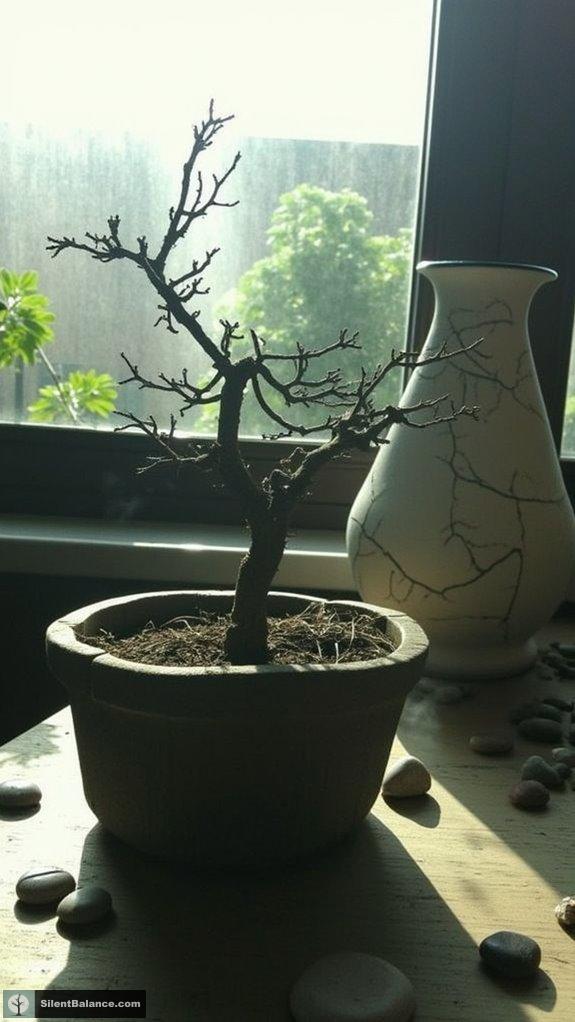
As you explore the world of bonsai, you’ll quickly realize that each little tree tells its own enchanting story, tied to rich traditions and cultural symbolism.
Bonsai trees aren’t just aesthetically pleasing; they’re packed with profound meanings. Here are three key aspects to reflect on:
- Harmony: Bonsai emphasizes balance between nature and art, symbolizing a deep connection to our environment.
- Patience: Growing a bonsai reinforces the value of time and nurturing, illustrating life’s delicate balance.
- Longevity: The enduring presence of bonsai reflects the desire for a lasting legacy, infused with cultural meanings across generations.
When you investigate these elements, you’ll understand why bonsai has such aesthetic significance in our lives—it’s a transformative experience. Isn’t that fascinating?
Tree Symbolism
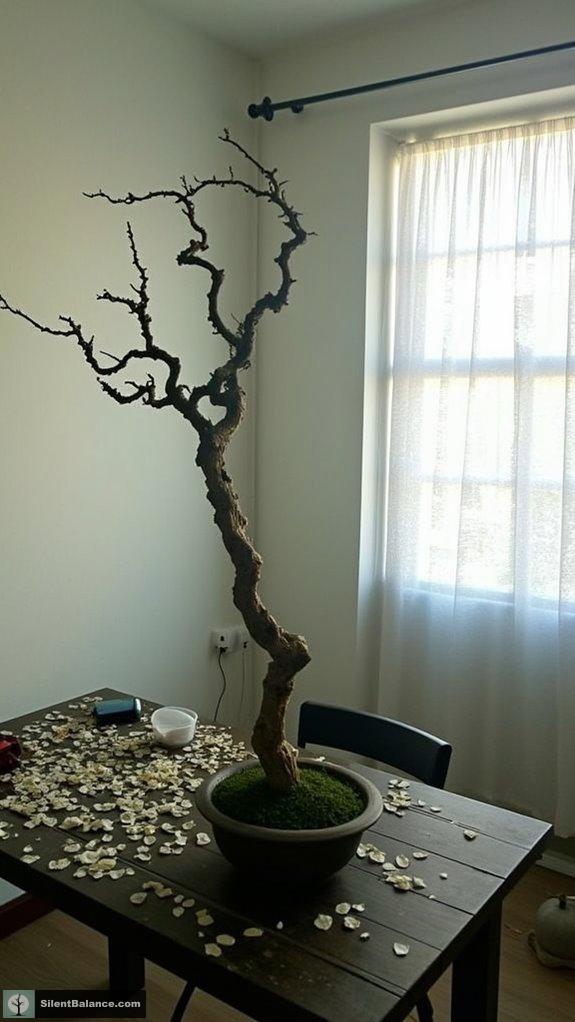
Trees, those majestic giants of nature, pack a wealth of symbolism that can be as complex as the finest bonsai.
Think about it—how much cultural significance do trees hold in your life? They’re often tied to wisdom, strength, and longevity. For instance, the oak is a symbol of endurance, while the cherry blossom speaks to the beauty of transience.
Trees embody wisdom, strength, and longevity, with the oak symbolizing endurance and the cherry blossom reflecting life’s fleeting beauty.
But it’s more than just pretty metaphors; trees carry profound spiritual meaning, connecting us to our roots—pun intended! They remind us to grow, adapt, and stay grounded.
And let’s not forget the bonsai itself, a living representation of patience and control.
Questions and Answers
Can I Mix Organic and Synthetic Fertilizers for Bonsai Care?
Absolutely, you can mix organic and synthetic fertilizers for your bonsai!
Just be cautious with your mix ratios. Too much of one can lead to burning roots or nutrient imbalances, and nobody wants that hassle.
Play around with smaller amounts to see what works best, as each tree’s needs differ. It’s like giving your bonsai a balanced diet, right?
Recall, we’re aiming for harmony, not chaos. So, let’s keep those little green buddies thriving!
How Often Should I Fertilize My Bonsai Tree?
Ah, nurturing bonsai is like dancing on a tightrope—balance is everything!
When it comes to fertilizer frequency, I usually feed my trees every 4-6 weeks during the growing season.
But don’t forget those seasonal adjustments! Monitoring your bonsai’s health is key; if they’re thriving, keep feeding! If not, dial it back.
Have you noticed how your leaves shine brighter with just the right touch of nutrients? It’s a rewarding sight!
What Signs Indicate My Bonsai Needs Fertilization?
If you’re wondering when your bonsai needs a nutrient boost, look for specific signs. Yellowing leaves or stunted growth patterns often indicate nutrient deficiencies.
When my little tree begins to look lackluster, I know it’s time to step in.
And hey, don’t forget that vibrant green should be the norm. Just like us, our bonsai won’t thrive without a good meal, so let’s get those nutrients flowing!
Ready to help your bonsai flourish?
Are There Bonsai Species That Prefer Organic Over Synthetic Fertilizers?
When it comes to bonsai, some species truly thrive on organic bonsai preferences, while others respond like pros to synthetic fertilizers.
Ever tried feeding a Ficus with organic compost? It’s like throwing a party, everyone’s invited!
But then you have a Pine, which might do better with a more controlled synthetic mix.
Doesn’t it just make you excited to experiment and see what makes your little green buddy shine?
What Are the Best Practices for Storing Fertilizers?
When it comes to storing fertilizers, I’ve got a few tricks up my sleeve!
First, keep them in a cool, dry place—temperature fluctuations can mess with their shelf life.
I prefer airtight containers; they prevent moisture from sneaking in.
Labeling is a must, so I know what I’ve got, plus the expiration date—no mystery here!
Are you ready to treat your bonsai like the little royalty they are? Let’s keep their nourishment fresh!
Summary
In the great debate of bonsai organic versus synthetic fertilizers, it really boils down to your goals and values. If you’re aiming for eco-friendly practices, organic’s your best bud; if rapid growth is your jam, synthetics might suit you better. Whether you’re nurturing a prized Ficus or experimenting with a whimsical Juniper, knowing these differences can elevate your bonsai game. So, what’ll it be—nurturing nature or going for that quick fix? Your bonsai adventure awaits!

- 11 Best Luxury Sandalwood Candles for 2026 - June 19, 2026
- 11 Best Woven Wicker Gift Baskets for 2026 - June 19, 2026
- 11 Best High Powered Binoculars for 2026 - June 19, 2026
