
When it comes to healthy bonsai growth, root pruning’s absolutely essential! It helps develop a balanced root structure, which boosts nutrient absorption and airflow. Picture your bonsai as a tiny tree in a pot—without pruning, it can get a bit crowded down there! You don’t want those roots fighting for room. Plus, regular pruning keeps that foliage in check. Curious about more secrets to thriving bonsai? Stick around, there’s more to uncover!
Quick Takeaways
- Root pruning promotes a balanced and robust root structure, essential for the stability of bonsai trees.
- It enhances nutrient absorption, vital for the overall vitality and health of the tree.
- Pruning encourages improved airflow within the root zone, reducing the risk of root rot.
- Regular root management helps maintain harmonious growth between roots and foliage, leading to a thriving bonsai.
- Early detection of root issues through pruning supports long-term bonsai health and flourishing growth.
Understanding the Basics of Root Pruning

When you immerse yourself in the world of bonsai, you quickly realize that root pruning is more than just a fancy term—it’s an essential art form that keeps our little green friends thriving.
Understanding your bonsai’s root system is like peering into its soul; you’re finding pathways that nourish growth.
Using proper pruning techniques, you can finesse those roots, encouraging a robust and balanced structure. Trim a bit, and voila! Your tree learns to thrive in a confined space, developing strong, healthy roots that support its charming aesthetic.
Ever heard of “root training”? It’s akin to a bonsai gym, prepping your tree for its beautiful future.
Don’t let fear hold you back; jump in, snip away, and watch your masterpiece blossom!
Benefits of Root Pruning for Bonsai Health

While root pruning might seem intimidating at first, believe me when I say it’s a game changer for your bonsai’s health. When you embrace the right pruning techniques, you’ll see your little tree flourish.
Here are a few benefits I’ve personally experienced:
- Stronger root growth: By selectively cutting back those unruly roots, I encourage a denser root system that supports overall stability.
- Enhanced nutrient absorption: A well-pruned bonsai can soak up nutrients more efficiently, ensuring your tree gets what it needs to thrive.
- Improved airflow: Pruning opens up the root zone, reducing the risk of rot and promoting a healthy, vibrant bonsai.
Recommended Techniques for Effective Root Pruning
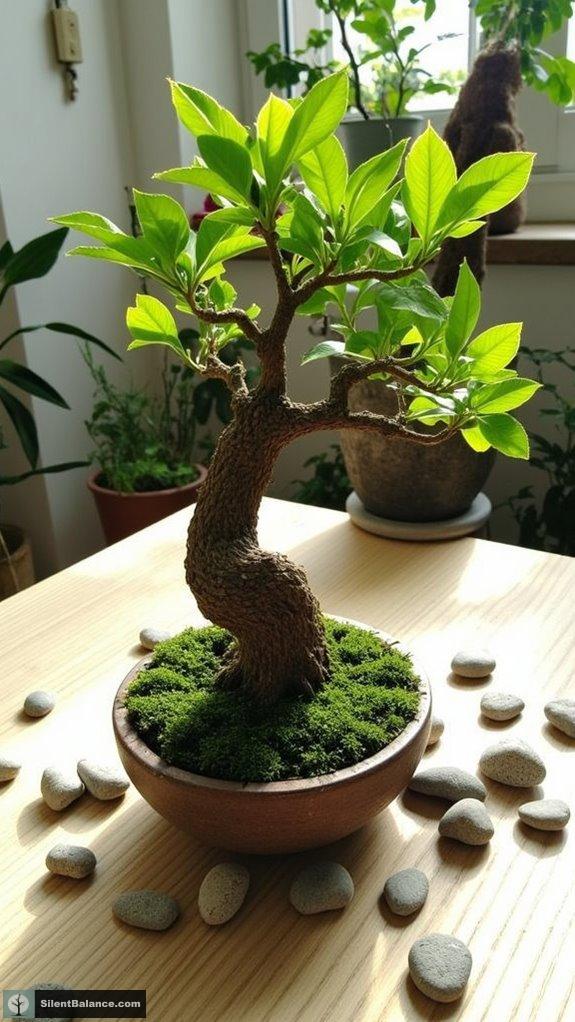
Ready to transform your bonsai into a masterpiece? Effective root pruning begins with mastering a few essential root trimming techniques.
First, I recommend using sharp, clean pruning shears. This guarantees a precise cut without damaging the delicate roots.
Next, consider your root management strategies—think of it like a hair makeover for your tree! Trim away aggressive roots while preserving those finer, fibrous ones that help absorb nutrients.
Remember, consistency is key; aim to prune annually during the growing season. Additionally, roots should be managed differently for indoor vs outdoor bonsai, as each environment has unique growth patterns.
And hey, don’t forget to give your bonsai a good soak post-pruning to minimize stress.
Why settle for average when you can cultivate a stunning bonsai? You’ve got this; your little tree is in good hands!
Signs Your Bonsai Needs Root Pruning

If you’ve ever wondered how to keep your bonsai thriving, recognizing the signs it needs root pruning is essential.
Here are some key pruning indicators to look for:
- Your bonsai’s leaves are yellowing or dropping unexpectedly.
- The root system is visibly crowding the pot, looking like a tangled mess.
- Growth seems stunted, and you’re not seeing those new buds pop.
Don’t wait until your tree’s in a bind! Keeping an eye on these indicators will help you maintain control over your bonsai’s health.
Maintaining Balance Between Roots and Foliage
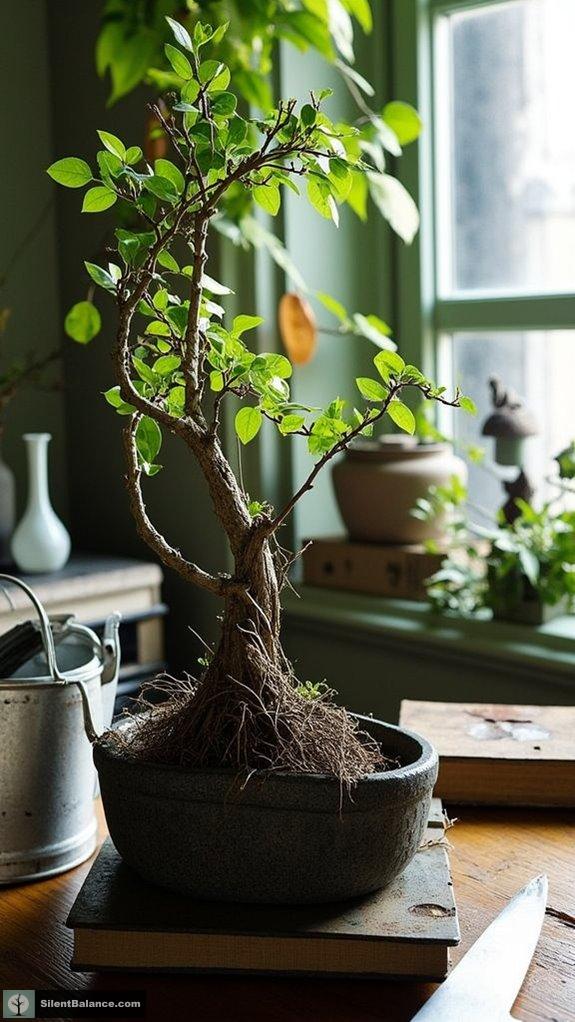
Balancing roots and foliage is like dancing a delicate tango—you want every move to be in perfect harmony.
Your bonsai’s root system needs careful attention; it’s the unseen foundation that supports healthy foliage growth.
Too many leaves and not enough roots? That’s like throwing a party where everyone eats but nobody brought snacks! You’ll end up with a lopsided tree that struggles to thrive.
So, how do you maintain that exquisite balance? Pruning your roots encourages a robust system while simultaneously keeping leaves in check.
With each snip, you’re not just trimming; you’re guiding your bonsai’s energy.
Think of it as crafting a masterpiece—every cut matters. Indoor bonsai plants thrive when their root systems are nurtured and pruned properly. Are you ready to step up your game and guarantee that dance is flawless?
Bonsai Tree Symbolism
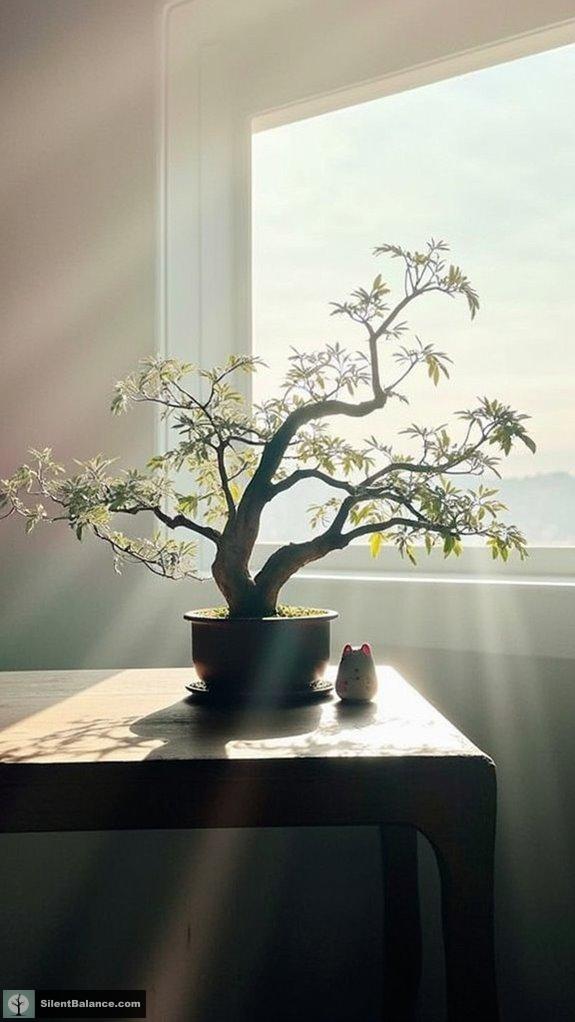
Bonsai tree symbolism is a beautiful tapestry of meanings, weaving together threads of patience, perseverance, and harmony.
Bonsai tree symbolism beautifully intertwines patience, perseverance, and harmony, reflecting the essence of personal growth and balance.
As I explore this art, I can’t help but appreciate its deeper significance:
- It embodies peaceful harmony, symbolizing balance in our chaotic lives.
- Every twist and turn of its branches tells a tale of cultural significance, representing different philosophies in various traditions.
- The gentle care required reflects the work and dedication inherent in personal growth.
Isn’t it fascinating how a tiny tree can encapsulate such profound ideas?
By nurturing your bonsai, you’re not just creating art; you’re cultivating a living representation of what it means to be steadfast amid adversity. Additionally, the practice of bonsai care can also serve as a form of meditation, enhancing inner peace and personal reflection.
Now, who doesn’t desire that in their life?
Tree Symbolism
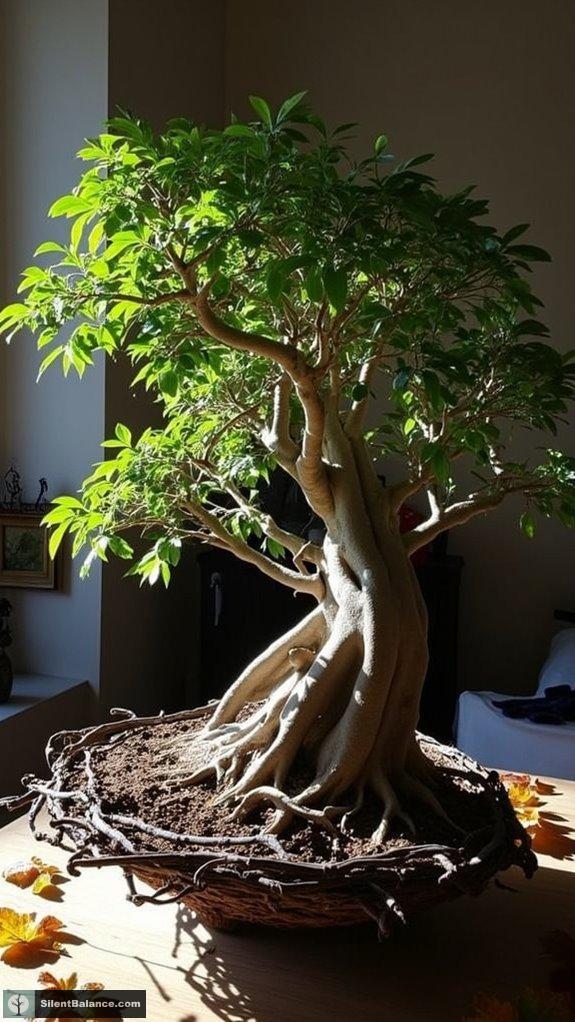
Trees symbolize a plethora of ideas that resonate deeply within our lives. When you think about spiritual growth, it’s hard not to draw parallels between our journeys and the sturdy oak or the delicate cherry blossom.
Each tree carries a rich cultural significance, often representing resilience, wisdom, and connection to our roots—literally and metaphorically.
Ever heard the term “rooted yet flexible”? It’s a mantra among bonsai enthusiasts. When crafting these miniature marvels, we cultivate control and intention, shaping their forms just like we shape our paths.
Questions and Answers
How Often Should I Prune My Bonsai Roots?
I usually prune my bonsai roots every one to two years, depending on the tree’s growth.
Keeping the root health in check is essential, and using the right pruning techniques can make all the difference.
Are you ready to jump in?
Don’t worry; it’s not as scary as it sounds!
You’ll be amazed at how your bonsai flourishes after just a little trim.
Trust me, you’ll feel like a bonsai wizard!
Can Root Pruning Harm My Bonsai Tree?
You bet root pruning can harm your bonsai if you’re not careful!
Think of it as a delicate dance; too much excitement leads to root damage and a lengthy recovery time.
I’ve learned that trimming too aggressively can stress your little tree, making it take ages to bounce back.
It’s all about balance.
What Tools Are Best for Root Pruning?
When it comes to root pruning techniques, having the right tools is vital. I always reach for sharp bonsai scissors and root saws. They make cutting through thick roots a breeze!
Don’t forget a root rake for teasing out tangled roots—it’s like giving your bonsai a mini spa day!
Trust me, using essential bonsai tools will make your pruning experience smoother and way more enjoyable.
Ready to dig in? Let’s go!
Should I Prune Roots During Dormancy or Growing Season?
Did you know that many bonsai enthusiasts swear by root pruning during dormancy? It’s true!
Timing’s everything when it comes to this delicate art. Pruning in dormancy means your tree’s energy is low, minimizing shock and promoting healthy growth later.
Plus, who doesn’t love a little beauty sleep for their bonsai?
If you want control over your tree’s shape and health, embrace dormancy benefits.
Trust me; your bonsai will thank you!
How Does Root Pruning Affect Bonsai Tree Aesthetics?
Root pruning’s a game-changer for bonsai aesthetics!
It enhances visual balance by shaping the tree’s overall look, making it more appealing. A well-managed root structure supports the tree better, allowing it to showcase its natural beauty.
Think about it—don’t you want your bonsai to be the envy of the garden?
Dynamic roots create vibrant foliage, and who wouldn’t love that?
Summary
In the world of bonsai, root pruning is like a hairdresser giving a revitalizing trim—it’s essential for growth and vigor! By keeping those roots in check, we guarantee our little green friends thrive and flourish. So, if you’ve spotted your bonsai feeling a bit crowded, don’t hesitate to grab those pruning shears. Recall, healthy roots mean a happy tree! Now go ahead, give your bonsai some love, and watch it soar like it’s finally found its wings!

- 11 Best Luxury Sandalwood Candles for 2026 - June 19, 2026
- 11 Best Woven Wicker Gift Baskets for 2026 - June 19, 2026
- 11 Best High Powered Binoculars for 2026 - June 19, 2026
