

Caring for bonsai in small spaces? It’s all about maximizing your resources! First, capture sunlight—6 to 14 hours is golden, so aim for windows that face south or west. For watering, think gentle; check moisture daily and soak when needed. A proper soil mix, like 50% Akadama with a hint of pumice and lava rock, equals happy roots. Don’t forget to prune regularly to encourage bushy growth. Curious about how to jazz up humidity? Stick around for more tips!
Quick Takeaways
- Position bonsai near southern or western-facing windows to maximize light exposure, aiming for 6 to 14 hours daily.
- Use grow lights to supplement natural light in compact areas, especially for sun-loving species.
- Maintain consistent moisture with daily checks and implement a humidity tray to retain moisture levels.
- Choose an appropriate soil mix of 50% Akadama, 33% Pumice, and 25% Lava Rock for optimal drainage and aeration.
- Regularly prune and shape bonsai to maintain their size and health, enhancing light penetration and airflow in small spaces.
Optimizing Light Exposure in Small Areas
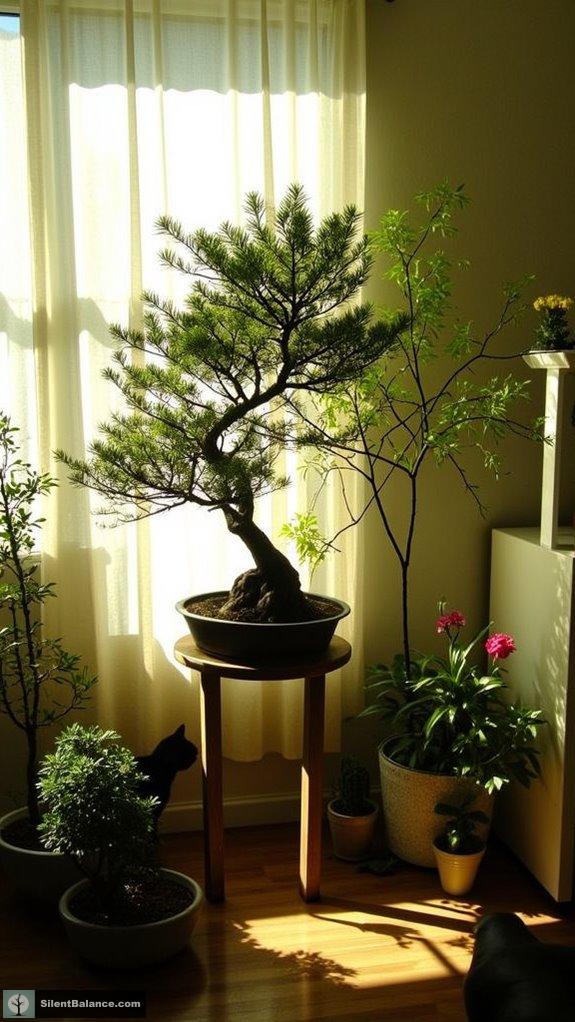
When you’re working with bonsai in a cozy nook of your home, optimizing light exposure can feel like a delightful puzzle—one that, when solved, reveals the true beauty of your little green companions.
To guarantee they thrive, place your sun-loving conifers where they’ll soak in that golden afternoon light, ideally getting 6 to 14 hours daily. Conifers require full sun for their optimal growth and vitality. The significance of pine bonsai in Japanese culture highlights the unique beauty and value that these trees hold, making their care all the more important.
Meanwhile, for shade-preferring varieties, morning sun is their jam.
Don’t forget to embrace your windows—those southern or western faces tend to offer the best natural light, especially in winter!
If your space is cozy, consider sneaky grow lights to mimic the sun’s embrace.
Envision your bonsai stretching happily towards more light! You might even find it swaying like a happy dance.
Ideal Watering Techniques for Limited Space
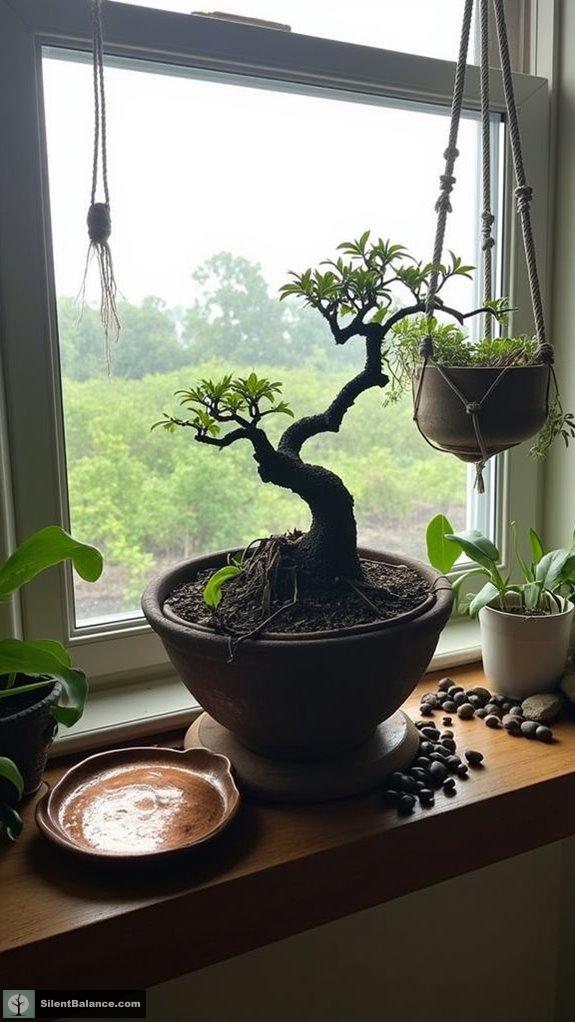
Finding the right watering techniques for your bonsai in a compact space isn’t just a chore; it’s an opportunity to connect with your green friend on a deeper level.
I never stick to a rigid schedule; instead, I interact daily, checking soil moisture with a chopstick or moisture meter. It’s essential to water when the top half feels just slightly dry, ensuring my bonsai isn’t parched. Proper hydration reduces stress, which is especially important in a small space where conditions can fluctuate rapidly. Utilizing grow lights can also help in maintaining consistent moisture levels by providing the right amount of light for photosynthesis.
For those tight corners, I love the soaking method—immersing the pot until bubbles vanish does wonders!
And keep in mind, always use room temperature water; my bonsai doesn’t appreciate a chilly surprise.
A humidity tray? It’s a fabulous way to boost moisture in small spaces, creating a cozy atmosphere for my leafy companion!
Choosing the Right Soil for Your Bonsai
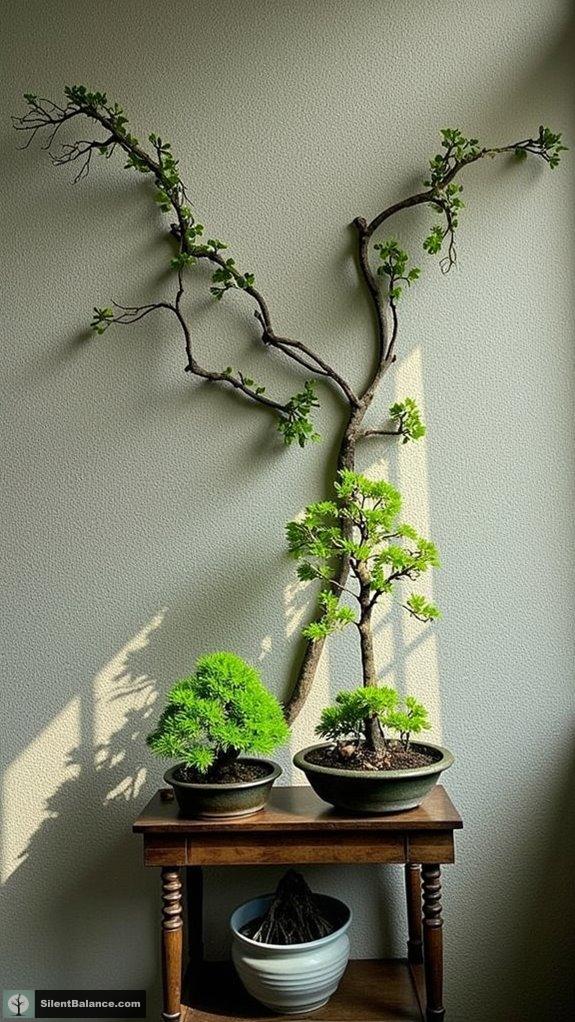
Choosing the right soil for your bonsai is like picking the perfect outfit—it’s all about what suits your little green companion’s needs while making sure they look fabulous!
Imagine having a mix that supports your bonsai’s roots while promoting health. Here’s a quick table to help you visualize:
| Key Components | Benefits | Ideal Ratios |
|---|---|---|
| Akadama | Retains moisture & drains | 50% for deciduous |
| Pumice | Creates air pockets | 33% for conifers |
| Lava Rock | Excellent aeration | 25% for both types |
Best Fertilization Practices for Small Bonsai
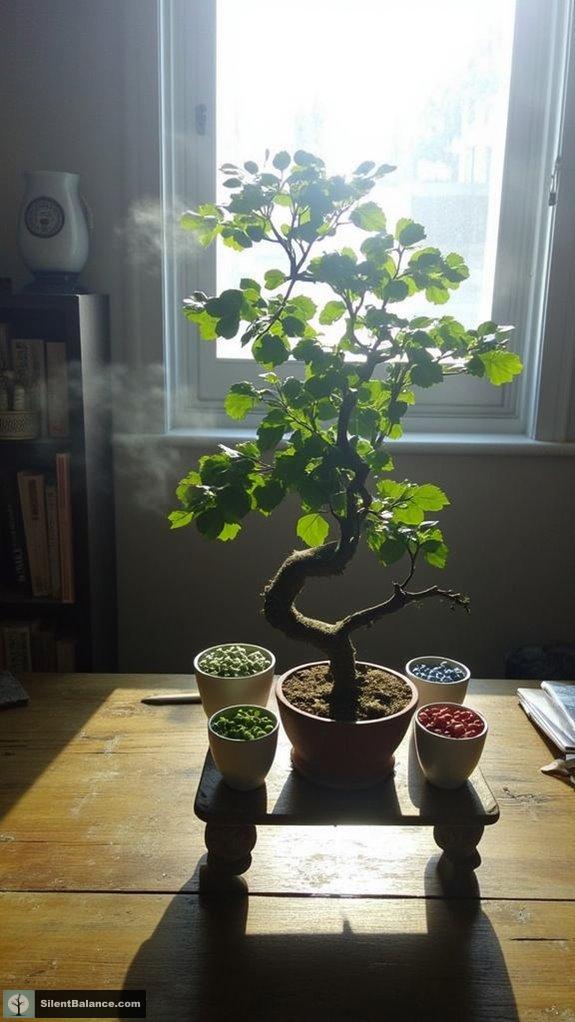
To get the most out of your small bonsai, a proper fertilization routine is key—even if it feels a bit like a precision dance!
I prefer organic fertilizers like fish emulsion or seaweed-based products, as they’re gentle and easy to use. For those in a hurry, inorganic fertilizers can provide a quick jolt, but watch for fertilizer burn—yikes!
During the growing season, I stick to my schedule, feeding every few weeks. Have you tried liquid fertilizers? Dilute them to half strength for your little guys; this avoids nutrient overload and runoff.
When it’s time to bloom, high phosphorus fertilizers work wonders.
And hey, don’t forget to track your routine. Bonsai thrive on consistency, just like us!
Pruning and Shaping for Compact Growth
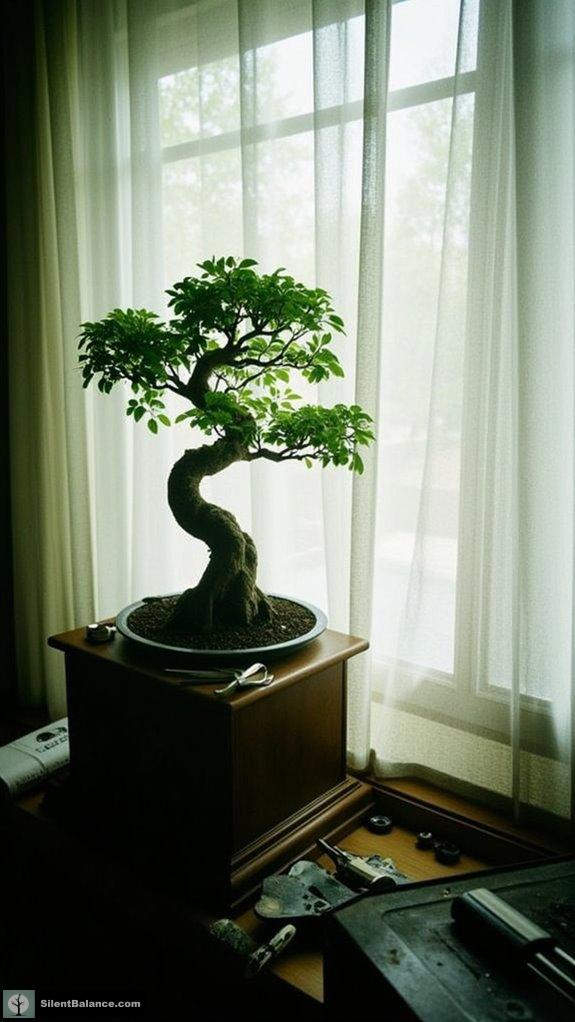
After harnessing the right fertilizers for our tiny trees, we now get to the fun part—pruning and shaping!
This is where our artistry shines. I love it.
To guarantee that our bonsai stays compact and charming, I focus on:
- Maintenance pruning: Keep that existing shape looking sharp with careful trimming.
- Leaf thinning: A little nip and tuck can really enhance airflow and light penetration.
- Hard pruning: Don’t shy away from trimming back those dominant shoots; it encourages bushier growth!
Enhancing Humidity in Indoor Environments
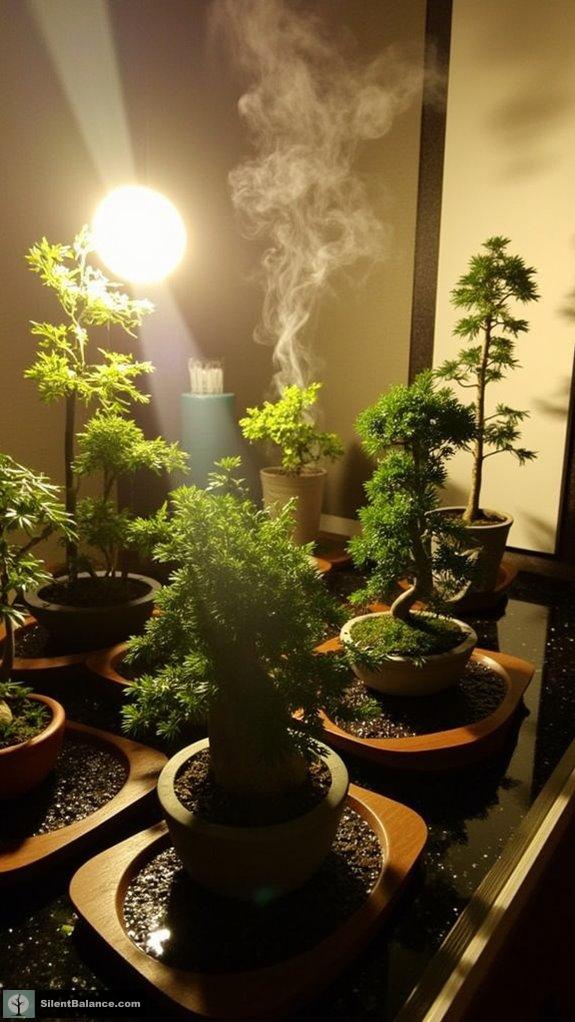
How can we create that perfect little haven of humidity for our indoor bonsai?
It’s essential to keep our leafy companions happy, so let’s put our green thumbs to work!
Here are a few quick ideas:
| Method | Description |
|---|---|
| Humidity Trays | Fill trays with water and pebbles; keep pots above water level |
| Misting | Lightly mist leaves in the morning for a rejuvenating dew |
| Humidifiers | Set up a cool mist humidifier nearby for steady moisture |
| Grouping Plants | Cluster plants together to create a natural humid microclimate |
With these simple tips, we’ll keep our bonsai thriving. Recall, the right humidity not only prevents stress but makes them flourish.
Creative Placement Ideas for Bonsai in Small Spaces
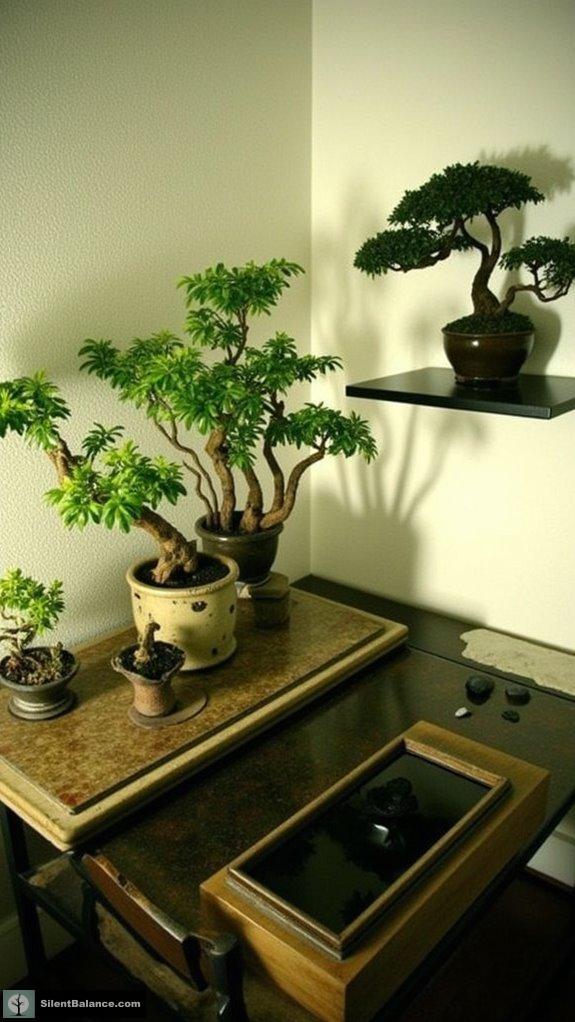
Finding the right nook for your bonsai can feel like a treasure hunt, especially when you’ve got a cozy space to work with.
I love styling my little trees to make a stunning impact. Here are some creative placements:
- Use compact side tables or coffee tables as chic display areas, turning functional decor into focal points.
- Elevate bonsai on wall-mounted shelves, maximizing vertical space and keeping the floor clear.
- Create a tranquil Zen corner with a low table and a couple of floating trees, making room for meditation.
Bonsai Tree Symbolism
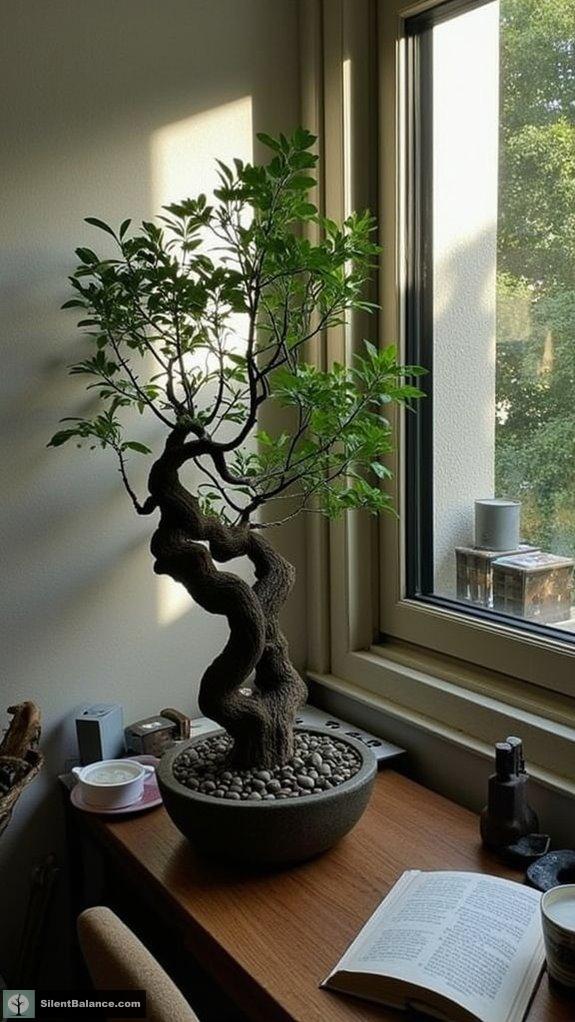
Bonsai trees are more than just pretty plants; they’re living symbols packed with meaning and history.
These miniature wonders originated over 1,300 years ago, serving as a status symbol among elites.
When I think of bonsai, I can’t help but feel a deep connection to patience and meditation, reflecting a perfect balance between man and nature.
Isn’t it fascinating how they embody harmony, urging us to slow down and savor life?
Caring for a bonsai isn’t merely maintenance; it’s a journey towards mindfulness.
Picture yourself nurturing your “companion tree,” fostering growth and self-awareness.
Plus, they’re just pretty cool pieces of art!
Tree Symbolism
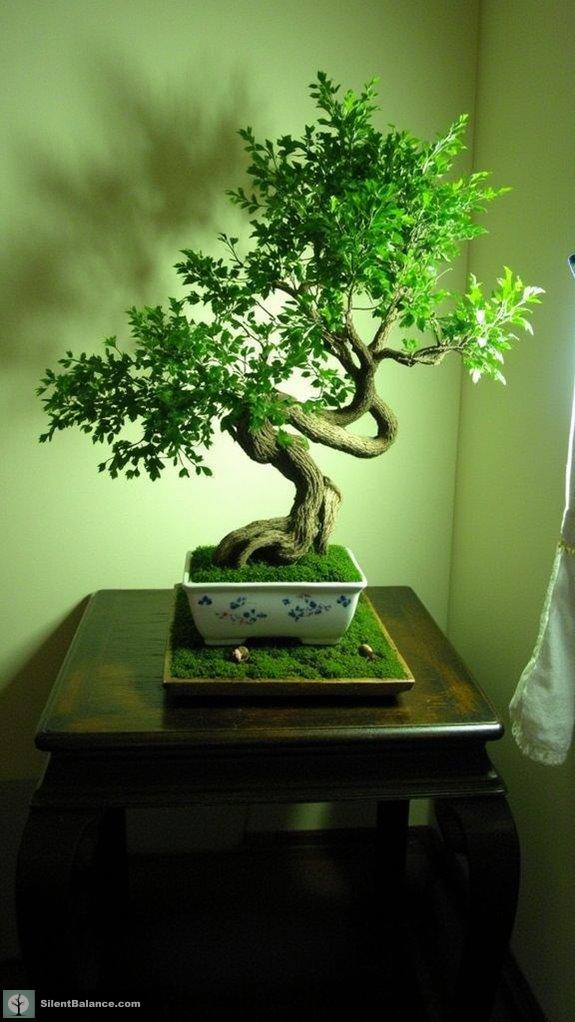
Trees have a way of speaking to us, don’t they? Their rich symbolism brings timeless lessons and connections to our lives.
You’ve probably felt that serene presence of a bonsai whispering ancient wisdom. Here’s what I cherish about tree symbolism:
- The acacia tree, embodying rebirth and that lovely notion of eternal life.
- The Tree of Life, a gateway to spiritual balance and nature’s embrace, keeping our spirits connected.
- Yggdrasil, the cosmic tree, reminding us of interconnection across all domains.
Isn’t it fascinating how these tiny trees carry the weight of such powerful messages?
As we care for our bonsai, we’re engaging with generations of knowledge, breathing life into our personal symbol of growth and resilience.
Questions and Answers
How Do I Select the Right Bonsai Species for Small Spaces?
When I select the right bonsai for small spaces, I look for compact species like Dwarf Jade or Chinese Elm. They’re beautifully resilient, fit perfectly, and bring a touch of nature into my cozy environment.
Can Bonsai Thrive in Extremely Low-Light Conditions?
I’ve found that some bonsai can survive in low-light conditions, especially Ficus and Jade. However, they need some light to thrive, so I always try to provide them indirect sunlight or supplemental grow lights.
How Can I Prevent Pests in Limited Spaces?
Aren’t you concerned about pests invading your precious bonsai? I make sure to isolate affected plants, keep everything clean, and monitor moisture levels closely. These simple steps help me maintain a thriving, pest-free oasis.
What Common Mistakes Should I Avoid With Indoor Bonsai?
When caring for my indoor bonsai, I avoid overwatering and poor lighting. I’m mindful of species requirements and use proper soil. Keeping in mind to monitor moisture and prune wisely keeps my little trees thriving.
How Often Should I Check My Bonsai for Diseases?
I check my bonsai weekly for pests and diseases. It’s amazing how early detection makes a difference. I’ve caught issues before they escalate, keeping my little trees healthy and thriving in my home.
References
- https://www.bonsaibaime.com/bonsai-tree-after-care
- https://www.backyardboss.net/bonsai-basics-caring-for-a-miniature-tree/
- https://www.allthingsbonsai.co.uk/bonsai-tree-care/indoor-bonsai-care/
- https://www.ftd.com/blog/bonsai-tree-care
- https://www.bonsaiempire.com/basics/bonsai-care/
- https://www.bonsaify.com/blogs/news-and-more/how-to-mindfully-optimize-light-for-bonsai-trees
- https://www.bonsaiempire.com/blog/grow-lights
- https://bonsai2u.co.uk/how-much-sun-does-a-bonsai-tree-need/
- https://www.lovemybonsai.com/blogs/bonsai/7-indoor-bonsai-trees-that-thrive-in-low-light-environments
- https://www.youtube.com/watch?v=wuBXFenMrv0
- https://yugenbonsai.com/how-to-water-a-bonsai-tree-properly/
- https://libanswers.nybg.org/faq/222665
- https://www.youtube.com/watch?v=vHN82clwb4M
- https://www.youtube.com/watch?v=yMKjZKAoqH8
- https://www.bonsaiempire.com/basics/bonsai-care/watering
- https://www.gardeningknowhow.com/houseplants/bonsai/bonsai-soil-requirements.htm
- https://hookedonbonsai.com/creating-your-own-bonsai-soil-mix-diy-recipes-and-techniques/
- https://bonsai4me.com/an-introduction-to-bonsai-soils/
- https://www.bonsaiempire.com/basics/bonsai-care/bonsai-soil
- https://www.bonsaiempire.com/blog/bonsai-soil-requirements

- 11 Best Luxury Sandalwood Candles for 2026 - June 19, 2026
- 11 Best Woven Wicker Gift Baskets for 2026 - June 19, 2026
- 11 Best High Powered Binoculars for 2026 - June 19, 2026
